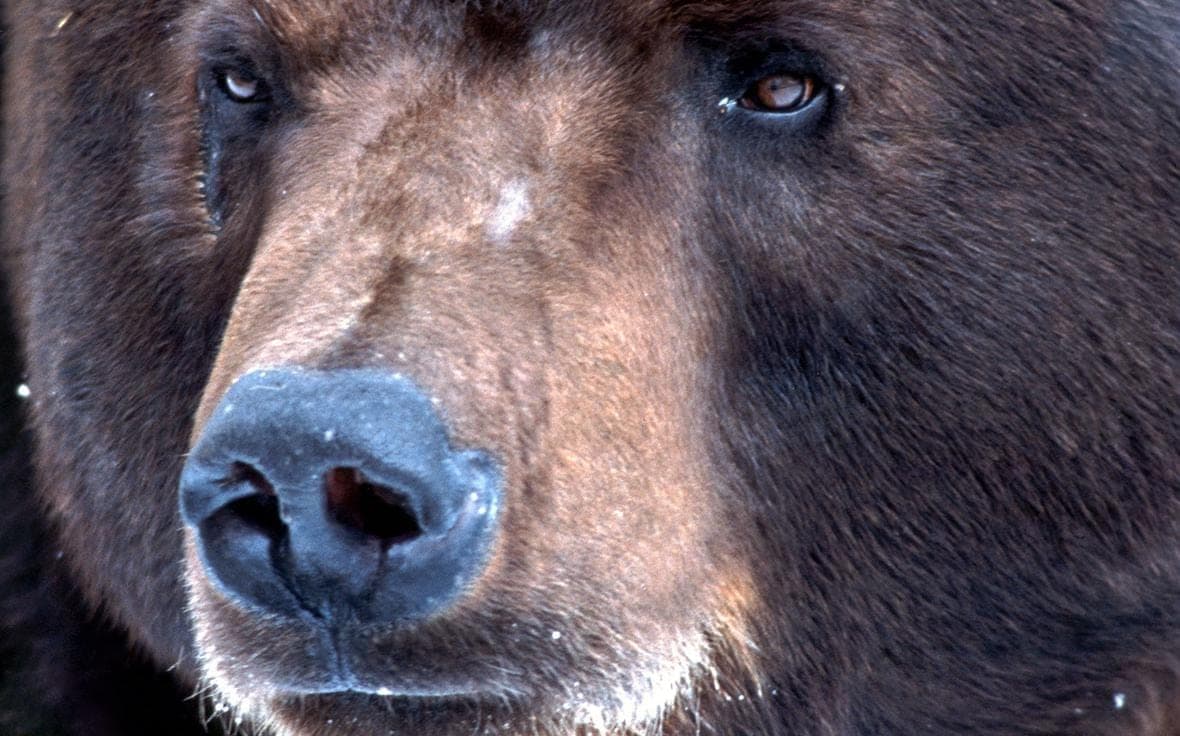
Where did the raccoon-strip come from in Belarus and why is it not such a cute animal as it might seem
The story of how in January of this year, Grodno customs officers found a furry illegal from the United States - a raccoon stripe, bypassed all the media. The animal was named...
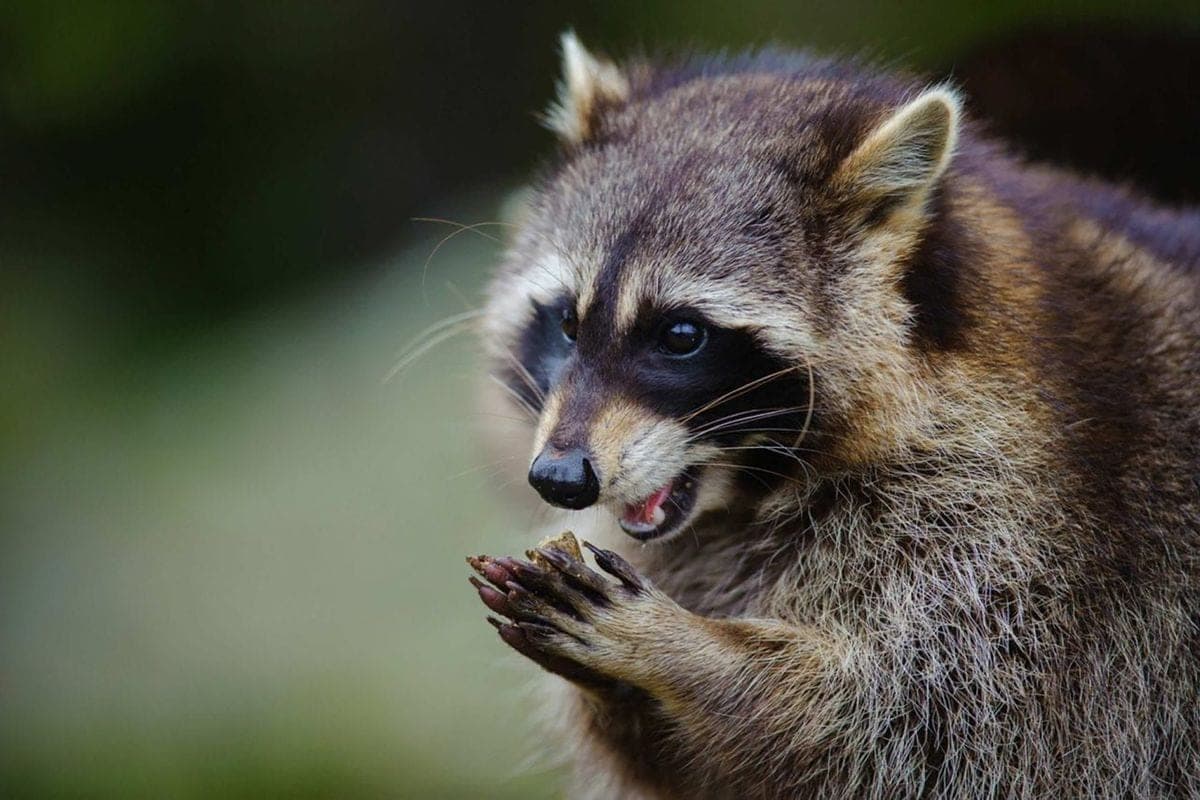
The story of how in January of this year, Grodno customs officers found a furry illegal from the United States - a raccoon stripe, bypassed all the media. The animal was named Senei, and after quarantine he left for permanent residence in the animal park "Dipryz" in Baranovichi district and even received his own passport. To most Belarusians, the animal seemed a curiosity. However, in fact, raccoons-stripes appeared to us a long time ago. And, apparently, “dwelled” here for a long time. Why scientists are not in a hurry to please this fact, found out in the National Academy of Sciences of Belarus.
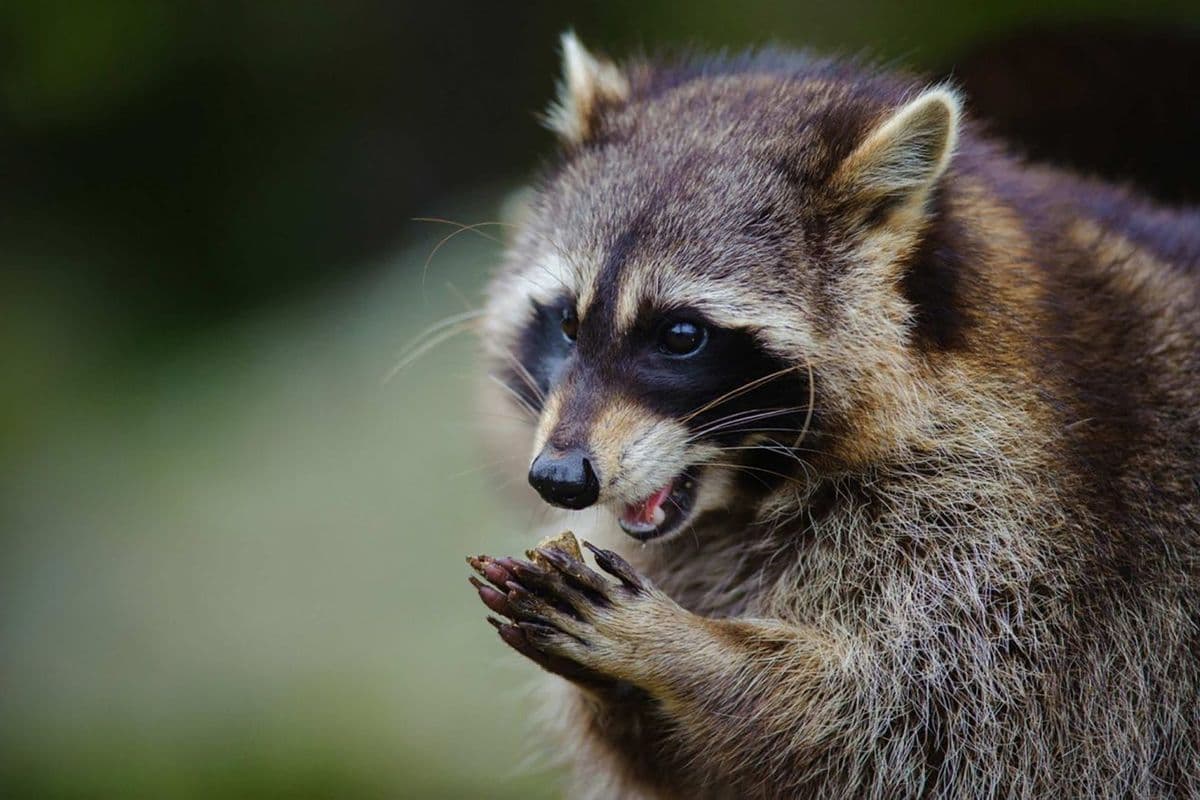
pinterest.com The natural habitat of the raccoon is the forests of North America, from the Isthmus of Panama to the southern provinces of Canada. However, at the moment he has successfully mastered almost all of Europe. From the neighboring countries it "occupied" Lithuania, Poland and Germany. For animals, the border is a very conditional concept, so the natural migration of raccoons to Belarus was only a matter of time, says the chief researcher of the NASB SPC for Bioresources, Doctor of Biological Sciences, Professor Vasily Grichik:

Vasily Grichik – At the moment, we have reliable information about the settlement of a raccoon-striped western regions of the country – numerous recording of traces, collecting samples of wool and litter, extraction of adult individuals, as well as materials of photo and video shooting. He has already mastered the entire Grodno region, except for its northernmost part - Ostrovets, Oshmyansk and Smorgon districts, Baranovichi and Brest regions of Brest region. There are reports of their appearance in the Lyakhovichi district in the basin of the Shchary River. Recently received information about the meeting of two individuals in the Drogichynsky district in the east of the Brest region. At the moment, raccoons almost reached the capital - they were seen in the Stolbtsovsky district of the Minsk region.
As the scientist notes, in the last 4-5 years, hunters and forestry workers, as well as local residents, meet raccoons quite often. Thus, the animal for us, we can say, is no longer exotic. And it all began even earlier - in the existence of the USSR.
- When natural furs were at the peak of demand, the idea of resettling fur animals for breeding and hunting was quite popular, says Vasily Grichik. If we are talking specifically about raccoons, their fur was valued quite highly, which was the reason for its settlement in a number of European countries. In 1954, the first batch of striped raccoons was imported to us, which was released into the forests of the Pripyat floodplains in the Zhitkovichi district of the Gomel region. In the following years, several more batches of animals were brought, which were released in several districts of Belarusian Polesie. Raccoons are contact animals, and it is easier to seduce them with delicious ones. But in no case do not stroke it and do not take it in your hands. A cute fluffy can infect you with parasites or bite you. If you consider that raccoons are carriers of rabies, it makes sense not to be led on a cute face, so as not to regret later.
- Raccoons seem to have acclimatized and took root well in the old floodplain forests of the Pripyat basin, the expert continues. By 1965, the number reached 1.5 thousand individuals, which allowed them to be extracted, and animal skins began to arrive in procurement farms. But then the situation changed, the population began to decline rapidly, and by the end of the last century, raccoons had disappeared from our territory. At least there was no evidence of their presence, neither scientists nor hunters.
According to Vasily Grichik, the reasons should be sought in a combination of a number of circumstances:
- In the late 1970s and early 1980s, several factors converged: first a series of cold, snowy winters, then high floods of Pripyat. To this was added poaching and felling of old hollow oaks, which raccoons chose as housing. In addition, experts noted a decrease in the size of the body and skulls of the captured animals. This may indicate the spread of some diseases or the presence of initial health problems in the entire party of immigrants.
But in Western Europe, raccoons took root and felt at ease. After 2020, scientists began to receive unconfirmed information about the penetration of raccoons into Belarus from Poland and Lithuania. In 2025, traces of the animal were found in the floodplain of the Berezina River in the territory of the Ivievsky district, and after the camera trap recorded the beast itself. As they say, I haven’t seen you in a long time... In Belarus, raccoons “on apartments” initially mastered oak trees: there are the largest and most comfortable hollows. But as the area grew, other places came in handy. They like forage (food-rich) forests in floodplains, where there is good moisture. In addition to oak, it can be oak trees, olshaniks, black-alder forests, broadleaf forests with a predominance of maple or linden.
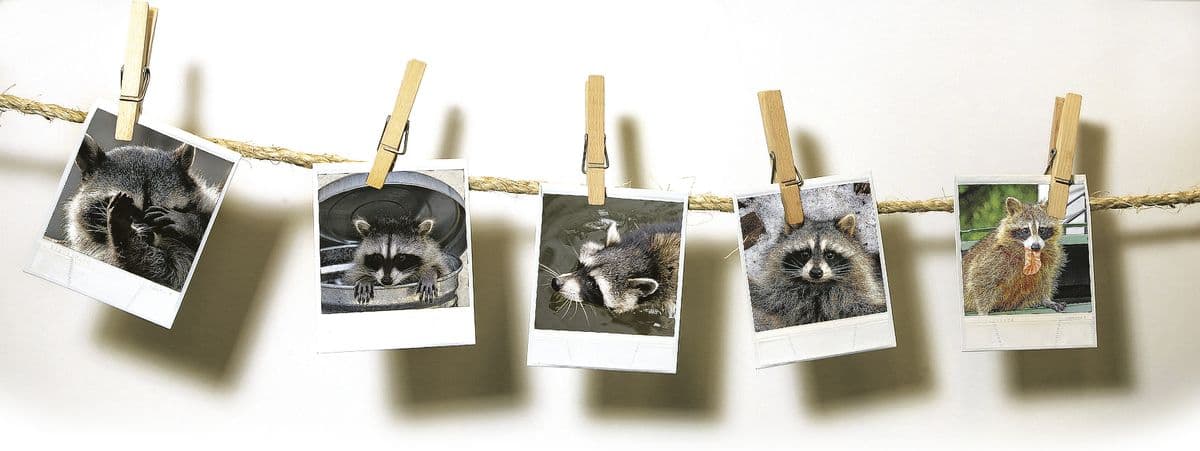
When the question arose where to put the raccoon-smuggler Senyu, scientists were unanimous: not in the wild! It would seem, why not let the animal live in the wild, especially since there are comrades here for him?
- As a biologist, I respect all living beings, says Vasily Grichik. But there are a lot of questions specifically about the raccoon. To begin with, this species is characterized by a high degree of invasiveness. By this term, I mean both a high potential for settlement and an equally high potential for negative impact on ecosystems. In simple terms, he just doesn’t belong here. The ecological niche of raccoons is the swamps of the American states of Florida and Alabama. We don't have their natural enemies to control their numbers, and these animals reproduce very quickly. At the moment, neither wolves nor lynx want to consider them as prey, and it is impossible to force them to do this in principle. The lynx prefers to hunt hares, she has enough of them, and from the wolf, the raccoon will very easily hold onto the tree.
Raccoons have extremely harmful effects on both the biodiversity of communities and the state of hunting fauna. They easily climb trees, thanks to which they actively ruin the nests of birds, including predatory ones, the masonry of rare Red Book species, in particular black storks, which we have in general. Such facts are confirmed, among other things, by recordings from video cameras. Now sounding the alarm reserve "Nalibok", which has the international status of a key botanical territory and a territory of regional importance, important for birds. Just so you understand, this problem is not local, but global. The situation is similar in many countries where these cute “migrants” were admitted: Germany, France, Lithuania and so on. Poland has developed a program to combat raccoons, but it does not work well. At the moment, the Ministry of Forestry of Belarus plans to include the raccoon stripe in the list of hunting species in order to somehow control its numbers.
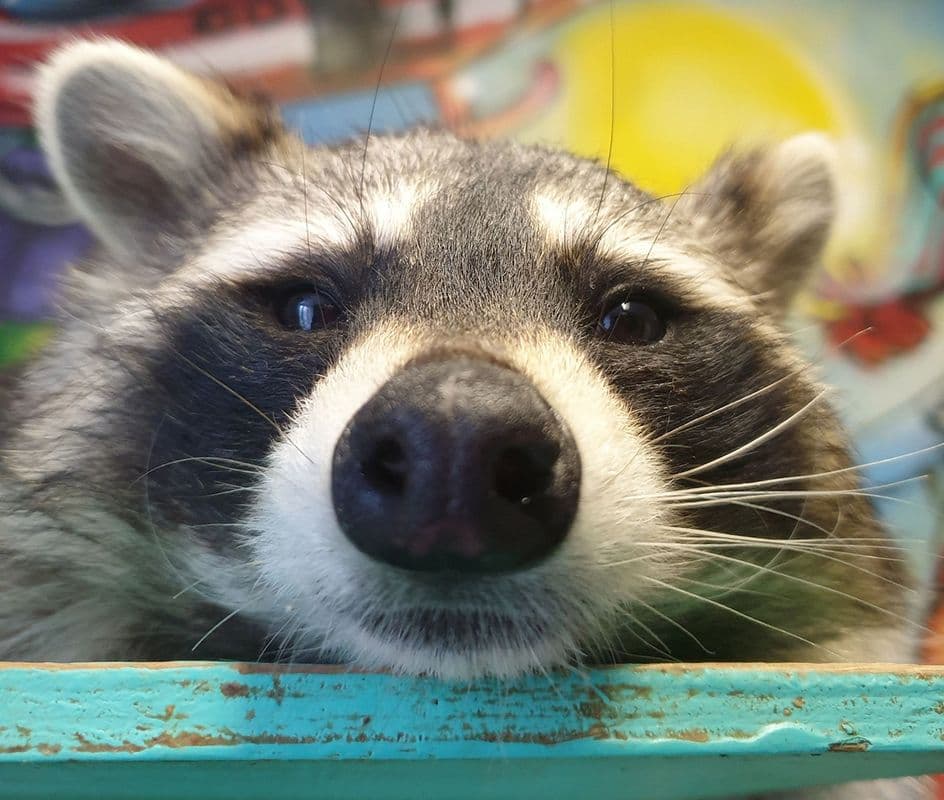
I would not like to unnecessarily demonize the animal, but the facts remain facts: while such cases have not been registered, but raccoons are also carriers of rabies. Honestly, we have enough foxes, and here it is..
- In addition, the raccoon is an epidemiological hazard as a carrier of a number of specific endoparasites, the expert warns. In the autumn of 2025, we found a dead raccoon on the M-6 highway in the Ivievsky district. In the laboratory of parasitology of our SPC tested it for the presence of helminths and identified a specific parasite that is considered potentially dangerous to humans. This is a new type of fluke (trematode) for Belarus. What consequences can lead to the inclusion of new types of endoparasites in their already rich complexes, it is difficult to say.
In our laboratory, we have determined the position on the need to take special measures that could, if not stop, then at least limit the resettlement of raccoons in our country. This is primarily a ban on the import and sale (advertisements for the sale of raccoons for detention in captivity regularly appear on the relevant Internet portals). Further, a categorical prevention of the release of these animals into nature, a ban on feeding wild raccoons, as well as possible measures for raccoon hunters living in natural and anthropogenic ecosystems. All useful that in the mouth crawled raccoons-stripes – omnivores that can adapt to almost any food. Not the fact that they can eat everything, but the appetite of these charms to envy all grandmothers of the world. In the conditions of domestic content (God forbid, of course) raccoons eat everything that is not nailed to the table, kitchen stove and refrigerator, in the wild feed on nuts, berries, fruits, acorns, various insects, mice, fish, frogs, small mammals and birds, their chicks and eggs. The Internet is full of videos with raccoons, which are kept as pets. But if you are not ready to let your house apart and are not distinguished by iron nerves (although the raccoon and so quickly shakes), do not succumb to a child’s face, advises the scientist:
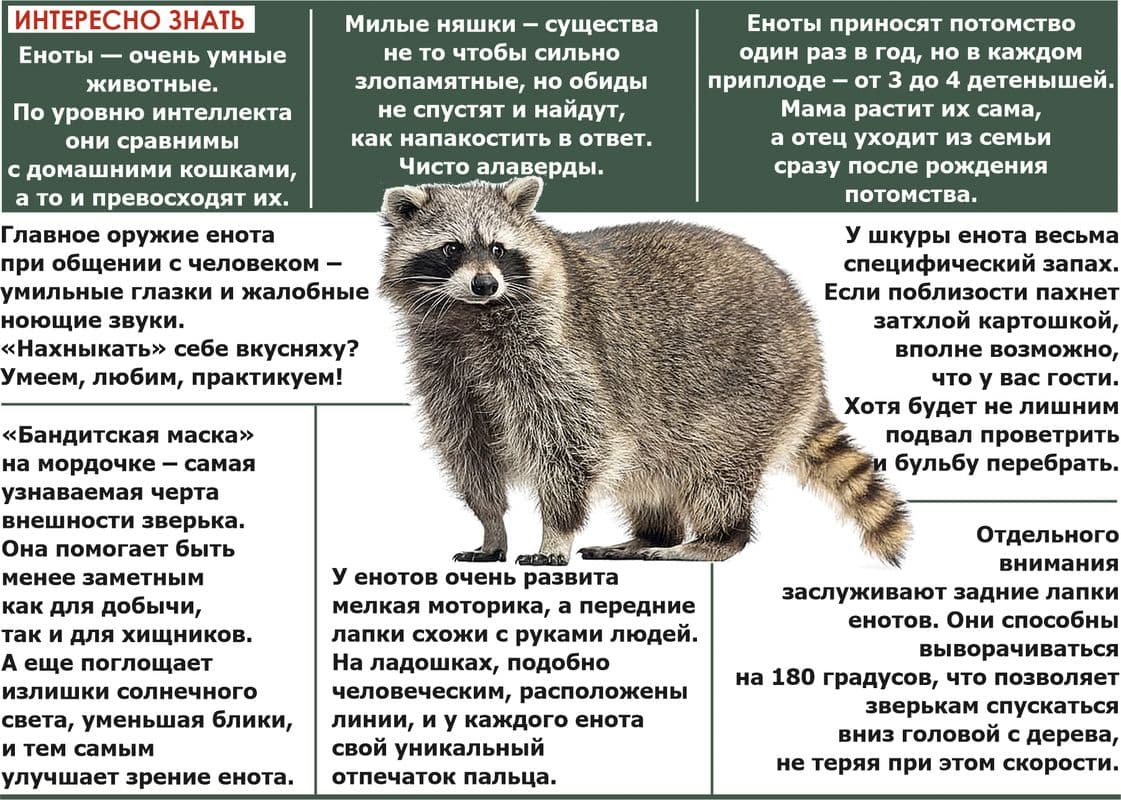
- The raccoon is not a companion animal, but a wild beast, although it is distinguished by cute eyes, small hands with neat fingers and so on. With these very fingers, which, by the way, are able to bend and twist at the most incredible angles, he will open any closet and room. The least that a raccoon will do in your house is to tear it apart, as they say, brick by brick. Usually, all destructive changes occur in the absence of the owner, as would be the case with an unbred puppy. But a dog can be trained to order, but a raccoon cannot. That is why the fate of these animals, which are filmed funny videos, as a rule, sad: they somehow get rid of. By the way, this factor is also important in the uncontrolled resettlement of raccoons. It can be both abandoned animals and escaped pets of zoos.
Given the amazing adaptability, in the wild raccoon will not disappear and one way or another will find where to settle. Recently, animals are increasingly attracted to human housing. The logic here is quite clear: you can settle in abandoned houses or barns, besides, there is always a lot of available food near a person. And if you include the charm that these animals are perfectly good at, then you can provide yourself with round-the-clock care. In some countries, including North America, raccoons quietly climb garbage cans. By the way, the same habits have animals that have chosen the surroundings of our lake Svityaz.
- When we studied the traces of raccoons in that area, the parking staff, rescuers of OSVOD said that raccoons have already mastered garbage cans for two years, and at once on two beaches, laughs Vasily Grichik. When services come to collect garbage, they literally have to be shaken out of the containers. They say a package of food was stolen from a vacationer. People pity them and don't hurt them. Still, for the majority of the population, these are exotic animals, and even cute to the impossible. However, when meeting them, certain rules should be followed. First, you can neither stroke raccoons nor take them in your arms: this can be unsafe, including due to the potential for infection with rabies. Second, don't feed them. The animal can graciously look into your eyes, but in fact the raccoon is self-sufficient enough to find food for itself. He will not starve, especially in Belarus, where he has a great feed base. And fed raccoons, especially near populated areas, are already problems. So the most you can do is take a photo from a safe distance.
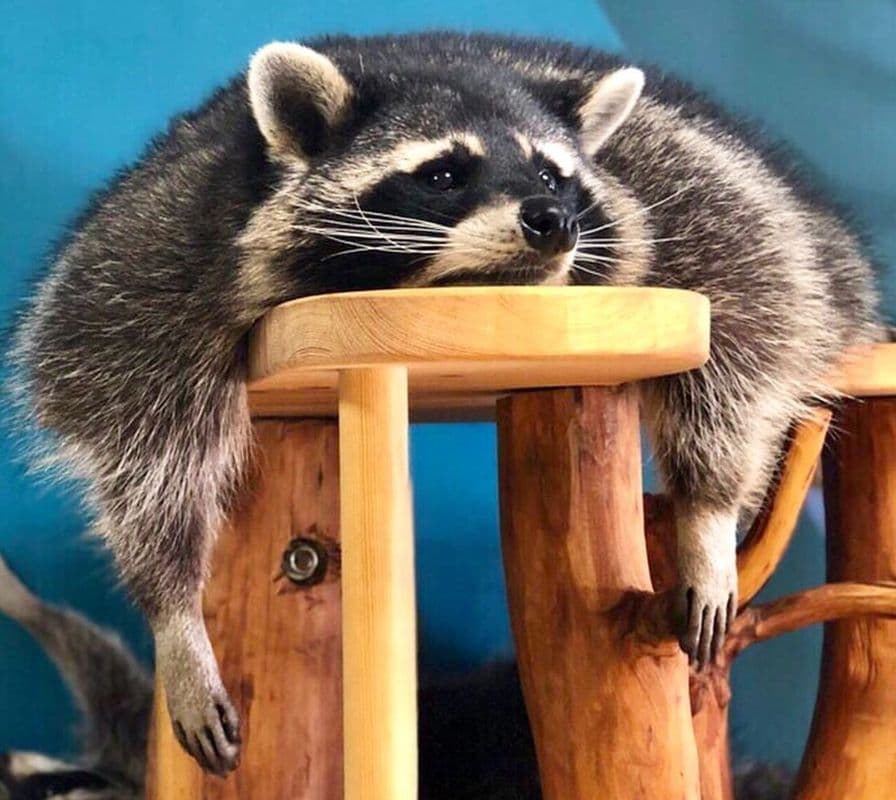
In the way of life, the raccoon is a nocturnal animal, so it is rarely seen by ordinary people. He also loves company. In winter, raccoons climb into wide hollows of trees immediately a whole bunch, 5-6 individuals: they snuggle against each other and sleep soundly there until spring.
- If a strong thaw is issued, they can get out to feed themselves, the specialist specifies. But, as a rule, they have enough food here, so they go for the winter with such koloboks, almost roll over. Since 2004, Belarus has been growing corn for grain, which is one of their favorite treats. By the way, he loves raccoon and grape snail. The real moydodyr raccoon was named so because of the characteristic habit: before eating prey, he often rinses it in water. This feature was noticed by the indigenous people of America - the Indians, and over time the nickname was fixed in the name of the species. And this is not about purity, or rather not quite about it. According to one version, raccoons have an unusually developed tactile sense. They literally “see” the world through the tips of their paws, and water increases this sensitivity at times. Thanks to the many nerve endings on their fingers, raccoons study objects and even distinguish their shapes and textures. It's about the same way people look at and taste food before they bite off a piece. If there is no reservoir nearby, animals can wipe prey with their feet, replacing the rinse process. Interestingly, female raccoons sometimes rinse in the water and their young. On the machine, no other way.
bebenina@sb.by