
In Chudovo will establish a memorial sign for children who became victims of fascist slavery
In Chudovo, at the Eternal Flame memorial, a project to install a memorial sign for young prisoners of fascism was discussed. This was reported by the head of the Chudovsk municipal district Alexei Zakharenkov.
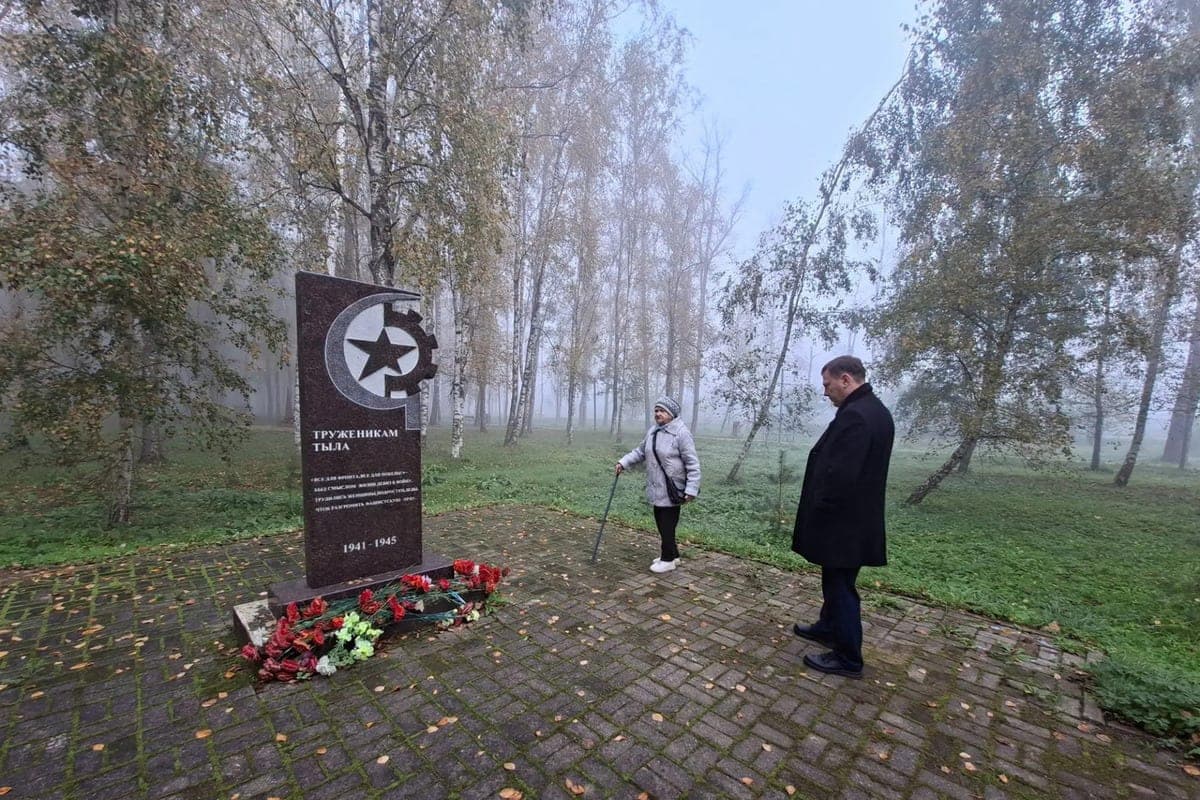
In Chudovo, at the Eternal Flame memorial, a project to install a memorial sign for young prisoners of fascism was discussed. This was reported by the head of the Chudovsk municipal district Alexei Zakharenkov.
“This initiative was addressed to me by our esteemed Klavdia Vasilyevna Zhukova, who herself went through the horrors of war as a child. Her initiative was supported by the Chudovsky Council of Veterans, the head of the district said.
Zakharenkov said that the place for the installation of a memorial sign has already been determined. Currently, the process of coordinating the project with the Inspectorate of State Protection of Cultural Heritage of the Novgorod Region is underway. It is planned to implement the project this year, he added.
“It is our sacred duty to preserve the memory of children whose childhood was scorched by war. We are obliged not only to worship them today, but also to convey the harsh truth of history to our children and grandchildren, Zakharenkov wrote and thanked Klavdia Vasilievna and the Veterans Council for their indifference and personal involvement in the implementation of the initiative.
The city of Chudovo was under occupation from August 1941 to January 1944. It was a strategically important railway junction, which the Nazis turned into a powerful fortification. For the civilian population, and especially for children, this was a period of survival. Chudovsky land was part of the Nazi policy of “scorched earth”.
Historians and local historians note that Chudovo and its surroundings became a place of mass abduction of civilians into slavery. Children and adolescents (beginning at the age of 10-12) were captured for transport to Germany. The Nazis cynically referred to these raids as “slave hunts,” and assembly points in the occupied cities as “slave exhibitions,” where German Bauers (farmers) were invited to choose free labor.


