
In Minsk presented the results of a study on socio-political moods
In Minsk, the presentation of the second part of the results of a large-scale comprehensive republican sociological study devoted to socio-political topics was held.
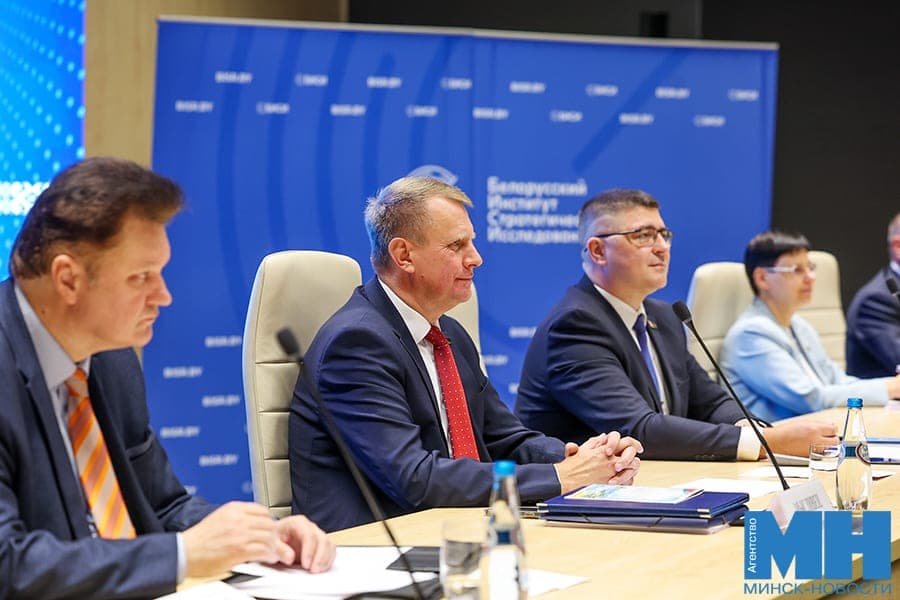
The second part of the results of a large-scale comprehensive republican sociological study devoted to socio-political topics was presented in Minsk, the correspondent of the Minsk-Novosti agency reports.
The study was conducted by the Institute of Sociology of the National Academy of Sciences of Belarus in July-August 2026 by order of the Belarusian Institute for Strategic Studies (BISI).
- Today we present the second block of sociological research, which deals with the socio-political situation. Among the issues are the public’s trust in political institutions, the assessment of the work of local authorities, said Nikolai Myslivets, director of the Institute of Sociology of the NAS.
Deputy Director of BISI Vitaly Punchenko stressed the importance of an objective assessment by citizens of the work of authorities at all levels:
- As a result of the study, we received an assessment of the quality of management, learned very interesting trends related to public moods and self-perception.
The survey involved 2,045 respondents. The geography of the participants was distributed as follows: 22.3% - from Minsk, 16.3% - from Minsk region, 14.3% - from Gomel, 14.2% - from Brest, 11.7% - from Vitebsk, 10.7% - from Grodno, 10.5% - from Mogilev. Among the respondents, 78.9% were urban residents and 21.1% were rural.
According to gender composition, 55.3% of women and 44.7% of men participated in the study. Age groups are presented as follows: 18.6% of participants - aged 18-30 years; 51.8% - from 31 to 57 years in women and 62 years in men; 29.6% - from 58 years in women and 63 years in men.
Among the respondents, 40.9% of participants have higher education, 44.2% have vocational or secondary special education, 14.9% have basic (up to 9 grades) or general secondary (up to 11 grades) education.
As for marital status, 55.4% of participants are married, 17.3% are single, 12.9% are widowed, 10.8% are divorced. There are children in 75.6% of respondents.
Photo by Denis Kulagi


