
In Sochi, told why you can not try the bright berries of the coral herd
In November, in the Sochi arboretum came a period of special decorativeness of the coral pad (Ilex corallina Franch)
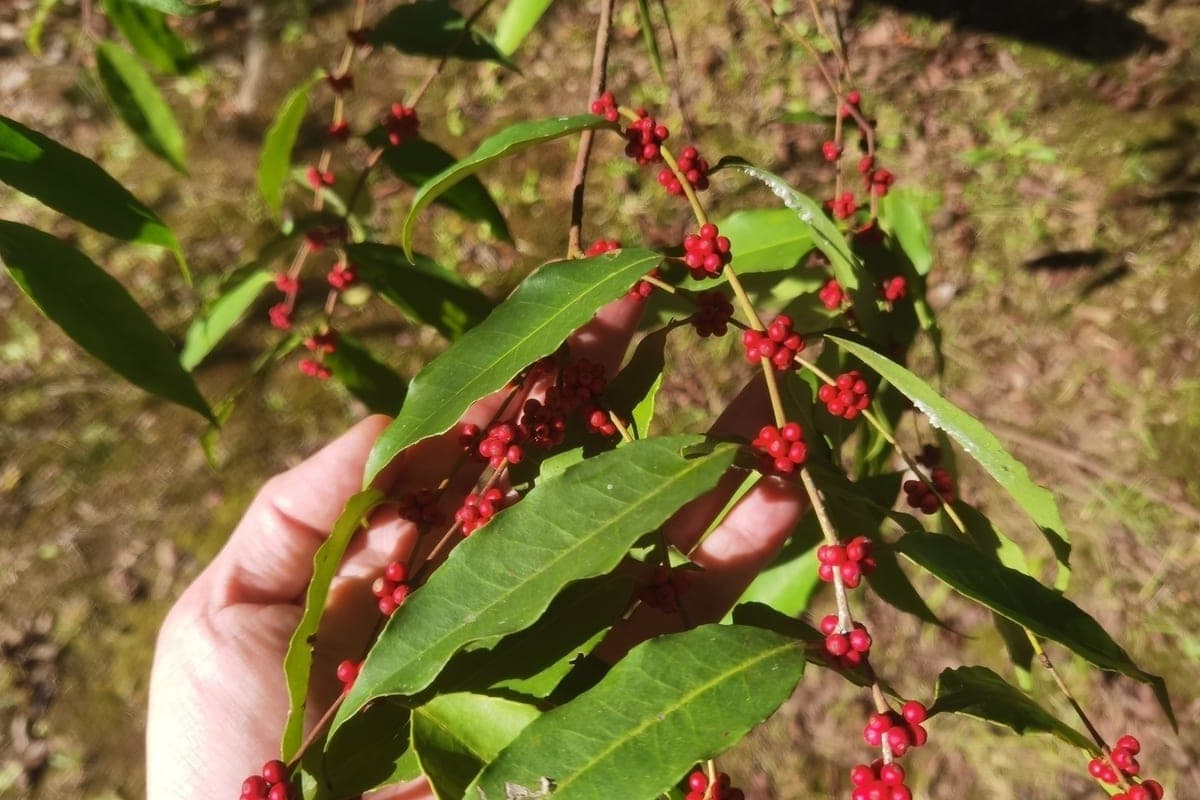
In November in the Sochi arboretum came a period of special decorativeness of the coral pond (Ilex corallina Franch.). The evergreen tree attracts attention with thin falling branches strewn with numerous red berries that resemble coral threads.
As told in the Sochi National Park, in the spring, this plant could be recognized by small greenish flowers with a honey aroma hidden in the sinuses of the leaves. By November, numerous fruits with a diameter of about 3-5 mm were formed in their place. They are arranged in small groups along the shoots, creating spectacular red garlands.
Unlike many other members of the padubian family, the adult coral padub has a soft, graceful crown without pronounced thorns. Its leathery leaves have an elongated shape and wavy edge, and the smooth light gray bark contrasts with the dark green foliage and bright fruits. In its natural habitat, in the mountainous regions of China’s Sichuan and Yunnan provinces, the tree can reach 10 meters in height.
Red berries are important for the natural ecosystem. In the cold season, they become food for fruit-eating birds, which also help the plant spread seeds. Inside each fruit are seeds, the development of seeds in which requires a long period of rest and change in temperature conditions.
The coral is also interesting from the point of view of botanical science. In the composition of plants of the genus Ilex found various biologically active compounds, including triterpene saponins and flavonoids. Some of these substances are being studied as part of modern phytochemical research.
The Sochi National Park reminds that the bright fruits of the padua are not intended for eating. The substances contained in them can cause digestive disorder and poisoning. Visitors are advised to admire the plant, take pictures of it, but do not try the berries.
You can see the autumn decoration of the coral pad in the Sochi arboretum. In November, this plant becomes one of the expressive decorations of the subtropical collection of the park.


