
In the United States declassified archives of meetings with the Bigfoot: that hidden documents
The U.S. Forest Service has released archival documents about alleged encounters with Bigfoot, known as Bigfoot. The materials collected eyewitness accounts from Montana and Washington, dating from 1941, reports The Washington Post.
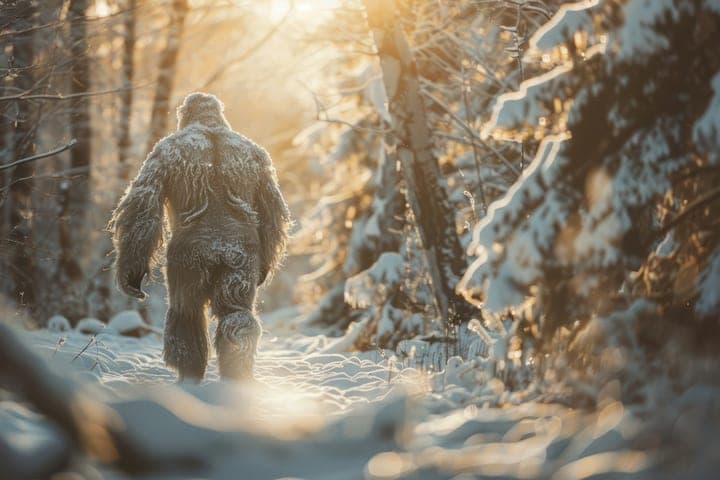
In total, the department posted three archival documents on its official website. One of them focuses on the story of 1982, when forester Paul Freeman claimed to have met an unusual humanoid creature in the Umatilla forest in Washington state. A few days later, he found traces in the forest, which he associated with the appearance of Bigfoot.
The fingerprints were examined by an unnamed biologist and U.S. Border Protection officer. They concluded that the footprints did not belong to Bigfoot. However, Washington State University anthropology professor Grover Krantz, known for his Bigfoot research, disagreed with this assessment and considered the prints authentic.
Two other documents contain accounts from Montana residents of encounters with large unknown creatures. Eyewitnesses described an unpleasant smell, loud sounds in the thickets and unusual traces that allegedly left these creatures.
Interest in the mysterious creature showed and the staff of the Forest Service. In early October, in California, they organized an open meeting called "Bigfoot in your neighborhood." The audience was made by employees of the department Katie Marquez and archaeologist Katie Strain, who, according to The Washington Post, told about the Bigfoot quite seriously.
Marquez listed features of appearance and behavior reported by alleged witnesses. According to their stories, Bigfoot looks like a large hairy humanoid creature with an unpleasant smell, makes loud screams, howls and whistles. The employee also showed audio recordings of alleged Bigfoot sounds and a map of the places where he was allegedly spotted.
Archaeologist Katie Strain said that in the western part of the Sierra Nevada mountains recorded 65 evidence of alleged encounters with Bigfoot. She also shared her own experience of seeing two young individuals during an expedition in Oklahoma in 2012.
The Washington Post has asked the U.S. Forest Service for explanations as to why the archives are being published now. The representative of the Ministry could not give a specific reason, but explained that when publishing the documents, the service takes into account their potential interest for journalists, researchers and the general public.
Source.


