
The great holiday of the Intercession: history, traditions, soul cards and the main bans of the holiday
Today, on October 14, the Orthodox world celebrates the Intercession of the Most Holy Mother of God - one of the most important and beloved autumn church holidays in the people
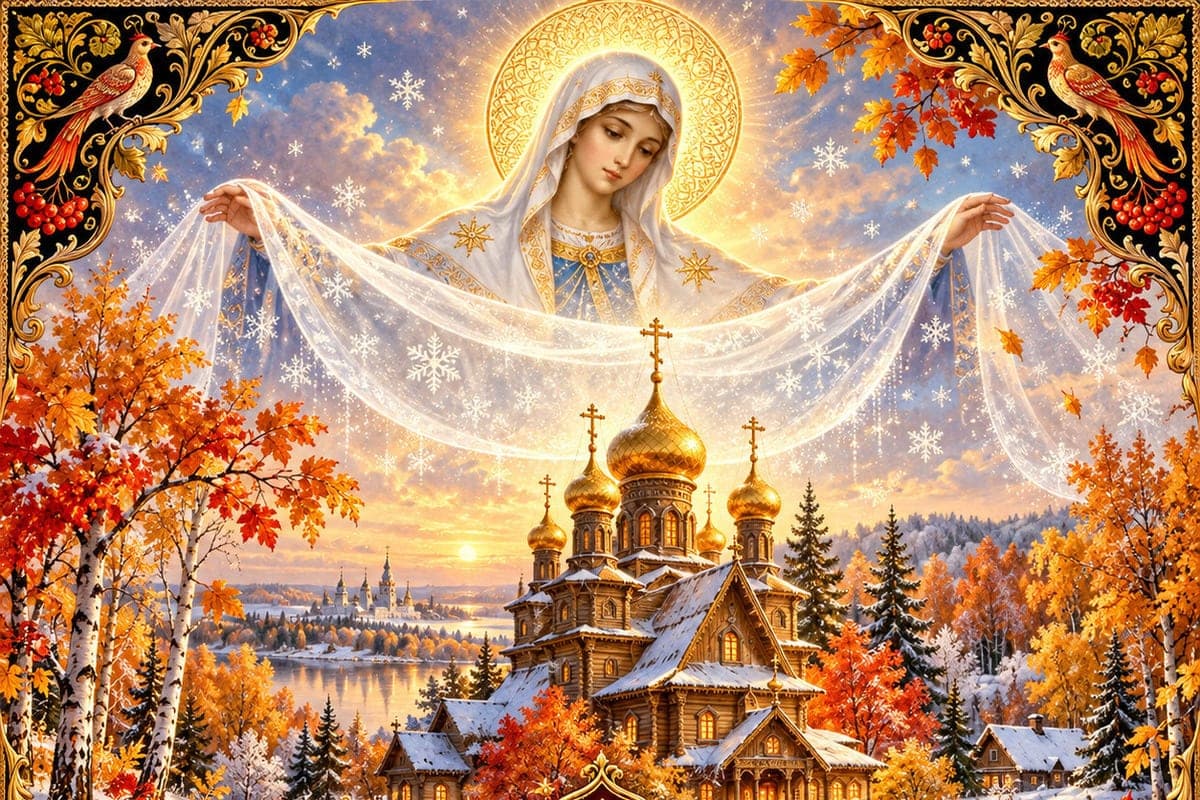
History and spiritual meaning of the holiday
In the church calendar, this day is inextricably linked with the miracle that occurred in the X century in Constantinople during the siege of the city. People praying in the Vlachern temple saw the Mother of God walking through the air, who removed the luminous omophorion from her head and spread it over all those present. This shining miracle became a symbol of protection: soon a rising storm destroyed the enemy fleet, and the city was saved. For believers, this day is the main reminder of the unceasing intercession of the Heavenly Queen for all mankind.
Folk traditions and the first winter
In the folk tradition of the Eastern Slavs, the holiday always marked the meeting of autumn with winter and the beginning of the First Winter. The very word “cover” people interpreted in two ways: as the cover of the Virgin and as the first covering of the earth with fluffy snow.
By this date, the peasants had fully completed all field and garden work, collected the last harvest, harvested firewood and transferred livestock for winter feed to the barn.
In addition, from Pokrov in Russia traditionally opened a fun season of autumn weddings and maiden gatherings. It was believed that the marriage concluded at this time, will be under the special protection of the Higher forces, and the family will become strong and happy.
What you can and should do this day
The spiritual traditions of the holiday prescribe believers to attend a solemn service, put a candle at the icon and pray for peace in the family, the health of loved ones and protection from troubles.
A traditional custom is the baking of pancakes, pies or caravans: people believed that if the Pokrov in the house smells of muffin, then the whole winter will pass in satiety and prosperity.
On this day, it is customary to show mercy, treating neighbors, orphans and those in need.
Young girls in the morning rushed to the temples in order to be the first to put a candle, saying: “Private, cover the ground with snow, and me with a wife!”.
What is strictly prohibited
There are also strict prohibitions that our ancestors tried to unconditionally observe, so as not to bring a series of failures to the house:
On Pokrov it is strictly forbidden to engage in heavy physical labor, construction, large-scale cleaning, washing, sewing or knitting - all household chores should be completed the day before.
Under a strict taboo are any manifestations of negativity: you can not swear, swear, envy and wish someone harm.
It was also considered a bad omen to refuse hospitality or assistance to those who came into the home with good intentions.
It is strictly not recommended to indulge in despondency - the holiday should be met with a light heart and sincere joy.
Folk signs
Centuries-old observations of the weather on this day formed the basis of stable folk signs, which judged the coming cold weather.
The main rule is: what is the cover, such is the coming winter. If by October 14, birches and oaks have completely dropped the foliage, then the winter will be mild, and if the leaves remain - severe frosts ahead.
The direction of the wind also plays a key role: the north or east wind promised severe snowy months, and the south - protracted thaws.
If the first snow did not fall on this day, then it should not be waited until December.
Congratulations cards


