
Age isn't a hindrance
The International Day of Older Persons, established by the UN General Assembly on 14 December 1990, is celebrated on 1 October worldwide
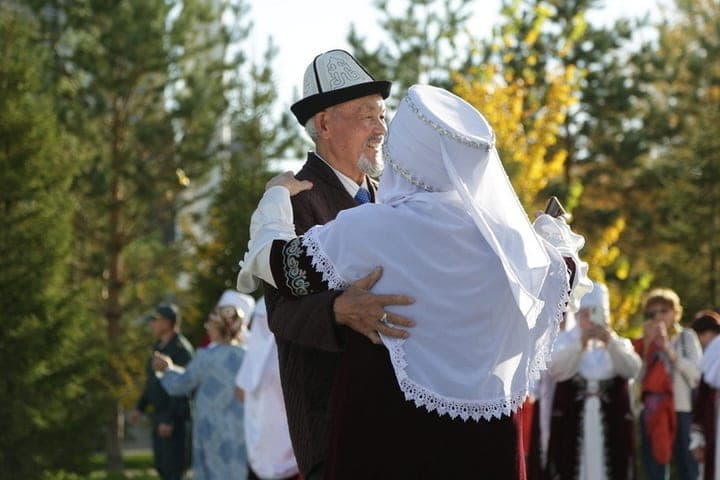
The decision came after the 1982 World Assembly on Ageing, which adopted the Vienna International Plan of Action on Ageing. The UN has defined it as an opportunity to draw attention to the situation of older people, their needs, problems and the need to improve the quality of life, as well as to celebrate their contribution to society.
Two million Kazakhstanis over 65 years old
In Kazakhstan, this day is perceived not as a formal date from the calendar, but as an occasion to take a closer look at those who have lived a long life, survived several epochs and remains a living carrier of family and national memory.
Today, almost two million people over the age of sixty-five live in the country. That's about ten percent of the population. Among them are those who have passed the centenary. At the beginning of 2026, such centenarians numbered more than 1,300 people. Within a year, they were almost a third more. Most of them are women. Almost three quarters live in cities, and Almaty remains the absolute leader in the number of centenarians. These figures indicate that life expectancy in the country is growing, and with it the responsibility of society to the older generation is growing.
Kazakh culture has long been built on respect for elders. Aksakals are not just elderly people, but carriers of experience, wisdom and family history. The tradition of "Ulkendi siylau" (respect for the elder) is still alive and felt in everyday life. The younger one greets, gives way, does not interrupt, listens attentively. The knowledge of seven generations of ancestors is still considered an important element of education. In an aul or in a city apartment, an elderly person often takes pride of place behind a dadrakhan. These norms are passed down from generation to generation, although modern life makes its own adjustments. In big cities, the rhythm is accelerating, families are getting smaller, children are leaving to study and work, and increasingly older people are left alone. Loneliness is one of the most sensitive topics discussed by social services and the elderly themselves.
According to statistics, tens of thousands of elderly Kazakhstanis live without the constant support of loved ones. The state is trying to eliminate this need. Today in the country there are more than one hundred and thirty departments of social assistance at home. They cover more than twenty-eight thousand lonely elderly people. Social workers help with everyday life, shopping, accompaniment to doctors, sometimes just make up a company and talk. There are also centers of active longevity, where older people can engage in sports, creativity, communicate, participate in activities. According to the Ministry of Labor and Social Protection of Population, the existing infrastructure covers the current needs of this category. However, the situation is heterogeneous in the regions. In some areas there are almost no nursing homes, and in rural areas access to services is markedly lower than in urban areas. This creates a perceptible gap between the capabilities of residents of major centres and those living in remote areas.
Social protection measures
Public medical and social institutions for the elderly and people with disabilities are a separate and important part of the system. There are about fifty of them in the country. Several thousand people live in them. Most of the guests are male. Conditions in different institutions differ. Somewhere there is a warm, almost homely atmosphere, where employees know the preferences of each resident and try to make sure that the person does not feel abandoned. Somewhere there is a shortage of staff and resources. In one of the centres, the staff say: “We try to treat everyone like a child. We know that he likes to drink, with whom he communicates, what his mood is today. We want them to feel at home here.” Such words sound especially important on the Day of the elderly, because they show that behind the dry figures of statistics there are lively human relationships and daily work of people who choose to care for their elders as their profession.
The state consistently takes measures of social protection of the older generation, including those aimed at improving the pension system. According to paragraph 3 of Article 197 of the Social Code of the Republic of Kazakhstan, the annual increase in the size of pension payments by age and pension payments for seniority is carried out in the amount established for the relevant financial year by the Law "On the Republican Budget".
On behalf of the head of state, a phased increase in the size of the basic pension continues. At the same time, the Ministry of Labor and Social Protection of the Population of the Republic of Kazakhstan implements measures to support older people, increase the level of their social services, and engage in public life.
There are 127 active longevity centers in the republic. The total amount of funds allocated from local budgets for their functioning in 2025 amounted to 7.5 billion tenge.
Active longevity centers operate on the principle of one window in three areas: active longevity, health culture and public relations. The activities of the centers are aimed at improving the quality of life of older people, stimulating productive and active longevity, organizing systemic leisure: yoga, Scandinavian walking, increasing digital literacy, motivational and entrepreneurial courses, English language courses, ensuring independence for the elderly, participation in the life of Kazakhstani society.
On October 1, a month dedicated to the Day of Elderly People starts in Kazakhstan. Akims of regions, cities and districts, heads of enterprises and organizations will hold events for social support of older citizens, meetings in labor collectives, open days in outpatient and polyclinical organizations and so on.
A separate page - veterans of the Great Patriotic War. There are very few of them left, only a few dozen people throughout the country. Each of them is a living story. The state continues to provide them with special support, but time is taking its toll. Next to them are home front workers, spouses of departed front-line soldiers, former prisoners of concentration camps.
They are also becoming smaller every year, and attitude towards them remains one of the important indicators of the maturity of society. When we talk about the last veterans, we are talking not only about material assistance, but also about preserving memory, about the ability of these people to feel attention and respect.
How are the elderly Kazakhstanis living today?
Many remain active. Someone runs a household, helps raise grandchildren, participates in the life of local communities, goes to veterans' meetings or just keeps in touch with neighbors. Someone masters new technologies to call children and grandchildren, read the news, watch movies. Someone faces difficulties, health problems, limited mobility, a sense of uselessness when children live far away and the circle of friends is narrowed. Pensions, social benefits, help at home - all this creates a certain material base. True support is always more material. It's attention, it's conversation, it's being heard, it's feeling like you're still needed. That is why volunteer initiatives, visits of schoolchildren and students, joint holidays, simple human meetings and even a simple call with the question “How are you?” are so important.
In the Kazakh tradition, old age was never considered a time of extinction. “Old age is wealth,” they used to say. And today, as the number of centenarians grows and life expectancy increases, these words acquire a new meaning. Society is gradually aging, and this requires not only financial and organizational decisions, but also changes in everyday attitudes. Respect for elders should not remain only a beautiful tradition, which is remembered on holidays. It should be manifested in ordinary actions – in the way we talk to older neighbors, how we treat our own parents and grandparents, how we support those who do not have close people nearby. Sometimes a simple attention is enough to make a person feel needed.
Older people’s day is a good reason to stop and look around. How many of us remember a completely different country, different times, different values. How many stories do these people keep? And how much more can they convey if they are given the opportunity to speak and if there are those who are willing to listen. Statistics show an increase in the number of people who have crossed the century mark. The analysis suggests that the proportion of older people will increase in the coming decades. And the human dimension of this topic remains simple and understandable. There are people next to us who need attention, respect and the feeling that they are still needed. This is the real meaning of the holiday. Not in official congratulations and flower baskets, but in treating elders every day as tradition taught us, with dignity, warmth and real care. Age will be perceived not as a burden, but as a wealth that enriches the whole family and society.


