
Israeli doctor detained at airport with 300 saplings from Thailand
On October 13, 2026, a resident of central Israel, a doctor by profession, was detained at Ben Gurion Airport, who tried to import about 300 banana and fern seedlings from Thailand without the permission of the Ministry of Agriculture
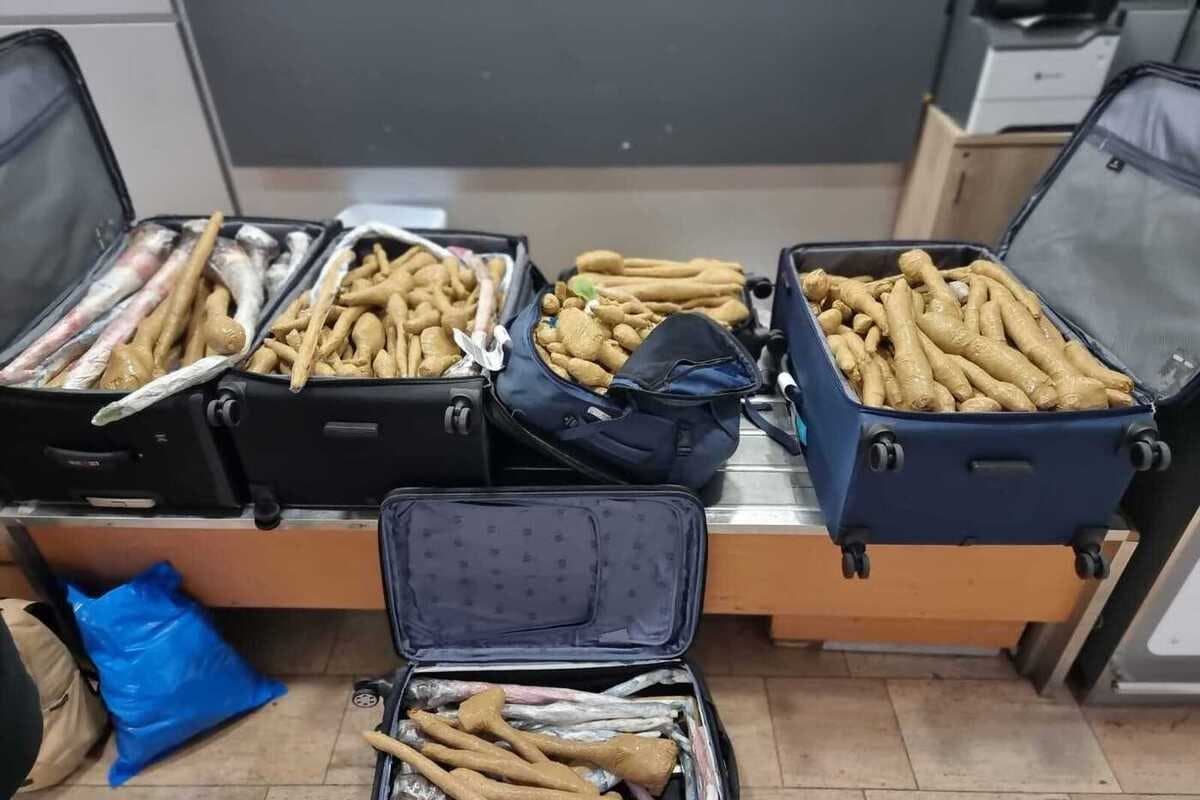
On October 13, 2026, a resident of central Israel, a doctor by profession, was detained at Ben Gurion Airport, who tried to import about 300 banana and fern seedlings from Thailand without the permission of the Ministry of Agriculture. The case was one of the largest and rarest in recent years, raising concerns among phytosanitary safety professionals.
On the evening of October 13, at Ben Gurion International Airport, customs officers and plant protection inspectors from the Ministry of Agriculture of Israel inspected the baggage of a passenger returning from Thailand. In five of his suitcases were found about 300 seedlings of banana and fern genus Platycerium, which, according to the passenger – the doctor, was intended for his private garden, which over the years turned into a real “jungle”. The man claimed that collecting exotic plants is his personal hobby, but the lack of permission to import planting material became the basis for the immediate seizure of the entire batch and the beginning of an investigation.
According to the Ministry of Agriculture, even a single case of importing plants without a permit is considered a serious violation of the Plant Protection Law 5716-1956, which has been in force in Israel since 1956. The law strictly regulates any movement of plants and plant products across the border, including personal importation, and provides for administrative and criminal liability for violation, including confiscation, fines and criminal proceedings. For legal import, it is required to obtain a special permit and a phytosanitary certificate confirming the absence of dangerous pests and diseases (details on the website gov.il).
Of particular concern to experts is the origin of seedlings - Thailand is considered a region with high phytosanitary risk. According to international organizations such as CABI and FAO, pathogens and pests dangerous to banana plantations are widespread in Southeast Asia, which are absent in Israel. Among them is TR4 (Fusarium oxysporum f. sp. cubense Tropical Race 4), known as the Panamanian disease, which can destroy up to 100% of the crop and make the soil unsuitable for growing bananas for decades. In addition, in Thailand, there is a black banana weevil (Cosmopolites sordidus), whose larvae damage the root system of plants, as well as Banana Bunchy Top Virus (BBTV) and Banana Streak Virus (BSV) viruses that cause deformation and death of plants. All these threats can be invisible to the naked eye and enter the country even with one infected seedling.
The Israeli banana industry, centered in the Galilee and Hula Valley, covers about 6,000 hectares and produces about 110,000 tons of bananas annually, providing jobs and income for hundreds of farms. Penetration of quarantine pathogens can lead to catastrophic consequences - from complete loss of crops to long-term soil unsuitability and economic damage to entire regions.
According to the Ministry of Agriculture, in recent years there has been an increase in attempts to illegally import agricultural products, but the detention of such a large batch of seedlings is an extremely rare event. These are usually single plants or small quantities, and the mass seizure of 300 seedlings was an exceptional case, according to official reports.
Schlomit Zioni, head of the Ministry of Agriculture’s Plant Protection and Inspection Service, said: Even a small plant in a suitcase, fruit or vegetable can cause great harm to agriculture and the nature of Israel. Plants that appear healthy can carry pests and diseases absent in the country, causing irreversible damage and even endangering entire industries.” She urged citizens to show responsibility and not to import plants and plant products without the necessary permits, noting that thanks to the vigilance of customs officers and inspectors, it was possible to prevent illegal entry of dangerous plants.
In conclusion, it is worth noting that the investigation into this incident is ongoing, and all seized seedlings were destroyed in accordance with phytosanitary safety protocols. Experts predict that such a high-profile case will lead to tighter control and additional awareness campaigns among the population. In the context of globalization and the growth of international transportation, even personal fascination with exotic plants can turn into a threat to national food security. Only strict control and compliance with international standards can protect Israeli agriculture from catastrophic consequences.
Help and figures:
Indicator Value/Commentary
Number of seized seedlings 300
Major TR4 threats, weevil, BBTV and BSV viruses
The area of banana plantations in Israel ~ 6,000 hectares
Annual harvest of bananas ~110,000 tons
Plant Protection Act 5716-1956
Liability Confiscation, fines, criminal case
Sources gov.il, CABI, FAO
The uniqueness of this case lies not only in the scale of the import attempt, but also in the potential threat to the entire industry. In the near future, we can expect tighter control at the border and increased information work with the population. Experts sub-sub-session of agriculture.


