
Residents of the Volgograd region will see the Northern lights and the parade of planets on November 9
On November 9, 2026, the Earth will be at the epicenter of an exciting cosmic confrontation: while our magnetosphere will contain the shocks of the solar plasma, the night sky can give astronomers the ideal conditions for observations due to the “disappearance” of the moon.
Storm on the Sun
Our luminary decided to throw scientists and weather-dependent people a portion of adrenaline. On November 9, the Earth will feel the effects of a powerful high-speed stream of solar wind, which broke out of a giant coronal hole triangular shape.
According to the Laboratory of Solar Astronomy IKI RAS, the geomagnetic background will begin to storm from the very beginning of the day. The Kp index is expected to fluctuate up to 5 points, which is officially classified as a weak magnetic storm of the G1 level. Peak disturbances are predicted around midnight and around 18.00 Moscow time.
For technology, such a storm is almost invisible. However, weather-dependent people should keep a glass of water on hand, give up excess caffeine and heavy food.
Residents of the polar and even some northern latitudes of Russia (subject to clear weather) will get a great chance to see the incredible Northern lights.
A night of perfect darkness
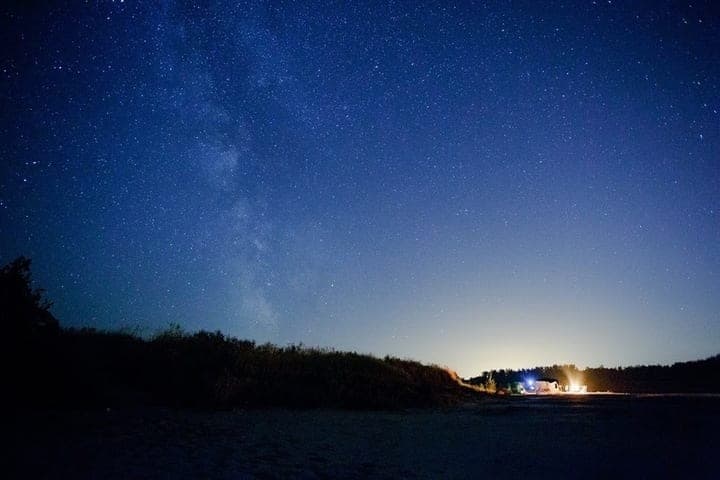
November 9 will be one of the main astronomical events of the month – the New Moon. The satellite of the Earth will completely disappear into the shadow and will not be visible in the night sky. The sky will become as dark as possible, opening a stunning view of deep space.
If you find the strength to wake up an hour or two before dawn and look to the southeast, you will find a spectacular sight: the parade of planets before dawn. There will be a great convergence of planets. The brightest Jupiter and the belligerent reddish Mars will shine side by side in the constellation Leo. And at the horizon in the predawn rays will begin their “dance” dazzling Venus and the elusive Mercury.
Due to the lack of lunar illumination, this night is ideal to view through binoculars or an amateur telescope the majestic Andromeda Nebula or the Pleiades star cluster.
The best period to observe Orion, one of the most beautiful and recognizable constellations, begins. Look for its characteristic “belt” of three bright stars and the reddish giant Betelgeuse in the eastern sky closer to midnight.


