
Live fish at fairs in Belarus: carp, amur and carp - why they are sold alive and what to do with them at home
Autumn agricultural fairs in Belarus offer live fish: carp, white amur and carp at prices from 6 to 10 rubles per kilogram. We understand why the carp is so tenacious, where the myth of the swimming bladder came from, how to humanely euthanize and clean fish correctly, and share three proven recipes.
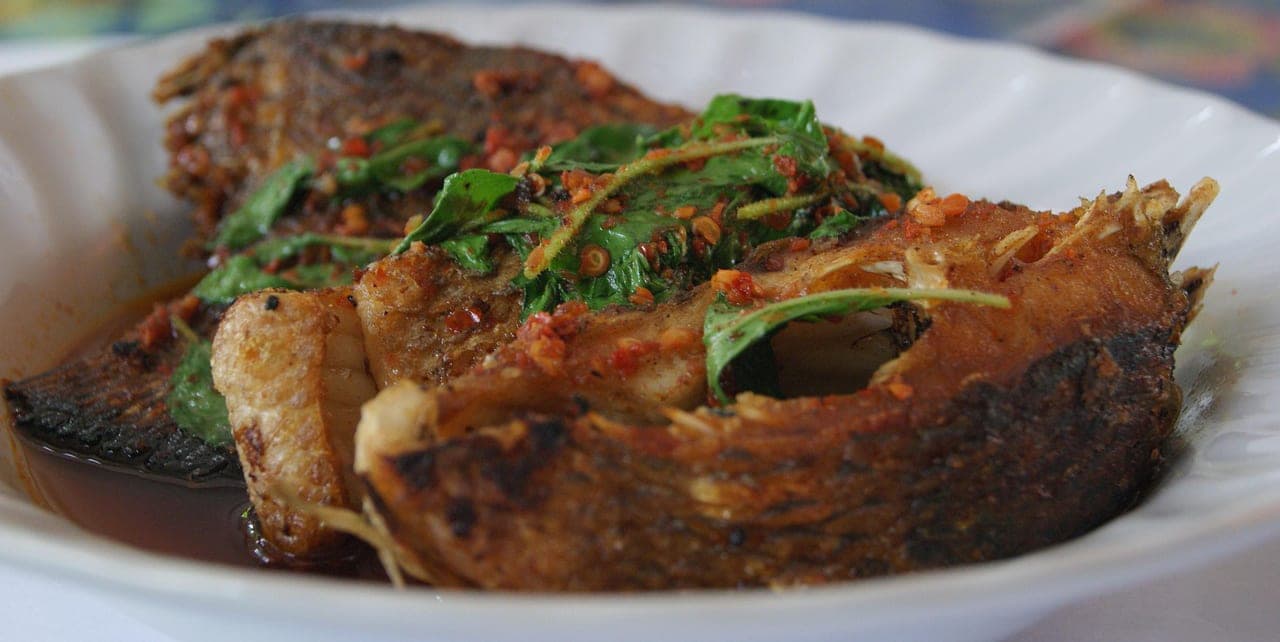
Autumn agricultural fairs in Belarus are not just bags of potatoes and mountains of cabbage. This year on the shelves everywhere appeared live fish: carp, white Cupid and carp straight from the fish tank beating tail and waiting for someone to take them home. Prices are pleasant - carp and Cupid about 9.30 rubles per kilogram, carp from 6.80 rubles. But here's the paradox: many housewives bypass live fish because they don't know what to do with it. How do I put you to sleep? How to clean so that the scales do not spread throughout the kitchen? And why does this carp live so much without water? Let's get to the bottom of it, and at the same time we'll cook three delicious dishes.
- 1.Battle for the bin: how much potatoes "Scarb", cabbage and carrots, cranberries and "Antonovka" at the fair in Mogilev
Why the carp does not die for so long and what does the bubble have to do with it
Many housewives noticed: they bought carp at the fair, brought home, and after half an hour he still pulls his tail. And in an hour. And in two. Where's this vitality coming from?
It's about biology. Carp is a fish from the carp family, and its body is able to survive with extremely low oxygen content. If the water becomes cloudy or the reservoir is covered with ice, the carp switches to a special type of metabolism: glycogen in its muscles is processed into ethanol and carbon dioxide, and ethanol is excreted through the gills into the surrounding water. Simply put, carp is able to “walk” like yeast, and thus receive energy almost without oxygen.
But there is a second factor – the swimming bladder. In carp, as in all carp, it is of an open type: it is connected with the intestine by an air duct. This means that the carp can swallow air from the surface of the water and partially use oxygen from the bladder to breathe when the gills are lacking. However, this is only an auxiliary mechanism - the gills still do the main work.
Where did the myth come from? People believe that the carp does not die without water precisely because in his swim bladder supposedly there is a reserve of “air for breathing”. The truth is that oxygen from the bubble can be partially absorbed. But that's not the main reason. The bubble is primarily a hydrostatic organ, it helps the fish to stay at the desired depth, like a ballast tank in a submarine. The real secret of carp’s survivability lies in its unique metabolism and ability to manage with minimal oxygen.
And carp kills not so much the lack of water as its own mucus: in the air it dries, hardens and glues the gill covers. Fish are literally choking on their own protection. Therefore, if the carp lies on moist grass or in moss, it can live without water for several hours, or even more.
How to humanely euthanize carp before cooking
No one likes to mess with beating fish – it is both unpleasant and inhumane. Here are three proven ways to euthanize the carp quickly and with minimal torment for the fish:
Way 1 is a head blow. Take the fish firmly by the head and deliver a strong precise blow with a heavy object (knife handle or small hammer) to a point just above eye level. The blow must be one, but strong – to instantly turn off the brain. This is the fastest and most humane method for home cooking.
Method 2 is freezing. Put the fish in the freezer for 15-20 minutes. The cold slows down the metabolism, and the carp just falls asleep. Do not hold it any longer, otherwise the meat will freeze and lose its texture.
Method 3 is salt on the gills. Folk method: sprinkle abundant salt gills. Fish quickly lose activity. Less aesthetic, but it works.
After sedation, it is better to cut the gills or make an incision behind the gill cover and lower the fish for a couple of minutes in cold water with ice - so blood flows, and the meat will taste cleaner.
How to clean the carp so as not to spread scales in the kitchen
Lifehack #1: scald with boiling water. Before cleaning, pour hot water on the carp on both sides - the scales will immediately soften and will be removed almost effortlessly. Do not hold it for long, otherwise the skin will boil. After scalding, cool the fish with cold water and you can clean.
Lifehack #2: Clean with a spoon, not a knife. A regular tablespoon works no worse than a special scraper. Move from tail to head, picking up the scales and pushing them up. The scales do not fly, but gather in one place.
Lifehack #3: Clean in the bag. Put the fish in a large plastic bag and clean right inside – all the scales will remain in the bag, not on the walls and floor.
Evisceration. First, cut the fins with kitchen scissors. Then cut the belly from the anus to the head. Take out the insides carefully - the main thing is not to crush the gallbladder, otherwise the meat will become bitter. If the bile still spilled, immediately rub the carcass with salt from the inside and rinse with cold water. Remove the dark film from the inner walls of the abdomen - it is bitter. If you leave your head, remove your gills and eyes.
Three recipes: what to make from fairfish
Carp baked in oven with onions and sour cream
The easiest and most spectacular way to prepare fresh carp is to bake it whole.
Carp - 1.3-1.5 kg, onions - 2 pcs., sour cream - 200 g, lemon - half, salt and black pepper - to taste, vegetable oil - 2 tbsp. l, a bundle of dill.
Peeled and gutted carp rub salt and pepper inside and out, sprinkle with lemon juice. Slice the onions with rings, lightly roast the oil and lay inside the abdomen. Lubricate the fish with sour cream on top. Lay it on a bowl covered with foil, and bake at 180 ° C for about 45-60 minutes. 10 minutes before readiness, you can once again lubricate sour cream for crust.
Lifehack: so that the carp does not stick to the foil, lubricate the foil with oil or put the fish on a pillow of onion rings - they will not let it burn and add aroma.
White Cupid, fried in a pan
Amur is a large fish, with dense meat, great for frying with steaks.
White Cupid - 1-2 kg (5-6 steaks), flour - 150 g, salt, black ground pepper - to taste, vegetable oil - 3-4 tbsp. l.
Cut the fish in portion pieces 2-3 cm thick. Sprinkle and pepperchit by rubbing the spices with your hands into each steak. Leave to salt for 30-40 minutes. Crank in flour. Roast on a strong heat for 3-4 minutes on each side until the golden crust, then reduce the fire, cover and bring another 10-12 minutes on each side. First fry on a strong one - for crust, then on a medium under the lid - to roast inside.
Lifehack: do not put steaks tightly together – there should be space between them, otherwise the fish will not roast, but stew.
Also, Cupid steaks can be fried on the grill, it will be very tasty. Preliminary fish can be marinated in a mixture of sweet paprika, black pepper, olive oil and salt.
Pickled carp – a fish that is stored for a week
The fathead is the most budget fish at the fairs, but it makes a great snack that stays in the refrigerator for several days.
Fatty - 2 kg (steaks), water - 1 liter, salt - 125 g, sugar - 125 g, vinegar 6% - 125 ml, onions - 3 pcs., vegetable oil - 150 ml, black pepper with peas - 10 pcs., bay leaf - 3 pcs.
Cut the fish into pieces about 1.5 cm thick. Boil a marinade: add salt, sugar, pepper and bay leaf to the water, bring to a boil, cool and pour vinegar. Fill the fish with marinade and leave it in the refrigerator for 24 hours. Then drain the marinade, add the ring-chopped onion and vegetable oil, stir and let it brew for another three hours.
Lifehack: If you do not like vinegar smell, replace some of the vinegar with lemon juice - the fish will be softer and more aromatic. And so that the bones in the pickled fish are not felt, keep it in the marinade for at least a day - the acid softens even small bones.
Live fish at fairs is not exotic, but a great opportunity to buy fresh, high-quality product at a price below the store price.
Read also:
- 1.Farm fairs in Minsk will work until December 6 – in good weather
- 2.Fair as a small holiday: where in the Minsk region will be held autumn agricultural fairs and what they will surprise
Photo: Pixabay / is illustrative


