
Banner of Belarus 1939 from the collection of Vladimir Lihodedov transferred to the National Museum of Belarus
The solemn ceremony of transferring the banner of Belarus in 1939 from the private collection of historian Vladimir Lihodedov to the National Museum of Belarus.
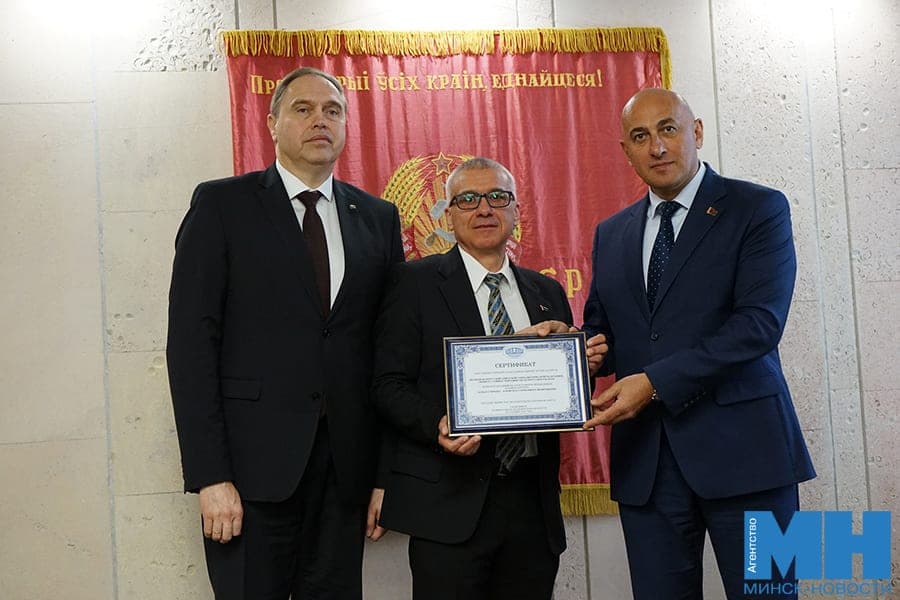
The solemn ceremony of transferring the banner of Belarus in 1939 from the private collection of historian Vladimir Lihodedov to the National Museum of Belarus was held at the National Academy of Sciences in Minsk on September 29, the correspondent of the Minsk-Novosti agency reports.
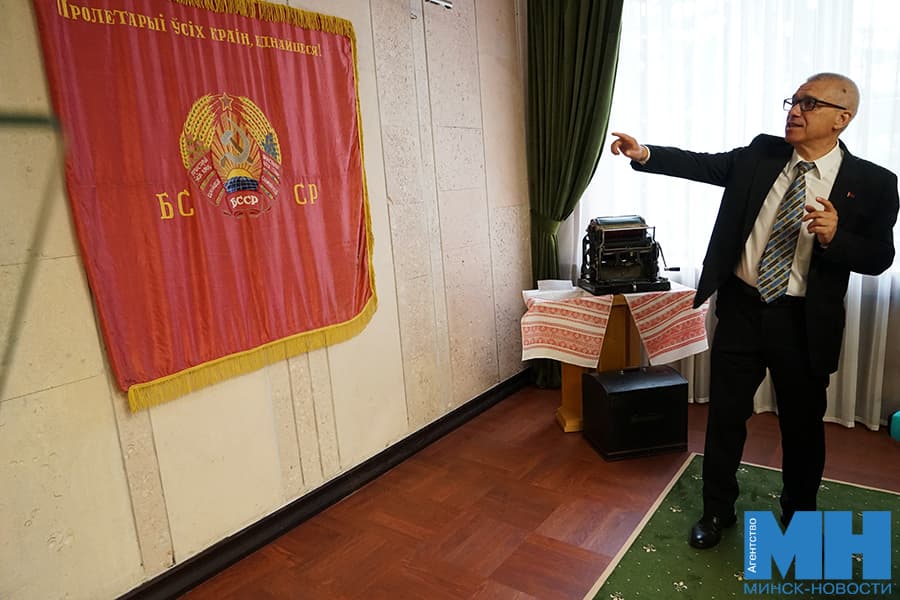
Since the age of 10, he has been collecting relics and artifacts related to the history and culture of Belarus. Many of them were lost in the twentieth century during the First World War, the Great Patriotic War and even as a result of the collapse of the USSR. V. Likhodedov collects them throughout the former Soviet Union, in Poland and Germany.
The banner of the BSSR of 1939 is by no means the oldest rarity in the collection of V. Lihodedov, but one of the most valuable. For the history of Belarus, 1939 is a landmark year. On this date, as a result of the Red Army campaign, the reunification of Western Belarus with the BSSR took place.
- The banner and portable printing machine used by Belarusian underground workers were found in Bialystok back in the 1990s, the collector explained. This region of modern Poland from 1939 to 1944 was part of Belarus. One of the symbols of the unification of the Belarusian people in 1939 was the banner of the BSSR. In those years, banners were embroidered by hand, so it is unique in itself.
According to V. Lihodedov, historians have argued a lot about the date of origin of the banner. There were opinions that its design is typical for the second half of the 1940s. However, the collector and his associates managed to find research and evidence that confirmed that before the Great Patriotic War, the sheaf on the coat of arms of the BSSR was framed both with flowering linen and with its boxes.
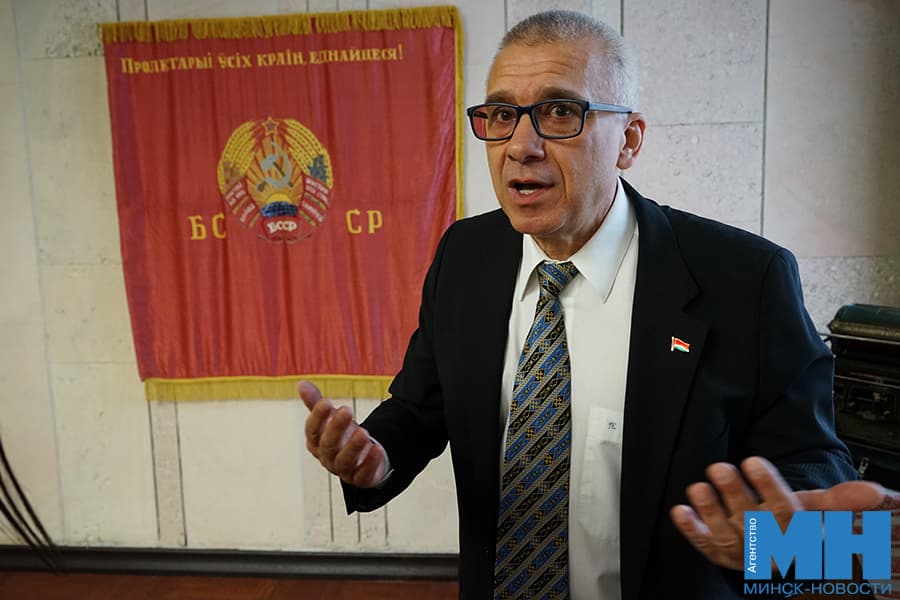
The date of origin of the flag is another important nuance for the history of this relic. Belarusian underground fighters managed to preserve it even during the Hitler occupation, when the possession of any symbol of Soviet power was punishable by death. And this is a vivid confirmation of the dedication of the Belarusian people and how much it meant for them to get rid of forced polarization and reunification with Eastern Belarus.
- Why did you decide to transfer the banner and typographical typewriter to the National Museum?
- I have been collecting for more than 50 years, Likhodedov said. I have seen many cases in my life where collections were lost after the death of a collector. I wish that my work would not be lost and that these findings would reveal our true history for future generations of Belarusians. The main condition is that the artifacts should “work”, and not be dusted in the vaults of museums. Under such conditions, I am transferring part of my collection to be either exhibited to the general public or used for research by scientists. Then I, as a collector, get the satisfaction of my work to bring back cultural property.
Chairman of the Presidium of the National Academy of Sciences of Belarus Vladimir Karanik and V. Likhodedov presented the Minister of Culture Marat Markov with a special certificate confirming the authenticity and date of origin of the banner. As the minister assured, this relic, together with the typewriter, will take a worthy place in the exposition of the National Museum of Belarus.
For reference
Historian and researcher V. Likhodedov is the author of 56 books-albums on the history of Belarus and the author of the project “Batskaшshchyna – in search of the lost”, the winner of the Presidential Prize “For Spiritual Revival” and the Union State Prize in literature and art.
Photo by Alexander Morunov


