
The zoologist suggested what to do when meeting with a moose during the gong
Moose change before their eyes every autumn - and that's not a metaphor
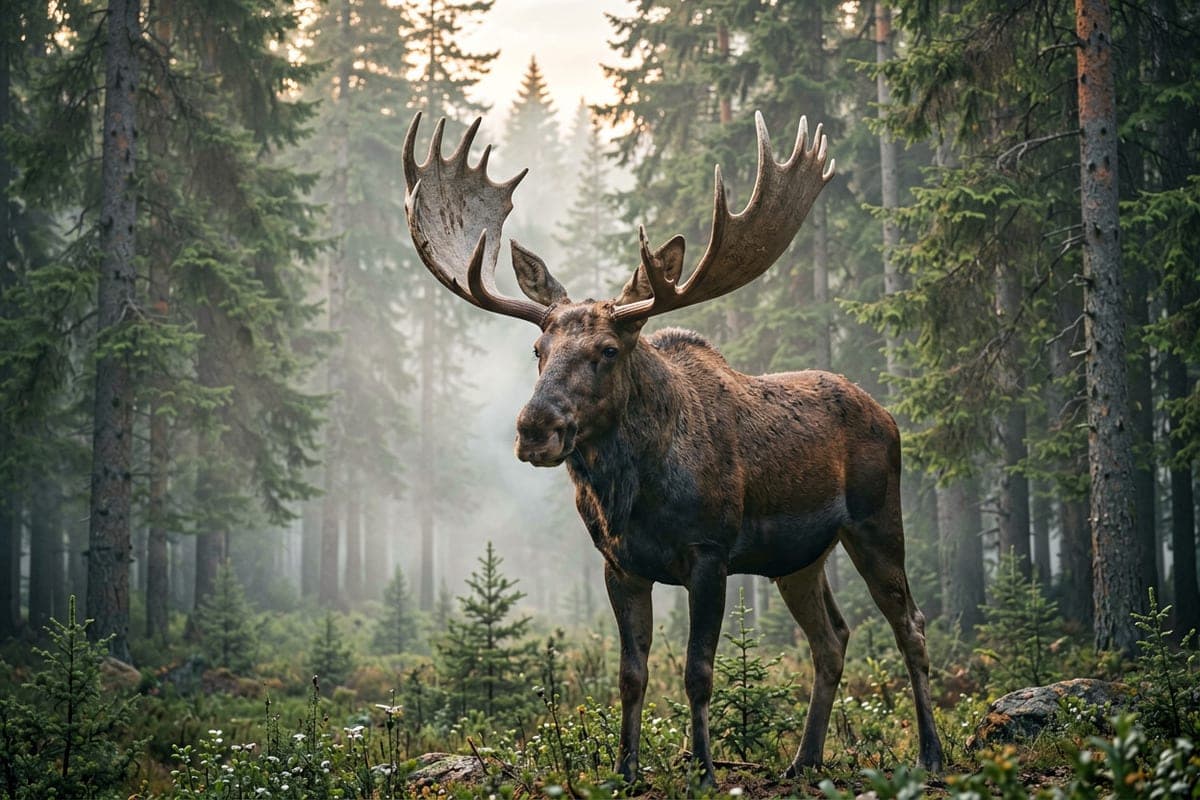
Every autumn, moose change before their eyes - and this is not a metaphor. These animals peak in September and the first half of October, although the first signals of new behavior were recorded in late August. How during this period the nature of forest inhabitants changes, explained Yuri Petrunenko, associate professor of the Department of Zoology and Genetics of the Faculty of Biology of the Herzen RSUPU.
The specialist clarifies: moose are not so much angry as excited, mobile and much less compliant. This is especially noticeable in adult males. But it would be a mistake to think that the gon turns an animal into one who throws himself at every passerby for no reason.
The threat occurs when a person reduces distance too quickly, tries to chase a moose, or cuts off its path to retreat. A dangerous reaction is also caused by attempts to approach for the sake of the frame, circumvent the animal, take it away with noise or objects.
The biologist emphasizes that the male does not see an opponent in any large object. Neither a man nor a machine is normally perceived by him as another male. But a rapid approach, the position between animals or a hopeless situation - and the moose may regard this as a direct threat. Do not imitate the voice of the moose: in the midst of the race, such a sound can attract a male.
The excitation of the animal is indicated by the ears pressed back, the fur at the withers, the lowered head, licking the lips, blows with a hoof or a slow movement towards a person.
If the moose noticed you, but does not shorten the distance, it is better to freeze and calmly retreat, leaving him a free corridor. Approaching, treating an animal or standing between it and the forest is unacceptable.
A dog running without a leash may be considered a potential predator. Therefore, the pet is kept on a short leash and not allowed to approach the wild beast.
In the gong, males are actively looking for females, move more and often leave the usual areas. They leave smelly marks, rake the ground with hooves, make characteristic deaf sounds. When meeting each other, males assess the dimensions and habits of the opponent. Usually, such contacts are limited to the demonstration of strength and the retreat of the weaker. But between equal males, real fights are possible.
Yuri Petrunenko debunked the popular misconception that moose get out on the roads because of loss of orientation. The animal does not lose its ability to navigate. During the race, males simply move more often and further in search of females - hence the increased likelihood of crossing highways. Seasonal migration and resettlement of young animals coincide with the same period. At other times, moose attract roadside plants and minerals, and in winter - cleared roads, which are easier to move.


