
Zoological Museum of BSU replenished its collection with a unique coral, which is about 400 million years old
The collection of the Zoological Museum of the Belarusian State University has been replenished with a unique coral about 400 million years old. This was reported by sb.by...
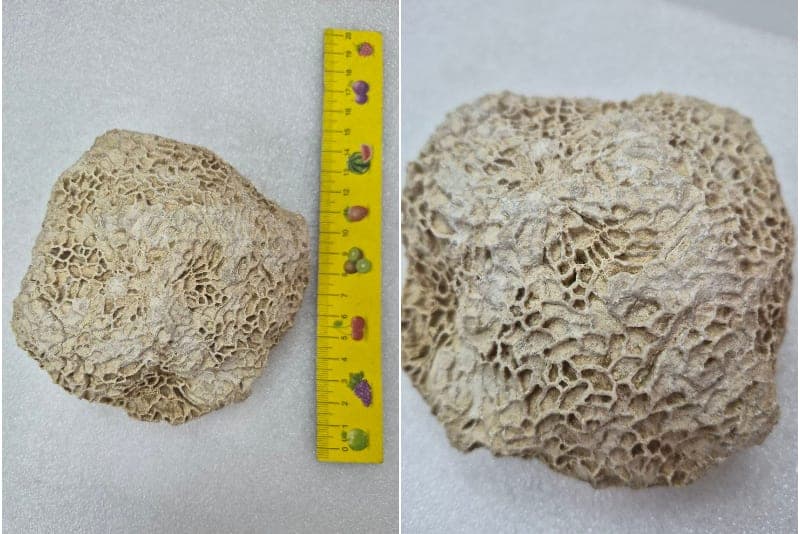
The collection of the Zoological Museum of the Belarusian State University has been replenished with a unique coral about 400 million years old. This sb.by reported in the press service of BSU.
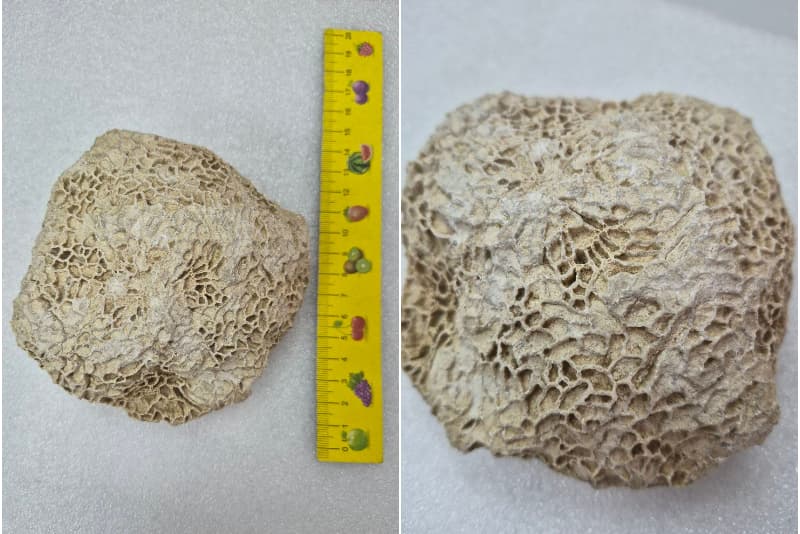
The press service said:
- This coral was discovered by a fifth-grader of the Churilovych secondary school of the Minsk district Konstantin Zaichenko during a walk along a field road in Machulischi. Recently, he and his parents visited the zoological museum of BSU, and after the tour decided to donate the fossil to the university. The assumption about the age of the coral found was put forward by a graduate of the biological faculty, Candidate of Biological Sciences Yuri Zaika. The expert devoted his scientific work to the study of extinct corals. According to his preliminary assessment, the fossil belongs to the Paleozoic era, and the coral came to Belarus during the ice age. To confirm this hypothesis in the near future will conduct a special examination.
Currently, the exhibition includes more than 30 species of coral of modern and prehistoric fauna. According to the head of the museum Alexander Balash, the gifted exhibit will be the most ancient and massive coral among the presented.
Zoological Museum of Biological Faculty of BSU was established in 1921. Now the exposition has more than 4500 samples. Among them are pre-revolutionary zoological objects, numerous tropical insects, stuffed red wolf, wandering albatross, ostrich, hyacinth macaw, chimpanzee, soup turtle, walrus, etc. There are seven exhibition halls located in the evolutionary order of the appearance of living organisms from the simplest to mammals: the hall of evolutionary teaching; the hall of invertebrates; the hall of fish, amphibians and reptiles; two ornithological departments; the hall of mammals; paleontological and osteological departments.


