From a makeshift court to a global phenomenon. How the Padel was born
Padel was invented in 1969 by a Mexican businessman and his wife, who did not have a tennis court in the yard. It is now played in more than 150 countries. He came to Russia in the 2010s, and now he is experiencing a real flowering
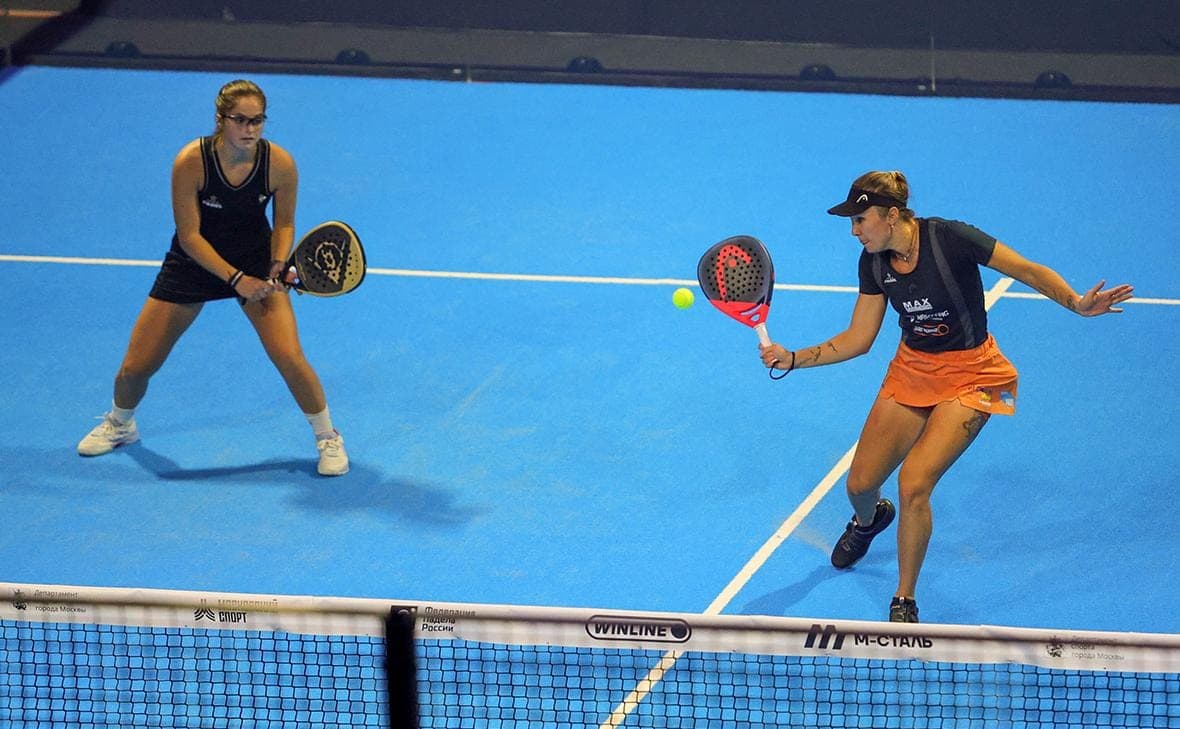
Fallen "younger" than many other sports, but in a little more than half a century managed to go from the passion of the Mexican businessman and his friends to world recognition and claim to Olympic status. How there was a padel and what made it popular - in the material RBC.
How did the Padel begin
In 1969, the influential Mexican businessman and tennis lover Enrique Corcuera, who did not have enough space in the backyard of his house in Acapulco for a tennis court, equipped a smaller court - 20x10 m in size - and surrounded it with three-meter concrete walls.
It was impossible to play classical tennis on such a court. Then Corcuera's wife Viviana, the former Miss Argentina, who was also a fan of tennis, created a set of rules based on elements of tennis and squash, and gave the guide to her husband for his birthday. That's how the padel started.
Originally, the Padel did not spread, remaining the hobby of the Corcouer couple and their friends. The entrepreneur met many businessmen and politicians both in Mexico and abroad. In particular, he was visited by American singer and actor Frank Sinatra and Henry Kissinger, who served as national security adviser and then US Secretary of State.
Moving to Spain and Argentina
Among Corcuera's friends was also the Spanish aristocrat and businessman Alfonso Hohenloe-Langenburg. In the early 1970s he visited Acapulco and also got acquainted with the Padel. The entrepreneur liked the game so much that on his return to Spain, he opened padella courts at his Marbella Club hotel in Marbella.
At first in Spain, the Padel also did not receive much distribution - it was played for the most part by wealthy hotel guests and local aristocrats. However, King Juan Carlos, who was then on the throne, and former Wimbledon champion Manolo Santana, also keen on the game, helped its promotion. Since the early 1980s, the padella has spread throughout the country.
In the 1970s, another important event occurred - the Argentine Julio Mendetegui, a member of the Hohenloe tennis club in Marbella, took an interest in the padel and eventually took up distribution on his return to his homeland. The first courts in Argentina opened at the elite club Tortuga in Buenos Aires, starting to pop up quickly in other parts of the country soon after.
Expansion and radical change
During the 1980s, the padel spread beyond Spain and Argentina, also reaching France, Brazil, Uruguay, Chile, the United States and Canada, and in 1988 the first professional organization of the sport, the Association of Padel Argentino (APA). In the same year, the first international match between Spain and Argentina took place in the Argentine Mar del Plata.
The following year, Argentinian coach Jorge Galeotti of Mar del Plata made a change to the padel, which had an invaluable impact on the growth of his popularity - the walls of the court changed the material from concrete to glass. Since then, a significant obstacle has disappeared that prevented watching the game from the sidelines. In addition, glass walls, unlike concrete, could be removed and transported.
Federation and uniform rules
On July 12, 1991, the APA and the Padella Associations of Spain and Uruguay established the International Padel Federation (FIP). FIP has set the standard for the Padel World Championships every two years, with the first competition being held in 1992 in Madrid and Seville, Spain.
Despite the creation of an international body, the rules of the Padella continued to vary from country to country. However, in 1997, Barcelona signed an agreement on common rules, also unifying the Latin name padel (in Argentina until then, the game was called paddle, sometimes this name is still used in the United States and Canada).
By the late 1990s, there were 11 national federations of the Padella, five in Europe and six in the Americas.
Padel League Radio RBC is more than just a sport. It’s not just how you play, but who you share the court with. It is an environment where managers, entrepreneurs and industry leaders meet to broaden the circle of communication and open up new opportunities through networking.
Join the Padel League of RBC Radio.
Development after the Millennium
In 2000, the first youth world championship in the Padel was held. Initially it was supposed to be held annually, but since 2003 the frequency has changed every two years on the model of the main competition.
In 2006-2012, the first professional Padel Pro Tour (PPT) was established with the money of private investors. In 2013, it was replaced by the World Padel Tour (WPT), and in 2024 it was replaced by the Premier Padel. In 2019, FIP launched its own regular tour, the CUPRA FIP Tour.
By the end of the 2010s, more than 40 national padella federations had joined the FIP.
In 2021, FIP launched FIP Promises, a youth tournament for boys and girls in the under-14, under-16 and under-18 categories. In 2025, the category of players under 12 years was introduced. By 2023, 70 affiliated federations and more than 160 international tournaments worldwide had been reached.
Launched in 2022, Premier Padel became the official global professional tour under the auspices of FIP. By 2024, it included 24 tournaments in 16 countries.
Fallen these days
As of 2026:
The FIP includes 100 national federations of the Padella. Padel is played in more than 150 countries; There are about 35 million amateur players in the world.
In 2026, FIP introduced a new format for the junior tour, launching four continental FIP Promises tours to develop young talent around the world. From April 2026, FIP will launch FIP Beyond, a series of tournaments designed for amateur players. The federation also officially recognized and took over the Hexagon World Series, a global team series of Padel tournaments now integrated into the official FIP calendar.
Padel's arrival in Russia
According to the Federation of the Padella of Russia (FPR), the first sites began to appear in the country in the early 2010s. They were created by enthusiasts who were inspired by international experience. From that moment clubs and communities of the Padella appeared, the first amateur tournaments began to be held.
The heyday of the cartel in Russia began in the 2020s and continues to this day. Its popularity is growing among sports enthusiasts and professional athletes, as well as families and young people due to its accessibility.
In 2024, the Ministry of Sports of Russia officially recognized the FPR as the regulator of this sport in the country.
As reported by RBC in the Federation of the Padella of Russia, by the end of the summer of 2026 in the country there are already more than 1,000 padel courts in 300 clubs, while at the end of 2024 there were about 230 courts, and at the end of 2025 — about 600. At the same time, about 500 more are at different stages of planning and construction and should open within the next year, and during 2027 the number of active padel courts in Russia should exceed 1.5 thousand.