When to change tires for winter in Belarus in 2026: the law, nuances and rules of choice
We understand what the law says in 2026, when it is actually worth going to tire mounting and how to choose the right set of rubber.
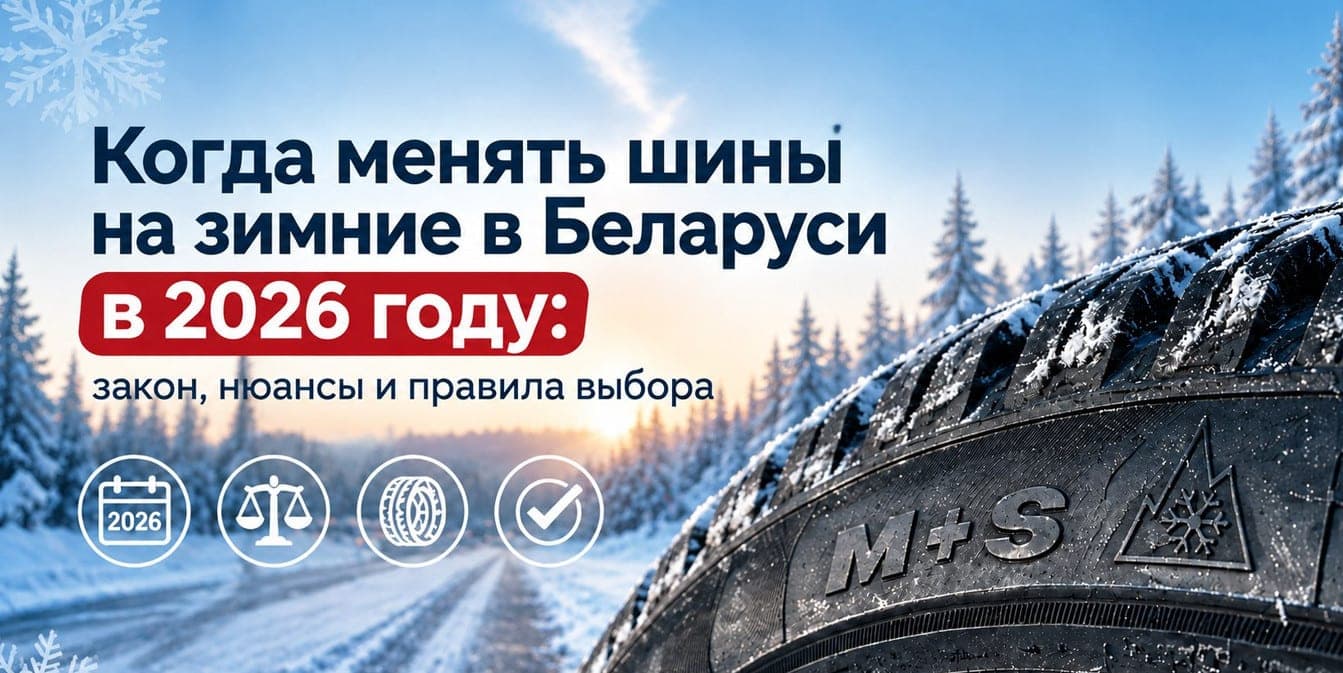
With the onset of autumn, Belarusian car owners traditionally face the issue of seasonal tire change. Operation of the car in the off-season and winter requires special preparation, because safety directly depends on the grip of the wheels with the road.
We understand what the law says in 2026, when it is actually worth going to tire mounting and how to choose the right set of rubber.
1. What the law says: Official deadlines
In Belarus, the rules of seasonal change of wheels are clearly regulated by the Rules of the road:
- 1.Mandatory period: According to traffic rules, cars must be put on winter tires between December 1 and March 1.
- 2.Marking: Tires marked as a mountain peak with three peaks and a snowflake inside it, or with the signs “M+S”, “M&S”, “M.S”, “M S” are allowed. If the wheel simply says “All seasons”, but there is no “snowflake in the mountain”, the traffic police will write a fine.
- 3.Tread height: The residual height of the winter rubber tread pattern shall be at least 4 mm. This requirement applies to all wheels of the vehicle.
- 4.Fines: For driving a vehicle in violation of these rules (after December 1 on summer or “bald” winter tires), administrative liability in the form of a fine is provided. Repeated violations within a year will result in a more severe punishment.
2. When to change rubber in fact: the rule of +7 ° C
Waiting for December 1st to upgrade your car’s shoes is a dangerous strategy. Summer tires begin to rapidly lose their coupling properties (take) even when the average daily temperature drops below +7 ° C.
- 1.October - November: The optimal time for a trip to the tire fitting in Belarus is the end of October or the first half of November, when stable morning frosts begin.
- 2.Why in advance? First, you’ll avoid the huge queues and seasonal rises in tire prices that traditionally occur on the day of the first snowfall (“tinner’s day”). Secondly, you will be safe during the unexpected morning ice on bridges and overpasses.
3. Which tires to choose: spikes, "European" or "Scandinavian"?
Belarusian winter in recent years has become unpredictable – from slush and rains to severe frosts with heavy snowfalls. The choice of tread type depends on your main routes.
European type ("Eurowinter")
- 1.For what: Ideal for large cities (Minsk, regional centers), which are regularly cleaned of snow and treated with reagents.
- 2.Pros: They behave well on wet asphalt, well drain water and melted slush (slush), do not make noise on the track.
- 3.Cons: Pass before deep loose snow and clear ice.
B. Scandinavian type (Velcros for harsh winters)
- 1.For what: The best choice is if you often travel outside the city, live in the private sector or often travel on uncleared roads of regional importance.
- 2.Pros: The soft composition of rubber (“Velcro”) perfectly clings to rolled snow and ice even in severe frost. Abundant tread pattern helps to “scrap” from snowdrifts.
- 3.Cons: On dry warm asphalt, they wear out faster and may seem unnecessarily “soft” when maneuvering.
B. Stud tyres
- 1.For what: Maximum protection on clean ice and country ice tracks.
- 2.Pros: Minimum stopping distance on the ice crust.
- 3.Cons: In Belarus, spikes most of the time will be in contact with bare asphalt, which increases the noise level, increases fuel consumption, and the spikes themselves fly out over time. In addition, studded rubber is prohibited from entering many European countries.
4. Useful tips before the season
- 1.Check the year of issue: Even if the tread looks new (for example, the wheels have been in the garage for a long time), the rubber ages over time. The average safe life of a winter tire is 5-6 years, after which the composition dries and loses elasticity.
- 2.Proper Storage: Keep removed summer tires in a cool dry place. Tires without discs are better stored vertically, periodically turning over, and the wheels assembled (on disks) are folded in a stack or suspended.
- 3.Balancing is mandatory: Each time before installing the kit (even if it was stored on second disks), do the balancing on the checked machine. This will save the suspension from breaking and prevent the steering wheel from beating.
Timely replacement of wheels is your contribution to accident-free driving and peace of mind on the winter road.
See also:
Preparation of the car for the autumn-winter season: checklist of antifreeze checks, battery and wiper brushes
How to check traffic police fines on the base of the Ministry of Internal Affairs in Belarus: a step-by-step guide without “letters of happiness”