Mobilization of police, armored cars in the streets, arrests – protests in France
On October 24, protesters clashed with police in the capital and other cities of France. The authorities have increased security measures in advance, and a number of...
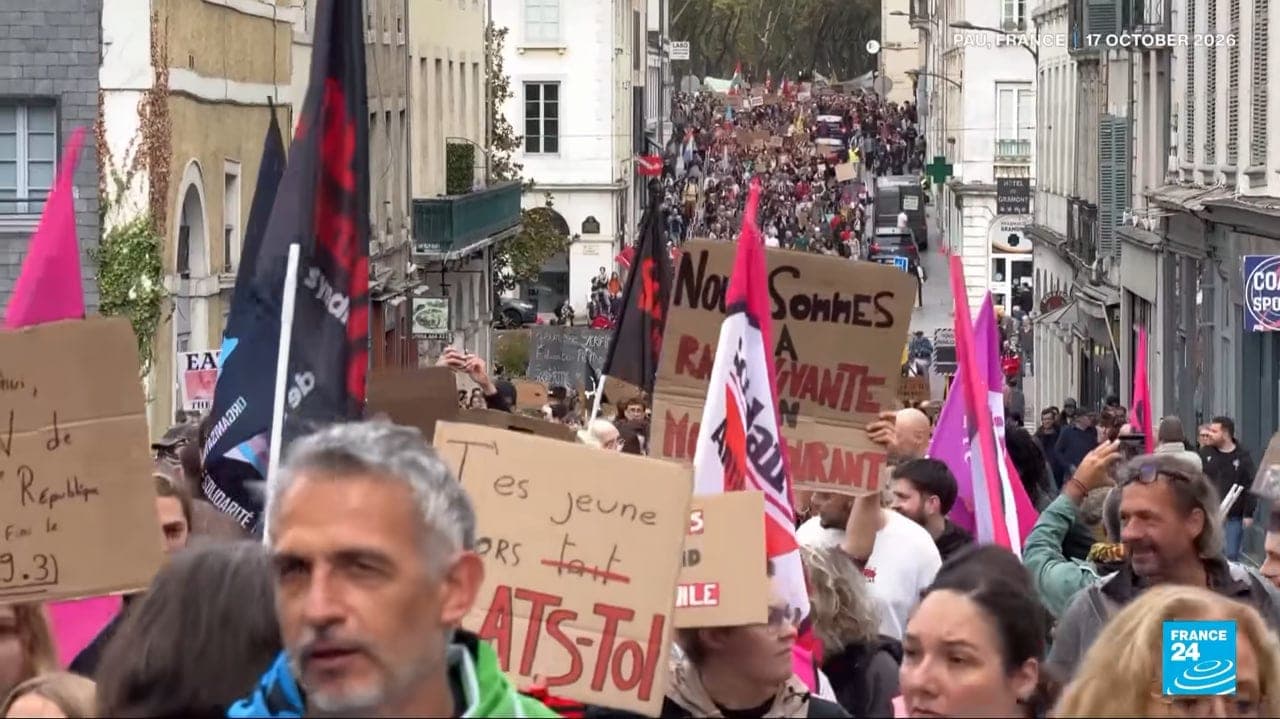
On October 24, protesters clashed with police in the capital and other cities of France. The authorities have increased security measures in advance, and a number of museums and metro stations suspended work on Saturday, a correspondent of the agency “Minsk-Novosti”.
Photo by France24
According to BFMTV, about 70,000 law enforcement officers were deployed across France on the eve of new demonstrations due to the rising cost of living and problems in the field of education. In Paris, two dozen metro stations were closed in the morning, major museums suspended work. The Louvre saw the military with weapons, at the Elysee Palace – armored vehicles of the gendarmerie and employees in equipment.
Parisian shopkeepers were preparing for the hot weekend, closing windows with wooden panels and taking action against possible new looting. In mid-October, protests in France turned into riots with car fires. The attackers also damaged or looted about 3,000 stores across the country.
If on October 17, more than half a million people took to the French streets, then on October 24, the Ministry of Internal Affairs of this country counted 410,000 protesters, and the CGT trade union (General Confederation of Labor) estimated their number at 800,000, and only in Paris - at 110-250 thousand, Marseilles - 17-100,000.
There were no clashes this time. According to BFMTV, after peaceful demonstrations in various cities, clashes between hostile groups and law enforcement forces were recorded. In Paris, after the demonstration against some of its participants, the police used tear gas and water cannons. In Saint-Étienne, several hundred people blocked the A72 motorway.
In Grenoble, about 400 unidentified men in masks and black clothes attacked police with pyrotechnics. Measures have been taken to arrest violators. In Bordeaux and Lille, there have also been incidents of police being attacked and objects thrown at them. In Lyon, mass gatherings were banned in a number of places, but some people in hoods and masks tried to enter such places - tear gas was used. The police tried to respond to any attempts to erect barricades or throw objects. In Marseille, shops were looted.
French Interior Minister Laurent Nunez said about 1,000 arrests had been made by 19:30. He believes that number will rise. A week earlier, there were fewer than 400 arrests at the same time. Nunes explained that the processions were generally good, but, as expected, some risky groups of people formed who separated and attempted to commit acts of violence. He stressed that these people could not get into the city centers. According to him, attacks on public buildings were also prevented.
According to media reports, mass street rallies on Saturday took place in other European countries. The processions were observed in Rome, Turin. In the center of Brussels, after calls in social networks, young people gathered to express dissatisfaction with the government's policy. During the protest movement, there were brief clashes with police. Her staff used pepper spray and detained several people for disturbing public order.