
Global bad weather: how the global financial crisis will affect Belarus, and whether the ruble will stand
It often happens that with the onset of autumn on the global financial market comes bad weather. In the current ...
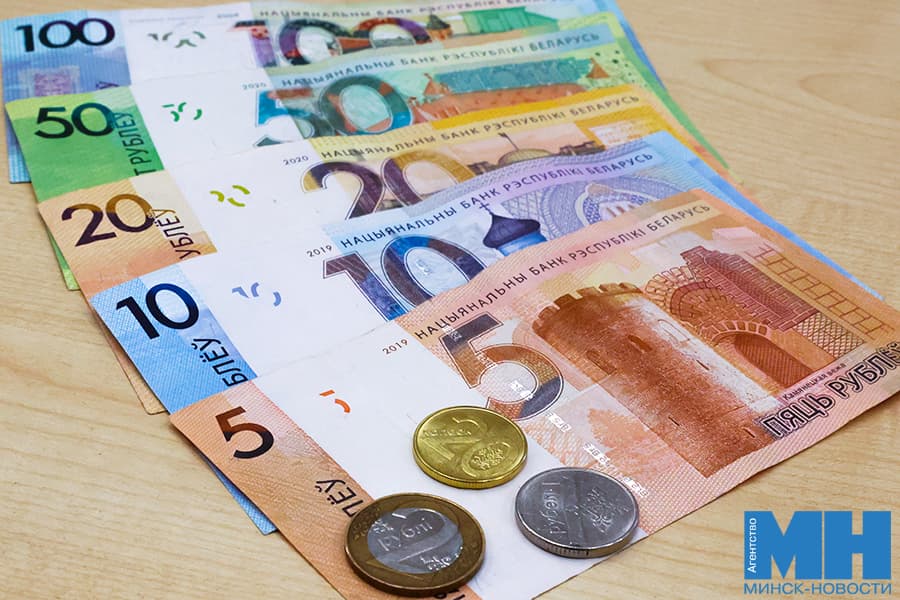
It often happens that with the onset of autumn on the global financial market comes bad weather. This year the situation repeats itself. What caused this time and what may be the consequences for the Belarusian foreign exchange market, - in the material of the correspondent of the agency "Minsk-Novosti".
September’s volatility, which is storming the global financial market, is this time linked to rising inflation across the global economy. In developed countries, such as the United States, the latest consumer price index growth is in the range of about 3.4%, well above the 2% target. Moreover, indicators are slowly but steadily increasing.
All this leads to the fact that the world’s largest central banks are forced to raise interest rates or, in other words, tighten monetary policy. And this, in turn, leads to an increase in the cost of national currencies and an increase in the cost of credit.
For example, a week and a half ago, the European Central Bank raised the rate by 0.25 percent, and then, after a three-year cycle of easing, the US Federal Reserve raised the interest rate. After that, the main currency pair EUR / USD safely falls to the level of 1.1360, and the yield of the most popular ten-year US government bonds reached a maximum in twenty years - 5.227 %.
A month and a half ago, the US national debt crossed the threshold of $ 40 trillion, the yield of ten-year securities was then about 4.7%. The United States annually spends more than $ 1 trillion on servicing (interest payments), and it is quite simple to calculate that a half-percent increase in the yield of government bonds increases the debt burden by at least $ 5 billion.
But what causes inflation to gain momentum and is it possible to reduce inflation? The answer is simple – it is dispersed by prohibitive prices for automotive fuel. And gasoline (aviation kerosene, diesel and marine fuel oil) is rising in price following the rise in crude oil prices. The latter does not want to become cheaper amid ongoing problems with oil supplies from the Middle East and restrictions on fuel exports from Russia.
Thus, the current geopolitical situation affects the global financial market and the Belarusian currency market along the chain. In our case, we see that the dollar exchange rate has been stuck in a narrow corridor around USD/BYN 3.025 for the past two weeks. On the one hand, the Belarusian market is fundamentally influenced by the change in the dollar exchange rate in the Russian OTC market, where the American trades about 84 RUB. On the other hand, the impact of global trends on the strengthening of the “buck”. At least, the EUR/USD currency pair in the Belarusian market is declining to 1.140, although at the end of August it was trading around 1,166.
So, what are the possible scenarios? It is obvious that everything today rests on the resolution of the Middle East conflict. The opening of free shipping in the Strait of Hormuz and the unblocking of the second route through the Bab el-Mandeb Strait will definitely fill the oil market and reduce prices. Not immediately, but gradually, this will weaken inflation and allow central banks to deploy monetary stimulus towards easing. This, in turn, will destroy the dollar.
It is obvious that the current US administration is deeply interested in such a solution, which is in the midterm elections to Congress on November 20 this year. With two months left, time is working against Trump, but so far the wagon is still there.
Thus, the current situation will continue for the next month or two. Any sharp changes in the domestic foreign exchange market in this case are unlikely, the exchange rates of the Belarusian ruble to the main foreign currencies remain close to current values. Further developments will tell time.