The first stage of creating a unique plantation of Karelian birch has been completed
Segezha Group in partnership with the Ministry of Natural Resources of the Republic of Karelia and the Karelian Scientific Center of the Russian Academy of Sciences develops a forest plantation of Karelian birch
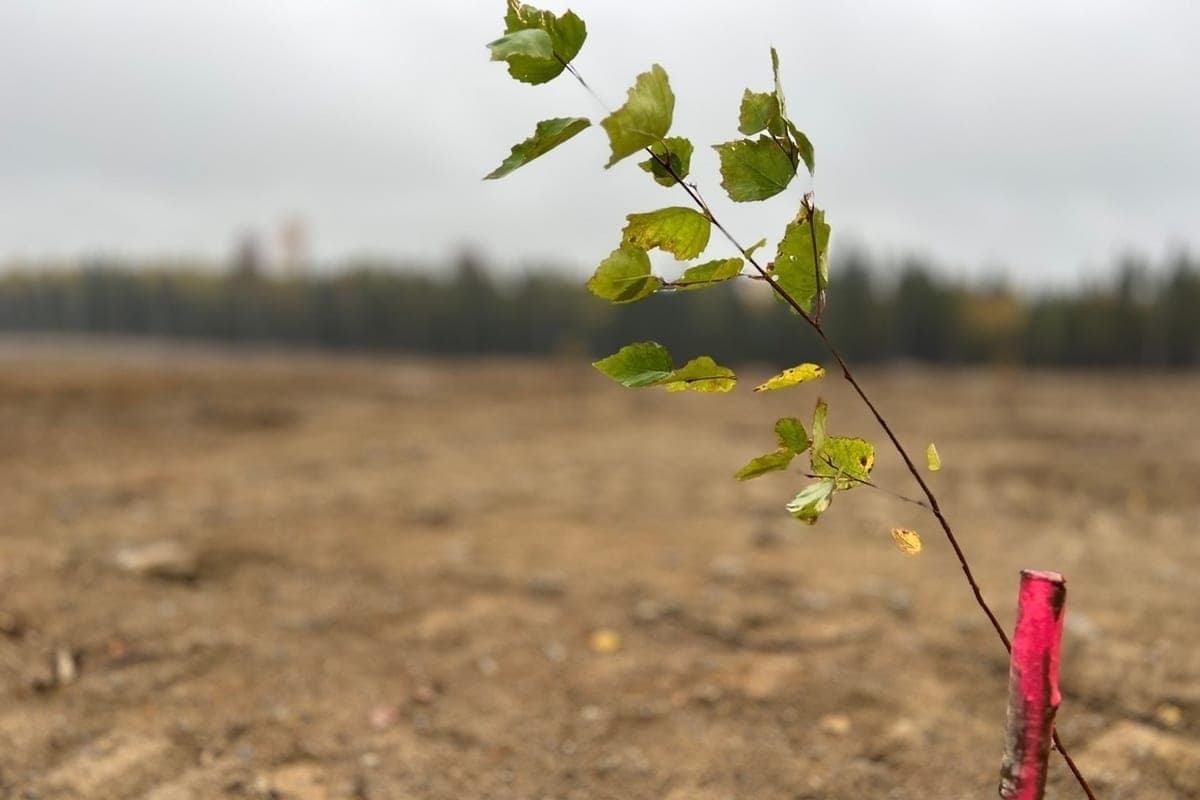
Segezha Group in partnership with the Ministry of Natural Resources of the Republic of Karelia and the Karelian Scientific Center of the Russian Academy of Sciences develops a forest plantation of Karelian birch. The project is being implemented in the Medvezhyegorsky district of the Republic of Karelia in order to protect and increase the population of a rare tree in Russia. The plantation farm of the holding for 22 hectares in the Pindushsky district forestry is successfully growing: the first thousand seedlings have taken root in the forest soil. By 2030, it is planned to plant several thousand more young trees.
“Plantation of Karelian birch is a very important project for us. With all responsibility we conduct proper agrotechnical care of the site. We carry out the full scope of work – from soil preparation and planting scheme to forestry activities and supplementing plantings if necessary, says Evgeny Batalov, Member of the Management Board, First Vice President, Head of the North-West Division of Segezha Group. Our holding actively participates in programs for the conservation of valuable tree species in the regions where it operates, contributing to the conservation of vulnerable ecological systems.
Seedlings for plantation are grown by an innovative method of clonal microreproduction in the laboratory of forest biotechnologies of the Institute of Forests of KarSC RAS. In the coming years, the employees of Segezha Group, with the participation of scientists, will carefully monitor the condition of plantations and study the features of the development of young trees in natural conditions.
Karelian birch with its unusual marble texture is one of the symbols of the Republic of Karelia. The development of the plantation will help to increase the population of these rare trees, and long-term observations will allow to assess the survival and specificity of the growth of innovative planting material in the Karelian forest. For Segez Group, this is practical work on the preservation of natural heritage and sustainable forest management.