Packaging manufacturers report critical situation due to three factors
The Union of Plastics Recyclers has asked for a delay in raising ecocollection ratios in 2027 due to risks of an "unprecedented" financial burden on the industry. The Ministry of Natural Resources reminded that the purpose of the ROP is not eco-collection, but waste disposal
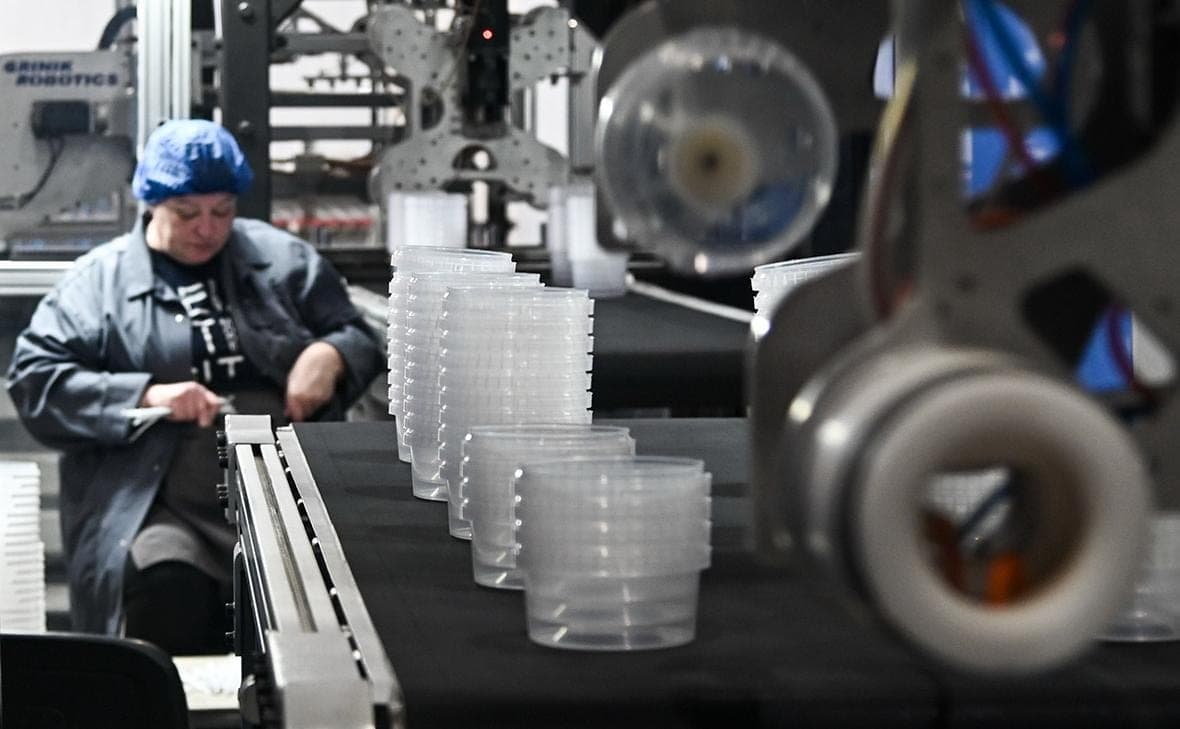
The Union of Plastic Recyclers (UPP) asked not to increase the coefficients to the environmental fee rate in 2027 and keep them at the level of the current year. An appeal with a request to support such a proposal was sent on October 6 to Deputy Prime Minister Dmitry Patrushev. A copy of the document is at RBC, the SPP confirmed its sending.
RBC sent a request to the press service of the government and the office of Deputy Prime Minister Dmitry Patrushev.
SPP unites companies that produce finished plastic products, mainly packaging and packaging – more than 100 companies in total (including Russia’s largest polymer manufacturer Sibur). The Union points out in a letter to the Deputy Prime Minister that the situation is “critical” for the industry: from January 1, 2027, three factors come into force, which together create an unprecedented financial burden for the enterprises of the polymer industry:
Raising the recycling rate from 75% to 100%
Indexation of the base environmental fee rate by 4%
Entry into force in full increasing coefficients to eco-collection, postponed by the government decree for 2026.
As a result, the financial burden on the industry will increase by 122% for polypropylene, for cardboard packaging, including for socially significant dairy products - by 108%, for plastic packaging from other materials - by 131%. It will not be possible to compensate for this by increasing selling prices for packaging due to strict price restrictions on the part of retail chains, state control and regulation of prices for socially important products, the union's director general Peter Bazunov points out in the letter. The amount of eco-collection, which manufacturers of packaging and materials will have to pay by the end of 2026 and 2027, will exceed tax payments, the SPP said in its letter.
What is ROP and how does the system work
The parameters of the current system of extended liability of producers and importers of goods and packaging (ROP) were approved in 2024. The purpose of this system is to encourage manufacturers and importers to dispose of their goods and packaging after they have lost their consumer properties, that is, when they have become waste. The law assumes that by 2027, businesses will have full responsibility - the obligation to 100% dispose of packaging.
Manufacturers of goods and their importers, who are not engaged in recycling on their own, can apply to recyclers or pay an environmental fee to the state. The basic rates of eco-collection from 2025 to 2027 are determined in the government decree on packaging groups. Special increasing coefficients are also set to the base rates, taking into account the complexity of waste recovery, the technological possibilities of their utilization, the demand for recyclable materials from them and the number of recycling cycles.
Initially, it was assumed that in 2026, increasing coefficients for certain types of goods and packaging will grow on average by one and a half to two times. For example, for plastic packaging products made of polyethylene terephthalate, it should have grown from 1.5 to 3, for plastic packaging made of polyvinyl chloride - from 2.5 to 4, for combined packaging - from 3 to 5. But then the entry into force of the increase was postponed: for 2026, the government left the coefficients and rules for calculating the eco-collection at the level of 2025. The coefficients set for 2026 will be applied from 2027.
The decision to increase the coefficients of eco-collection was established by the government in 2024, when the economic situation was different - without taking into account the current macroeconomic conditions, sanctions pressure, logistical constraints and the real readiness of infrastructure, the SPP said in a letter. In it, the head of the union draws attention to the fact that in 2024 it was not assumed that by 2027 the underutilization of recycling plants will remain in the country, including due to insufficient recovery of used packaging from solid municipal waste. “Enterprises are doomed to the impossibility of fulfilling the requirements of the law in a priority way (through self-disposal) and are forced to pay an eco-collection with increasing coefficients for reasons beyond their control,” writes Bazunov.
The SPP also recalled that the discussion around the parameters of the eco-collection for next year is still ongoing and asked not to change the fiscal burden on business until its completion. In May, eight industry unions of the food industry appealed to Deputy Prime Minister Dmitry Patrushev with a request not to raise the rates of the environmental fee and warned that this could lead to a rise in the price of packaging by 5-12% and accelerate the growth of food prices. The Deputy Prime Minister instructed to consider this proposal to the Ministry of Natural Resources, Rosprirodnadzor and the Russian Environmental Operator (REO), Kommersant wrote. The union also recalled that the proposals of the industry to improve the mechanism of extended producer responsibility are under consideration by the Ministry of Natural Resources - the SPP expressed hope for interaction with the first deputy minister of natural resources and ecology, Dzhambulat Khatuov, to whom these issues passed after the resignation of Denis Butsaev.
The press service of the Ministry of Natural Resources told RBC that the appeal of the SPP to the Ministry was not received. The environmental fee is paid only if the company, for its reasons, cannot or does not want to process waste from its goods on its own or conclude a contract with a recycler. “The state’s priority is the actual disposal of waste from released goods and packaging, not the receipt of an eco-collection,” the ministry said.