How the Soviet Gulliver traveled in the States: about the success of Alexander Ptushko’s film in the United States
2026 marks the 300th anniversary of Jonathan Swift’s legendary book Gulliver’s Travels
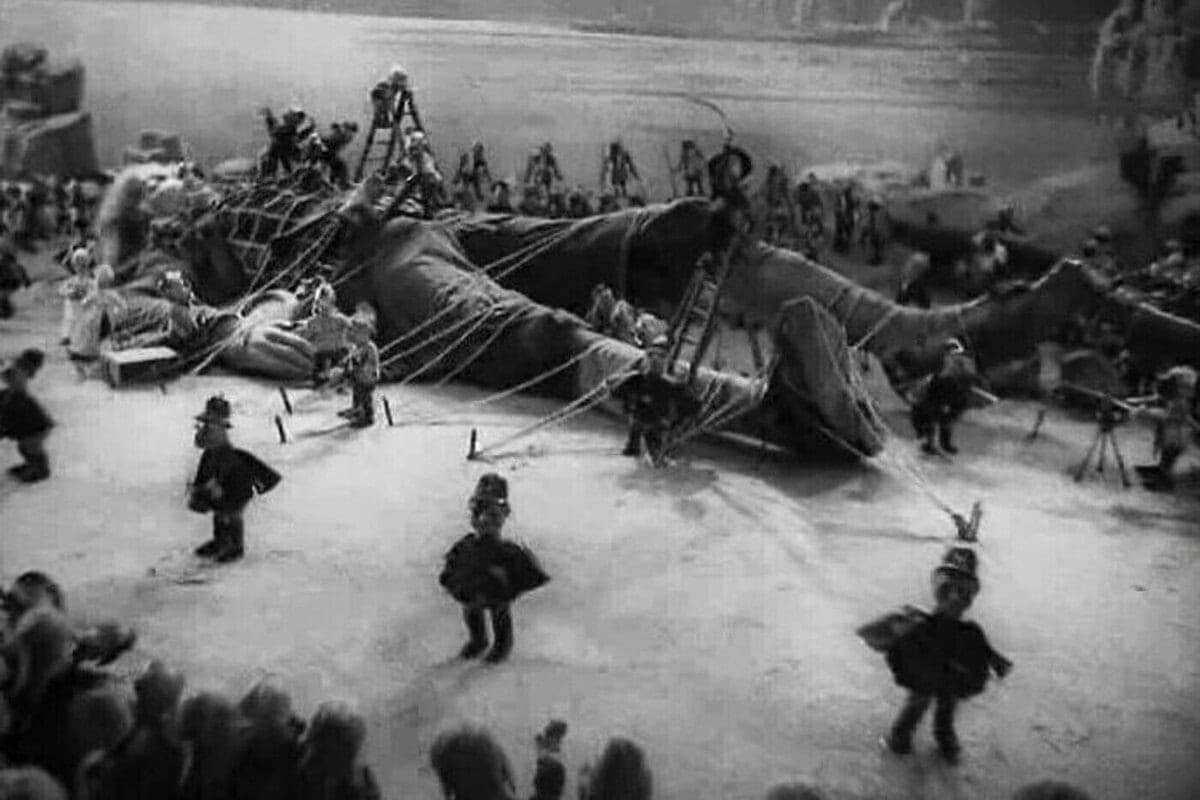
The film “New Gulliver”, which appeared on the screens in 1935, became the first full-length film in the world cinematography, created by means of volumetric animation. It was a sharp satirical comedy about the revolution in the militant capitalist state of Lilliput. The main hero - Gulliver himself - was the schoolboy Petya, who in a dream led the uprising of the Lilliputian proletariat.
For the first time in history, director Alexander Ptushko combined a live actor – Vladimir Konstantinov – and dolls in the frame. In total, about 1.5 thousand Lilliputians were created, on which artists worked especially painstakingly: it was impossible to portray a representative of the proletariat more comical than an aristocrat.
Despite this seemingly obvious ideological plan, “New Gulliver” hit the screens of the American box office and received a positive response there. In 2001, The New York Times wrote that this Soviet picture was respected by Charlie Chaplin for his innovation.
Even today, in 2026, netizens in the West continue to leave rave reviews of “The New Gulliver” as “a masterpiece of puppetry, special effects and visual innovation.” And every year, there are more and more delighted comments in different languages.