People vs. machines: virtual and real are competing on TV
Artificial intelligence and big TV have been living apart until recently
In the fresh Comedy Club, veteran humorists tested the strength of new rap stars. OG Budda, Toxis and Mayot against the background of Kharlamov and Volya are downright outlandish informal youth, although hamstrings, jokes and the general formula for interviewing them were invented as if decades ago. It’s hard to say whether AI is writing questions for such conversations, but it looked very nasty, as rappers would say, and that’s a score in favor of people.
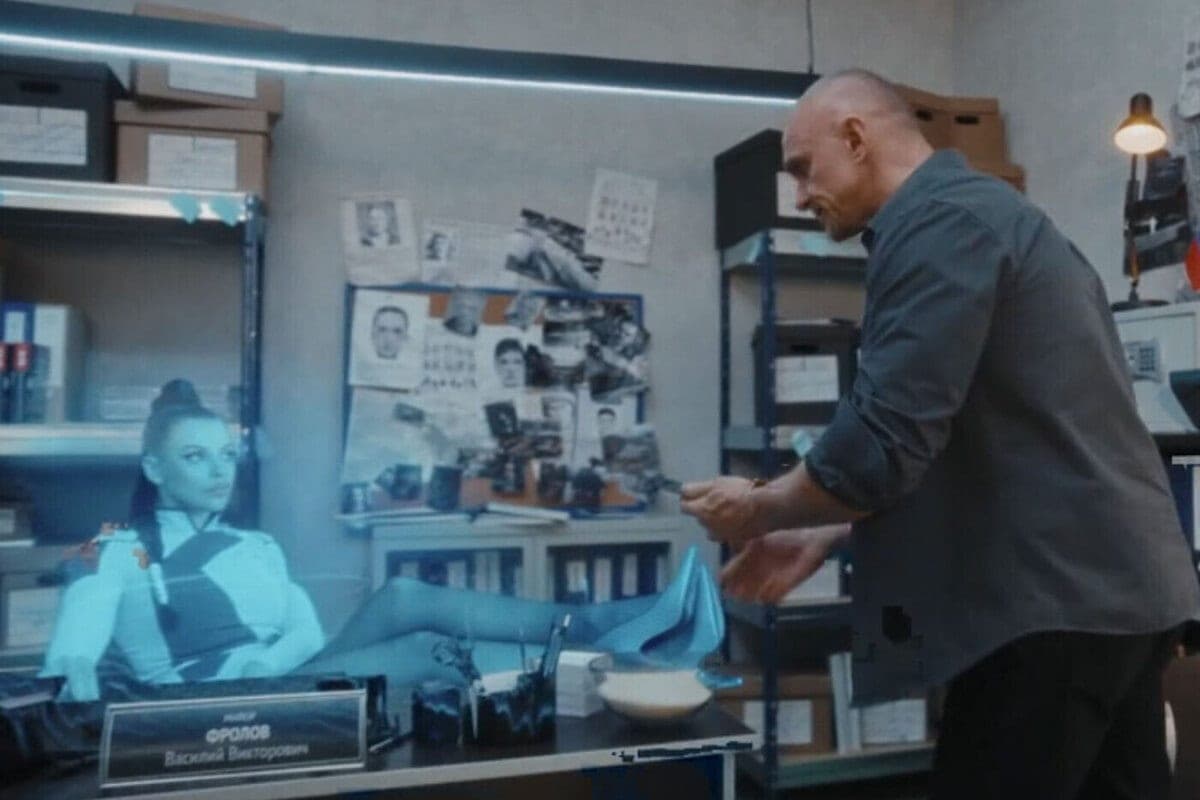
Meanwhile, Vladimir Epifantsev, who has also seen a lot in his media age, nervously debates with a neural network named Sveta in the second season of the series Neurovasya. His hero, a commissioner with a rather archaic view of life, conducts investigations along with the Light that lives in his mind. Sveta becomes arrogant, considers herself too smart, dictates her rules and even causes the jealousy of Vasya’s wife. Not for the first time, the writers turn the neural network into a bright girl with a problematic character. It must be admitted that this is a sign of great and not very reasonable optimism. But here the score is more in favor of cars. You can give up on the girl.
People partially recoiled in the new series “The Avatar Show”. The painted image of King Pea did not help the actor Vitaly Gogunsky to mislead the jury. It is possible that the musical ear of Sergey Lazarev recognizes a familiar voice behind the wildest outfit. Although in this case, no matter how smart animation machines try, Kuzya is Kuzya, and it is really easy to calculate.
Stas Namin in the documentary “Parallel Universe of Stas Namin”, dedicated to the anniversary of the man-legend, did not hide behind avatars, but almost everything that is visible on the screen, created by artificial intelligence. In this case, it is a complete coincidence of the chosen method of storytelling and the persona of the main character. Jubilee really managed to come up with his own, in many ways parallel to the existing rules of the musical and artistic world, and a bright virtual trip on the hits and iconic events of the life of Stas Namin looked like something very believable.
In this documentary project you can see the association with the film “Across the Universe” (2007), a dazzling, almost hallucinogenic musical directed by Julie Taymor on songs by The Beatles. But if almost twenty years ago you had to deal with people, scenery and fairly simple for today’s special effects, now you can call for the help of AI.
What else can this intriguing and intimidating technology do? Is it possible to visualize the life of Tchaikovsky or Mozart? Can it plausibly replace fragments of the old newsreel or black and white photos, which are already a century or two? Or maybe it will create a chronicle and photos that never existed, but which many would like to see? There is a suspicion that such active use of AI on television has not yet begun. But if the first experiments start projects of industrial scale, we will all find ourselves in a new wonderful world. There are still questions about the old one.