Flight Moscow - Lunaport departs from Tsaritsino
Tsaritsino hosts the exhibition “Cult Sciences’ XVIII” about how the Enlightenment changed everyday life – from ballooning to a comfortable chair
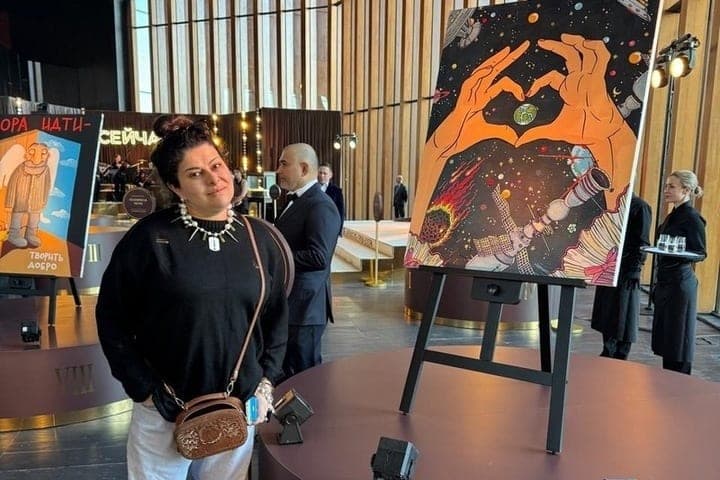
The spacious chambers of the Catherine Palace and the compact waiting room of the airport are separated by a single door. As you walk through it, you see the metal seats and the information board that tells you about the points of our expedition. The conditional boundary of the narrative is the victory of man over gravity, the invention of the balloon. And since society has always been drawn somewhere in the sky, the exhibition starts with the theme of flights.
Since ancient times, people peer into the starry sky, and with the invention of the telescope, this passion took shape in a full-fledged science - astronomy. Human imagination was also drawn into space: the exposition contains engravings by Filippo Morgen depicting the civilization of sleepwalkers. Aborigines of the earth satellite live in pumpkin houses, inflate ship sails with forge furs, tame winged snakes and fight with bizarre predators. In the XVIII century, the drawings looked innovatively fantastic, and now they are charmingly old: an unarmed eye can see the influence of Asian exoticism, fashionable in those days, on the image of the life of distant sleepwalkers.
Scientific discoveries in one field invariably stimulate development in others. Thus, the creation of accurate maps of the starry sky allowed to improve the means of navigation. The exhibition presents octants, sextants and a variety of watches: vending, pendulum and even the first electric. The evolution of their mechanisms illustrates how the answer to the question, “How many ticks?” changed. The best of the first chronometers were a quarter of an hour wrong - how easy it was to justify being late!
These devices greatly facilitated the lives of seafarers. Europe was flooded with overseas wonders: from India, China and Japan. Delivery of porcelain sets, cotton fabrics, Buddha figurines and xylographic sketches of Asian life was greatly facilitated, and the goods themselves gradually ceased to be a luxury available only to the nobility.
Travelers brought not only goods, but also impressions. Their discoveries encourage scientists to accumulate and systematize knowledge - the first dictionaries and encyclopedias appear, and people unite in circles of interest. They'll come together, pull out a microscope, and let's look at the samples: insect wings, bits of skin, and pollen of flowers. Enthusiasts compose illustrated herbalists and catalog minerals – the surrounding reality turns into a subject of scientific interest. Books are being written, ways are being sought to make them more accessible, and thus to increase the general education of the population. This develops literature as a whole, and therefore on the windows there are rare publications with autographs of great poets - Derzhavin and Pushkin.
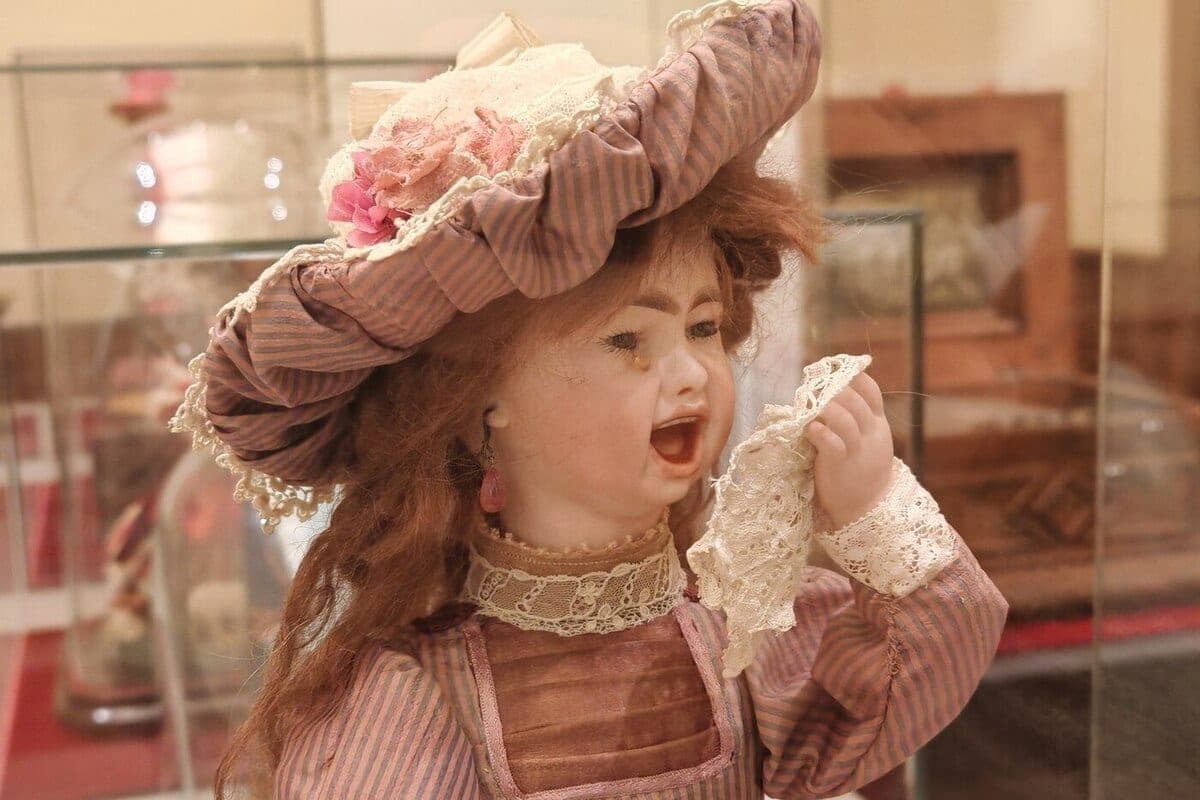
Fiction is not limited to lunatic engravings - the whole hall is reserved for automatons. The fashion for them was set by the legendary duck of Jacques de Vaucanson: this “robot” of the XVIII century could quack, wave its wings, clean feathers and even peck grain. The original has long been lost, so its humanized musical twins are exhibited: Leopold Lambert’s “Crying Girl”, Gustave Vichy’s “Shepherd” and Michel Marcus’ “Clown Equilibrist”. The theme is complemented by music boxes and punch cards - the distant ancestors of records, cassettes and discs.
The mystery in the world is becoming less and less: masters reveal the secrets of Chinese porcelain and find a way to make colored glass. Artful sets and enameled paintings appear. Habitual interior items are changing face: cultural changes are moving society not only to elegance, but also to comfort - in short, even furniture becomes comfortable.
And the stars are to blame: telescopes, balloons and the like. The man reached up and everything around him became sublime. It will get to the sky much later, but that’s a different story.