In Moscow presented exotic cinema and fashion from Senegal and Rwanda
The fourth festival of African culture and cinema “Africa” is held in Moscow
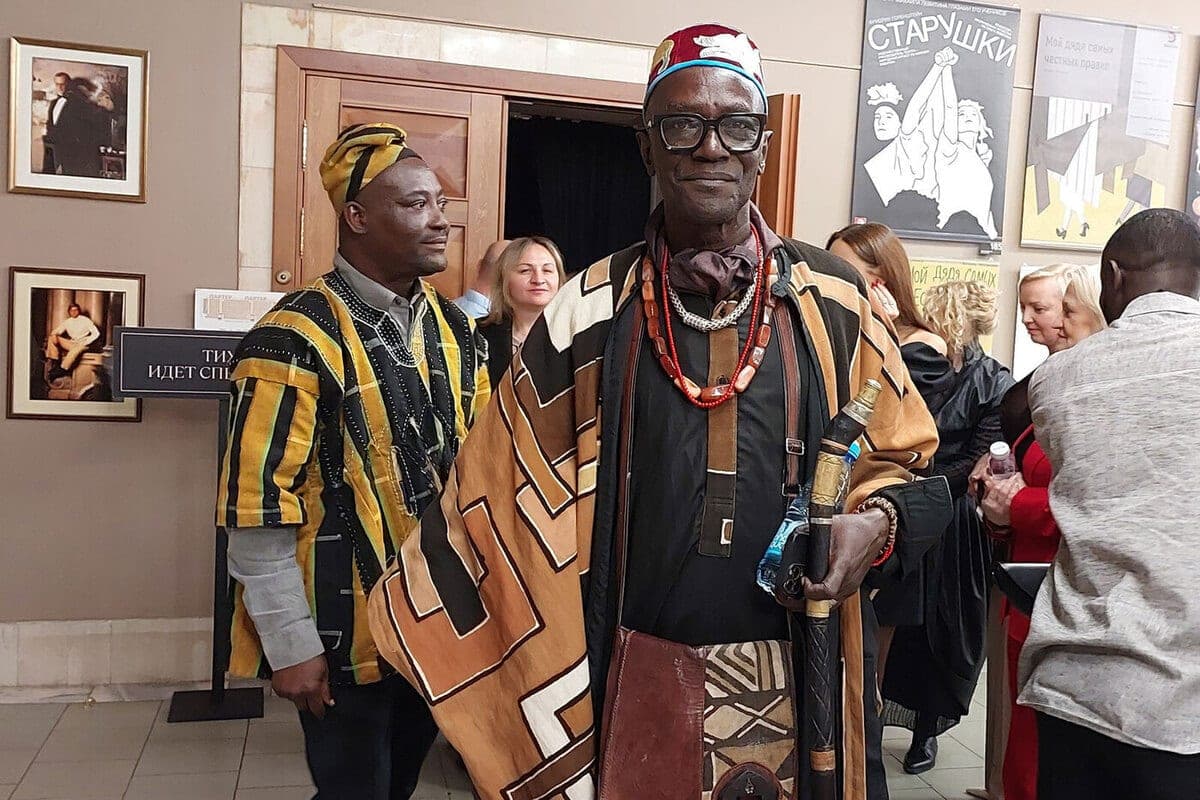
Among the most unusual guests of the opening ceremony was film director Moussa Sene Absa from Senegal. He appeared in traditional African clothes, with a staff in his hands, which resembled either an ancient weapon, or an outlandish smoking pipe.
His film “Xale”, created in co-productions of Senegal, Côte d’Ivoire and France, will be shown not in Moscow, but at “Lenfilm” in St. Petersburg, where the film program of African cinema is also prepared.
“I came to Moscow for the second time and I see people who care about others,” our guest said. Russia is bringing something new to my continent. We have dreams for the future. It is important to appreciate what surrounds us. We must build bridges with other people, because we have a common future, dreams of a better life and peaceful coexistence.
On the opening day of the festival in the House of the actor showed fashion performance in the production of Anna Verde with the participation of ballet artists, including the winner of the Golden Mask Oleg Gabyshev. Participants sat on stage in the pose of an Egyptian scribe, and then showed off a collection of clothes designer Nyambo Masamara from Rwanda, living between Kigali and Cape Town.
The Russian viewer will say that there are colors of autumn and dried foliage, there is no riot of African shades, and the inhabitants of his continent will surely find associations with the desert palette. This is not the usual clothing made of heavy cotton of bright colors, which is worn in Africa, and which is popular with Europeans. It is created from light transparent fabrics, silk and satin of muted shades.
Nyambo Masamara also came to Moscow and aroused great interest in his appearance. His hair is rather girlish, he wears thin clothes that resemble a woman’s dress and is literally open to every person who approaches him. African girls who attended the opening ceremony spoke enthusiastically with him and took pictures.
“It is important that modern Africa speaks to the world. For many years others have spoken for us, but today we have the right to say our word, Masamara said temperamentally from the stage. The collection of his clothes is presented these days in the State Museum of Oriental Art.
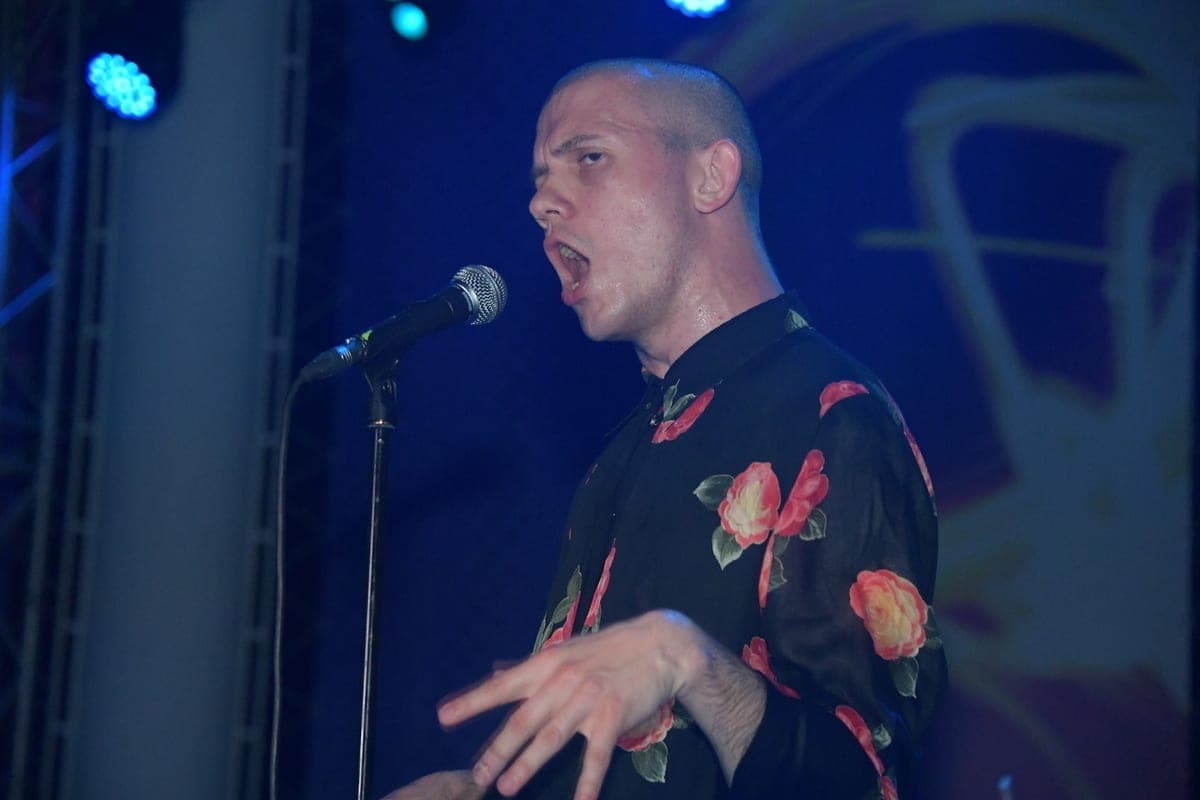
On the opening day, there was another performance, Rights of Nature, by Senegalese artist and choreographer Ibrahim Niassi. It combines African dance with hip-hop. The first thing you see on stage is a pile of flaps, reminiscent of a traditional Russian blanket. Gradually, a pile of tissue, under which the human body cannot be guessed, comes to life, turns into a vortex. The contours of man materialize, and he seems to emerge from the air and the earth. Nature is seen by the performer not as a resource, but as having a voice.
Ibrahim is incredibly plastic, even pity that he drowned most of the solo performance in a pile of fabric. Later, switching from English to French, which is closer, he said that the play is dedicated to the interaction of man and his environment. “It is important to preserve nature for future generations. We live in one world and it belongs to everyone. Our ancestors left it to us, and it is important that we think not only of ourselves, but also of those who will live after us.
In the Engineering Building of the Tretyakov Festival, films from historical to body-horror and rap musical are shown. They are established in Rwanda, Egypt, Mozambique, Nigeria, Angola and Senegal.
In parallel, a retrospective of the founder of African cinema Usman Semben takes place in the cinema of the Gosfilmofond. Born into the family of a fisherman, who knew from the age of 15 what the work of a mason and a docker was, he became a writer, poet and playwright in post-war France, in the 1960s Semben returned to Senegal and began making films.
He trained at the Gorky Film Studio in Moscow, where he was patronized by film directors Sergey Gerasimov and Mark Donskoy. His debut film “Black from ...” about the journey of an African woman to France was awarded the Jean Vigo Prize, the prize of criticism at the Cannes Film Festival. The master’s retrospective included films of the 1960-1970s: “Money Transfer”, “Emitai”, “Hala”, “Seddo”, “Tyrant’s Camp”. They will be presented by the director's son Alan Semben.
The State Museum of Oriental Art opened an exhibition of contemporary African art of the 2020s. It features works by Seidu Diko and Siriki Ki from Burkina Faso, Abdulai Konate from Mali, Mayova Laval and Harry Odunze from Nigeria, Barthelemy Togu from Cameroon.
There is also a section of modern fashion. Among its authors, besides Nyambo Masamara, who opened the festival, are Ava Meite from Mali, Doreen Mashika from Tanzania, Solome Asfau from Ethiopia, Kikoromeo from Kenya.