
In Voronezh will restore the house Firyupkin 110 years ago
The history of this house is closely intertwined with the name of the famous Voronezh architect Mikhail Zamyatnin, whose project formed the basis for its creation shortly before large-scale historical events - in the period from 1914 to 1915. The customer was a peasant engaged in business, Konstantin Firyupkin.
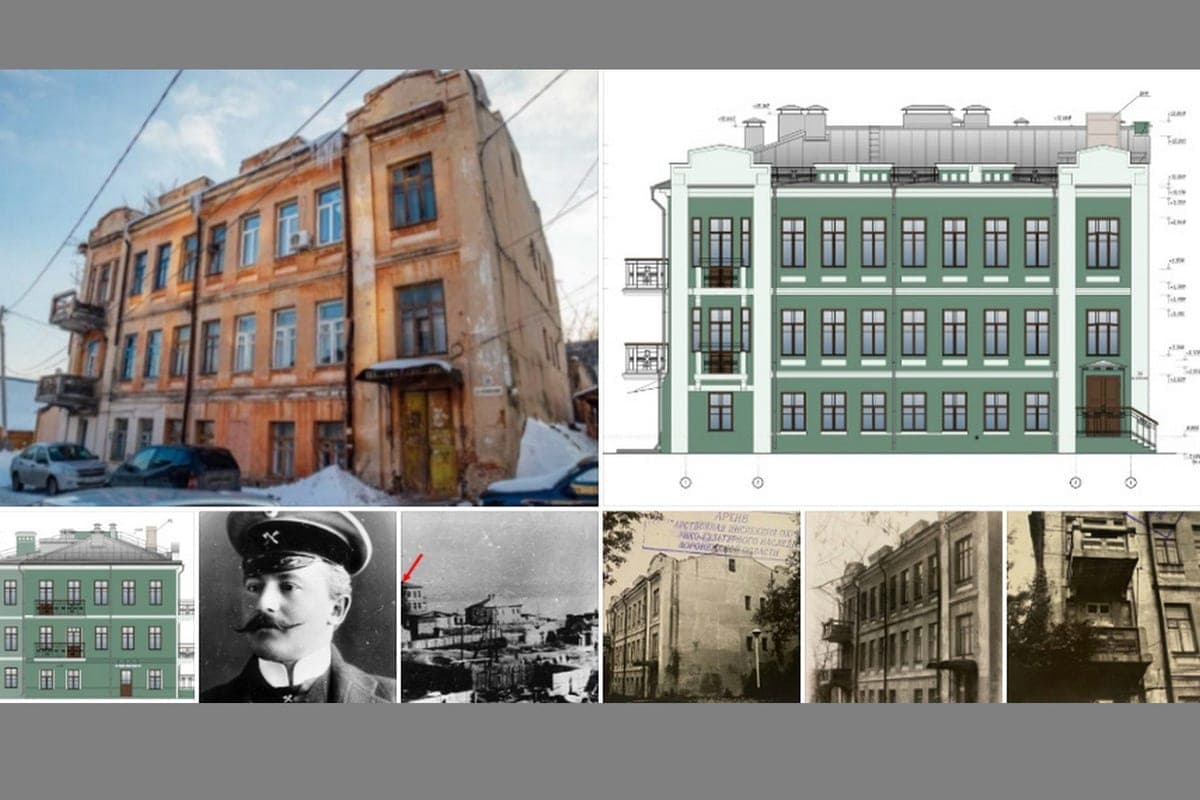
The history of this house is closely intertwined with the name of the famous Voronezh architect Mikhail Zamyatnin, whose project formed the basis for its creation shortly before large-scale historical events - in the period from 1914 to 1915. The customer was a peasant engaged in business, Konstantin Firyupkin.
The Department responsible for the preservation of cultural sites in the Voronezh region, approved the scientific and project documentation relating to the restoration of the monument of regional importance "Firyupkin House", located at 39 Baumansky Lane.
This project involves the implementation of restoration actions on all facades, as well as repair work and restoration of walls, floors, roof and roofing. In addition, interior finishing works and equipping the building with modern engineering communications and appropriate equipment are planned. The project includes the restoration of laid window openings, as well as partially walled door (balcony) holes. Particular attention is paid to the restoration of fillings of windows in the north wall made of glass blocks of the Falconier type. Work is also envisaged to restore stairways and marches with partial replacement of their structures, as well as the restoration and restoration of lost elements of fences for stairs and platforms. Ultimately, it is planned to place residential premises in the building.
Mikhail Zamyatnin presented the city with a structure designed in the then popular architectural direction - Art Nouveau, and its appearance still retains the elegant features of that era. One of the most remarkable details is an unusual window decorated with luxfers – glass blocks in the form of hexagons, which for their property to gently and mysteriously scatter light are often called “lunar stones”.
The building survived the difficult years of the Great Patriotic War, while it was not only not destroyed, but also managed to preserve valuable elements of its original interior decoration. A new chapter in the history of this monument began in 2021, when after the resettlement of residents, it became municipal property. And already in 2024, he had a chance for a new life – the building was sold for a symbolic amount of just one ruble to the new owner. However, this price imposes serious obligations: within three years after the approval of all the necessary design documentation, large-scale measures are required to preserve this architectural heritage.