FT spoke about the preparation of Europe and Asia for the “tug of war” for LNG
EU gas storage facilities are noticeably worse filled than a year ago, and Asian buyers are willing to pay more for LNG shipments. Europe may not have enough fuel in heavy winter, newspaper sources warn
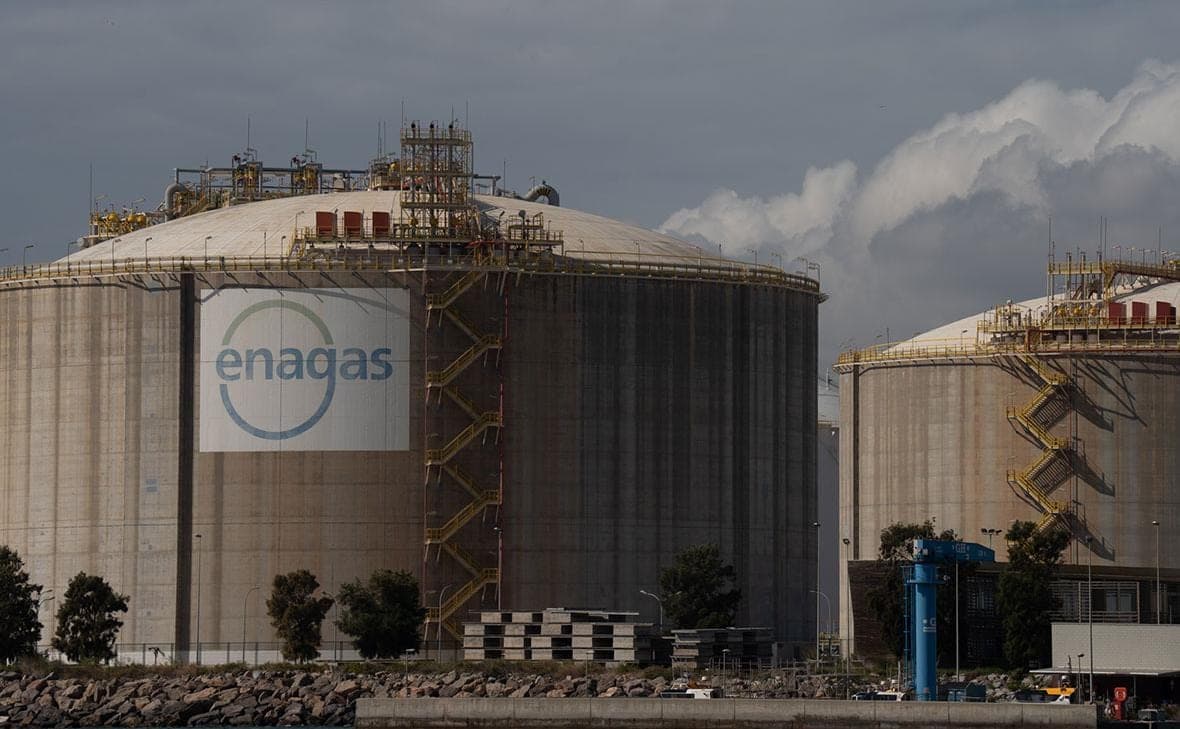
Europe is preparing for a winter “tug-of-war” with Asia for limited shipments of liquefied natural gas (LNG), writes the Financial Times (FT), citing analysts of banks, energy executives and participants in the Gastech conference in Bangkok.
Asian buyers began to offer more European LNG shipments, which increases the likelihood of redirecting supplies to Asia, the newspaper writes.
LNG prices have already reached multi-year highs and more than double the level before the start of the conflict over Iran. Further dynamics will depend on the resumption of regular supplies through the Strait of Hormuz and weather in the Northern Hemisphere.
In order to be less reliant on the spot market, Asian countries have re-launched long-term deals. Eni’s Global Natural Resources Operations Director Guido Brusco said Asian buyers are willing to pay a premium for guaranteed volumes.
“They want long-term contracts because they don’t want to depend on spot prices. They see how volatile they are and are willing to pay more just to know what they are getting, Brusco said.
One LNG producer told the FT that Asian customers are now seeking 20-year contracts. The cost of long-term agreements remains relatively stable due to the expected commissioning of new production facilities – mainly in the United States – in the next three to four years.
The head of Pakistan GasPort, Iqbal Zet Ahmed, spoke about the “fundamental change” in the attitude of the United States as one of the largest gas suppliers to small buyers. According to him, before such companies “sent away”, and now ready to discuss with them prices and delivery conditions.
European buyers approach long-term contracts more cautiously, writes the FT. They fear such agreements could run counter to new EU rules that oblige importers to measure and disclose methane emissions data.
Aktor Group chairman Alexandros Exarchu said the EU would have to back down from the new rules after the winter struggle for LNG and increased inflationary pressure due to rising energy prices. “If they don’t understand it, they will,” he said.
The outcome of the confrontation between Europe and Asia will largely determine the weather, writes the FT. “If the season is warm, we can do it. In a normal winter, we will be severely short of gas, and in a cold winter we will see the same prices as in 2022, said Anders Porsborg-Smith, managing director and senior partner of Boston Consulting Group.
European Energy Commissioner Dan Jorgensen has called on EU countries to step up preparations for the winter and consider reducing gas and electricity consumption. Among the possible measures, he called limiting the heating of public buildings, eliminating street heaters and turning off unnecessary outdoor lighting at night. At the same time, Jorgensen did not see an immediate threat to supply security.
In the first half of 2026, the European Union imported a record 9.89 million tons of LNG from the Russian Yamal LNG project – 18% more than a year earlier. The EU’s total ban on imports of Russian liquefied gas is due to come into force on January 1, 2027.
At the same time, Russia is increasing gas supplies to the East. In 2025, Gazprom delivered 38.8 billion cubic meters to China via the Power of Siberia gas pipeline – almost 800 million cubic meters more than contractual obligations. A year earlier, exports along this route amounted to 31.12 billion cubic meters. Russian gas supplies to Kazakhstan, Uzbekistan and Kyrgyzstan also increased by 20% in 2025.
In March, Russian President Vladimir Putin made an early withdrawal from the European gas market and a reorientation to new customers. “Other markets are opening up now. And it may be more profitable for us to stop deliveries to the European market right now. Go to those markets that open up, and there to gain a foothold, he said. The president said it was “thoughts out loud” and not a decision.