
The Ministry of Finance will monitor the impact of the tax on excess income on business
The impact of the tax on super-income on mining companies will be assessed in the first quarter of 2027. Monitoring will help to identify enterprises for which the load is significant due to low profitability or losses
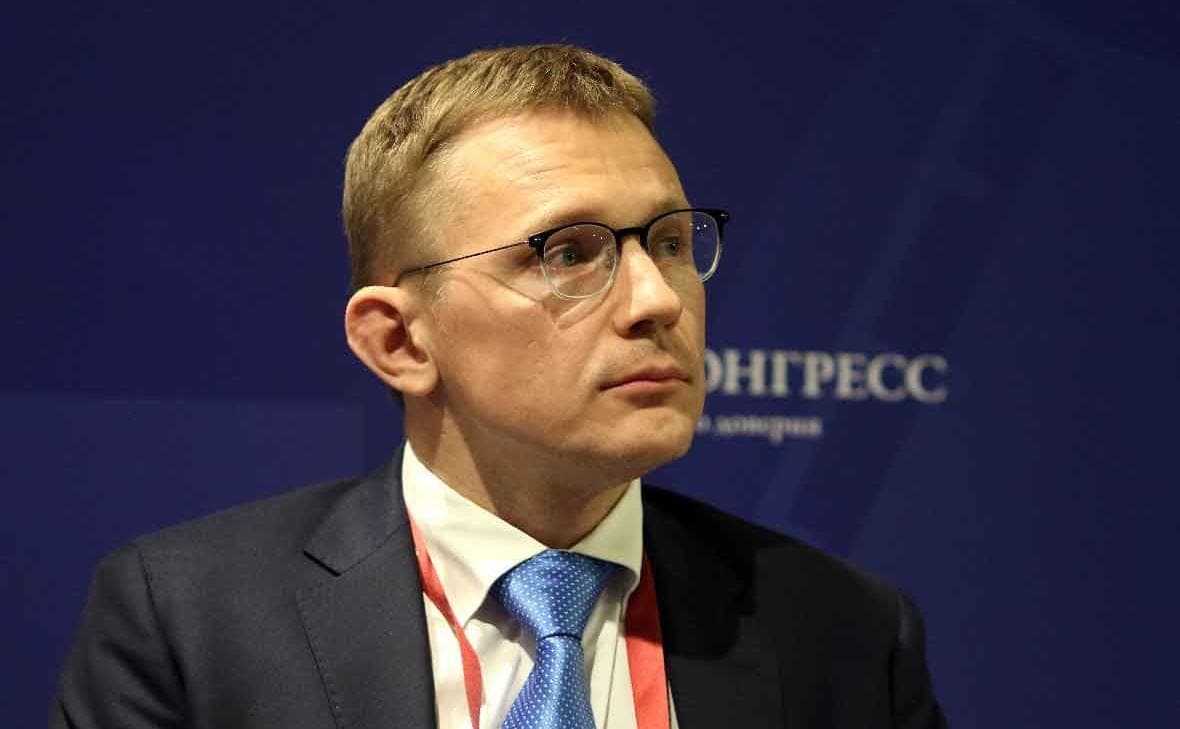
The Ministry of Finance is ready to monitor the impact of the tax on super-incomes on mining enterprises in the first quarter of 2027. This was stated by State Secretary – Deputy Finance Minister Alexei Sazanov at a meeting of the State Duma Committee on Budget and Taxes.
It will allow you to identify companies that actually have low profitability or are operating at a loss.
“I would propose to conduct monitoring over the next year with the analysis of these data quarterly, following the results, starting from the first quarter to look and, if necessary, then talk about how to rule or not to rule [tax legislation], or a sufficient mechanism and so on,” said the head of the Committee Andrei Makarov at the meeting.
He suggested assessing the impacts on regions, industries and individual enterprises. When asked about the time required to obtain such data, Sazanov said: “I think the first quarter of next year.”.
Earlier, the budget committee proposed to discuss the initiative of the Russian Union of Industrialists and Entrepreneurs (RSPP) to consider the real financial result of companies instead of the estimated increase in the cost of raw materials. This should reduce the risk of accruing tax to enterprises that have not actually received excess profits.
At the same meeting, Sazanov reported on the exceptions proposed by the Ministry of Finance. The Agency intends to deduct from the calculation of the tax extraction of manganese, chromium, tungsten and molybdenum. According to the deputy minister, this raw material is practically not exported and is mainly used in the execution of the state defense order.
The amendments also provide for an exception for mining in subsoil plots, wholly or partially located in the DPR, LPR, Zaporizhzhia and Kherson regions, Crimea and Sevastopol. In addition, the tax should not be subject to minerals and components, the amount of mineral extraction tax (MET) for which in 2025 is less than 10 million rubles.
The state Duma adopted a bill on tax on super-income in the first reading on October 29. It is included in the budget package for 2027-2029 and provides for a tax for subsoil users of solid minerals. The rate is 30% for most raw materials and 20% for gold.
According to the proposed design, the tax is calculated from the additional cost of the extracted raw materials arising when the average world price exceeds the base weighted average price of 2025. To create a tax base, the growth of the average price in 2026 should be at least 10%.
RSPP previously warned that such a design does not take into account the financial result of the enterprise. The head of the union and business ombudsman Alexander Shokhin explained that the recovery of revenue after the fall in prices can look like a superprofit, although in fact the company is only returning to the usual level of revenues. Therefore, according to him, even unprofitable enterprises can receive additional burden.
The Ministry of Finance estimated revenues from the new tax at 683 billion rubles. for three years. According to the calculations of the RSPP, with the same macroeconomic prerequisites, the amount can reach about 1.1 trillion rubles. - about 1.6 times more.
