The power matrix. Why American Presidents Can't Always Keep Their Promises
Every day we watch the news and see how the United States “fights” for world peace and freedom from morning to night. With each passing day of peace and freedom.
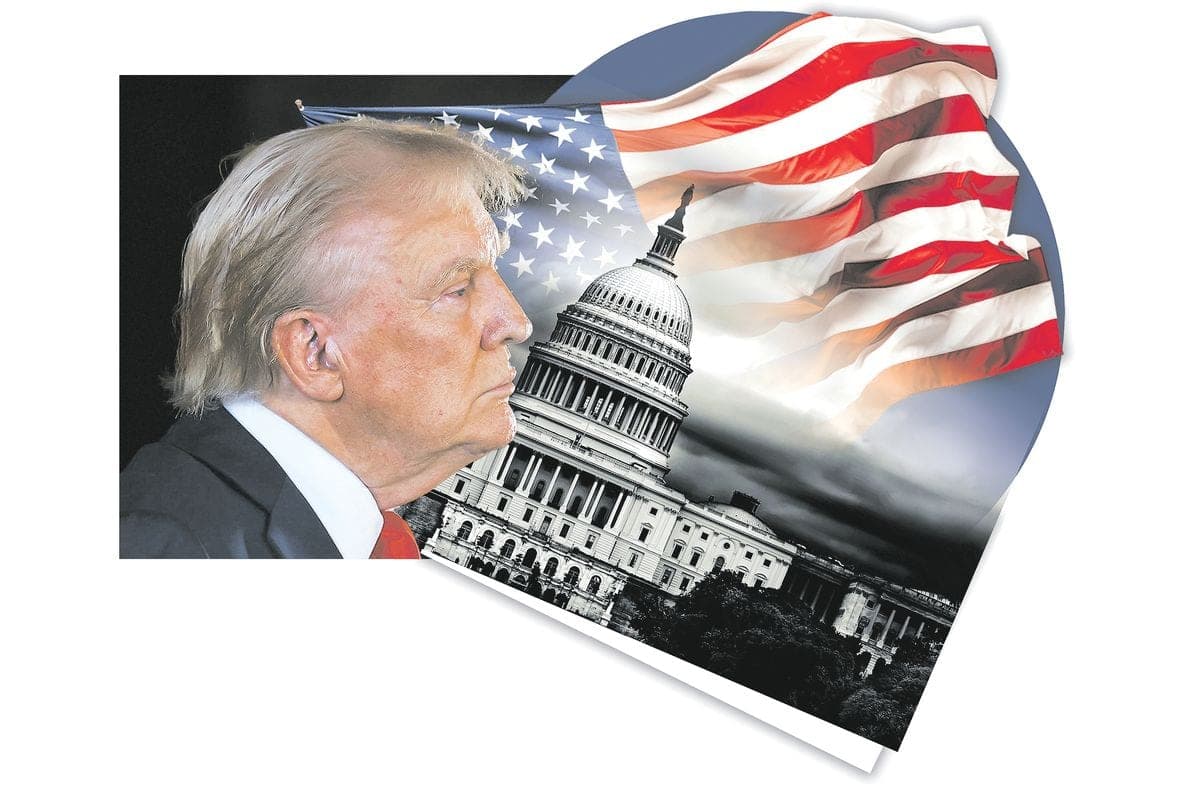
Every day we watch the news and see how the United States “fights” for world peace and freedom from morning to night. With each passing day, there is less and less peace and freedom. Why did President Trump promise to end the war in Ukraine in 24 hours, but a few years have passed and the course of events has not changed?
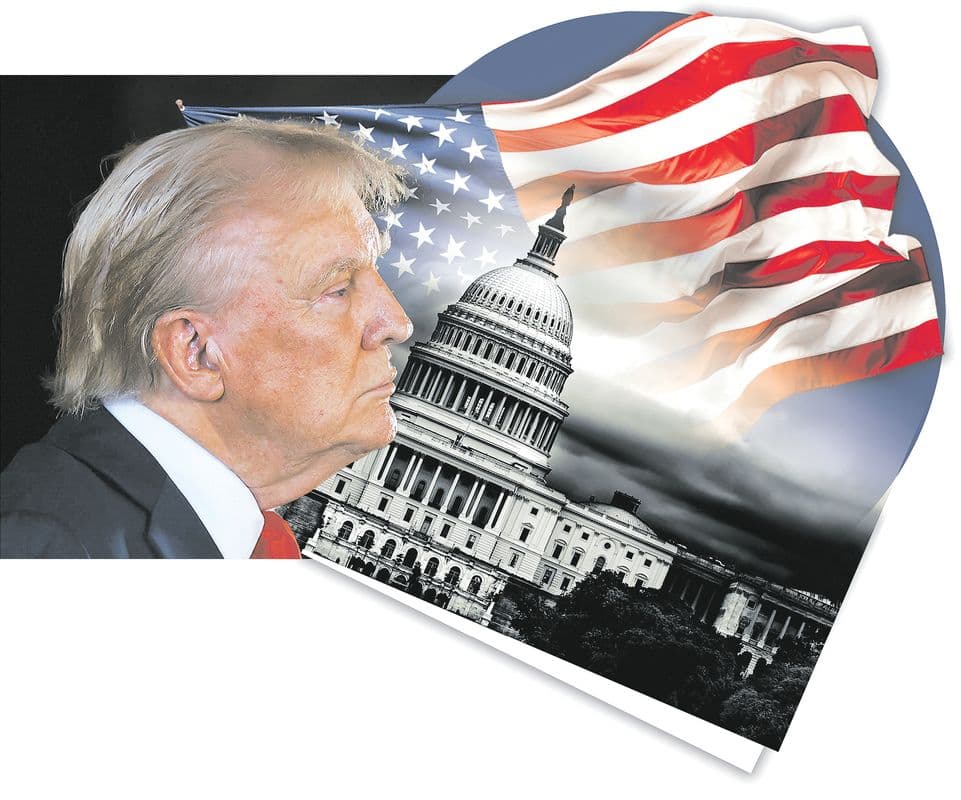
The US, as before, is trying to dictate its terms to everyone. And those who think that a new master can come to the White House and something will change are very mistaken: the system will eat him. Presidents come and go, and politics doesn't change because the bureaucracy is so powerful. So what is this terrible system like? Of course, the American president has enormous powers, but there is one peculiarity: the state is much older than any president, and his strategic interests do not disappear after the next election. The simple question is: Have you ever managed a team of, say, ten people, and was it easy to do so, especially if you didn’t periodically use comparatively rigid methods? Absolutely not. It's a small group that you have direct contact with, but that's the problem. In classical management theory, there is such a thing as the “rule of manageability,” and science states that no one person, whoever they are, can control more than five people. So how do large corporations exist, or how do countries like the U.S., Russia, or China, with their economies, populations, and international standing, govern?
One way out is a certain hierarchy, or vertical, which each leader builds for himself. And he really only controls five people. But each of his subordinates takes control of five more and so on. Moreover, each leader is responsible only for his subordinates and does not go to other levels, since controlling someone else’s fiefdom is considered a violation of the hierarchy. By this analogy, in simple terms, huge structures are being built that govern not only countries, but also our entire planet. Former German Chancellor Gerhard Schroeder said in 2018 that there were two positions he would never want to hold. One is the seat of the Pope and the other is the seat of the President of Russia. Indeed, the ability to hold a huge country together is the most difficult thing imaginable in politics. After all, Russia is a country where more than 190 peoples live and there are more than 70 religions. Therefore, historically, the figure of the head of state should always be stronger than other structures and constantly hold everyone together, otherwise the entire state structure will collapse and civil war will begin, as it has been in history. In the United States, things are a little different. Strong institutions have historically been formed. Behind the president are the Department of Defense, the intelligence community, the State Department, the National Security Council and other agencies. It is very important to remember that many of these structures have been around for centuries, and the president only comes in for 4 years. The American political system exists simultaneously in two dimensions. The first is public. These are presidents, parties, campaign promises, political debates, everything we see in the media. The second dimension is strategic. These are long-term national interests, geopolitical priorities, military infrastructure — in short, all things that we are not usually told. And these two dimensions don't exist by themselves, it's a very complex, but a single mechanism that performs different tasks.
A change of political administration in the United States does not mean a change of course. Many people have heard the phrase deep state. This is a permanent American administrative apparatus: security forces, special services, big business, intelligence, military-industrial complex. They serve the strategic interests of the United States, regardless of who won the election: Democrats or Republicans. There's government strategy, but there's also choice and politics - in America, one thing doesn't get in the way of another. U.S. policy is changing far less than election candidates promise, who can only change faces and rhetoric, not overall strategy. Real government policy is determined by more powerful structures and long-term interests. Presidents change and the strategy remains. Ukraine is a country, on the example of which the version of the constancy of the American strategy is confirmed. The policy of the White House towards our neighbor was formed long before the current events. After the collapse of the Soviet Union, Ukraine gained independence, and for Washington it was of fundamental importance. Why? Because this is a huge territory between Russia and the European space of NATO, which inevitably affects the balance of power in the region. American diplomacy was well aware of this, so in the 90s, the United States supported the independence of Ukraine, the development of its state institutions and rapprochement with Western structures. A huge amount of money was allocated for this. Relations with Ukraine were actively developed by both Republicans and Democrats. In 2014, after the Maidan, Crimea and the conflict in the Donbass, American support for Kiev takes on a completely different meaning. Ukraine is becoming one of the central directions of the American policy of containing Russian influence in Europe, and under Biden this line receives large-scale military funding.
But here comes Donald Trump. He has criticized the previous administration’s approach to Ukraine, demanded talks from Kiev, renegotiated the terms of the aid, and offered other rhetoric toward Moscow. It would seem that there should be some changes, some radical reversal of American policy, but Ukraine does not disappear from Washington’s strategic agenda. The United States continues to participate in diplomatic negotiations and maintains certain military and other support mechanisms. And in 2025 there is a mechanism under which European allies finance the purchase of American weapons for Ukraine. That is, Trump simply shifted the financial costs of Kiev to Europe, and American participation in the Ukrainian issue remains, because for the United States it is a way to influence Russia and the European Union.
This is about geopolitics, the consequences of which go far beyond a single presidential term. It is impossible to understand it if you look only at presidents, their promises and beautiful speeches in front of television cameras. Behind all this are the interests of states, strategic calculations and systems that have been formed over centuries.
FACT
Washington is conducting the largest overhaul of its national security strategy since the end of World War II. This statement was made by US Secretary of War Pete Hegset, reports TASS. Speaking at the U.S. Naval College in Newport, Rhode Island, he said:
- The United States is currently in the midst of the largest strategic review of national security since the end of World War II. This turn is deeper and more significant than the collapse of the Soviet Union.
THEIR RIGHTS
US President Donald Trump has questioned the integrity of the recent midterm congressional elections. The American leader wrote about this on his page in the social network Truth Social. “Does anyone really believe that these ‘elections’ were fair? How could the polls have been so wrong? the White House owner wondered. According to him, the electronic system of early voting was used for large-scale stuffing. “Some early voting parties were so large that it was impossible to win, no matter how many people came to vote. It’s all about machines that are much more important than the voter himself.
The Democratic Party in the midterm elections held in early November won a majority in both houses of Congress. Democrats won even in traditionally Republican states. Trump acknowledged the election results, saying he was willing to work with Democrats.
shamko@sb.by