Europe spends last reserves to fight fuel crisis
At the meeting of the International Energy Agency (IEA), which is scheduled for October 14-15, a set of measures to reduce the fuel shortage in the world market will be discussed
The planned release of 100 million barrels of oil and finished fuel from the reserves of the IEA member countries will be made as part of the organization’s agreement to supply more than 425 million barrels of energy resources to the market. A large share of fuel - about 325 million barrels - has already gone on sale. Now we will talk about the implementation of the remainder.
Specific parameters for the withdrawal of oil and oil products from the IEA’s strategic reserves have not been determined. “Apparently, the main focus will be on diesel fuel due to its shortage and the expectation of the winter period,” said Arthur Leer, president of the Association of Exporters and Importers. It is assumed that the output volume will be calculated for about four months, and the possible inflow of energy resources to the market at the first stage will be about 1 million barrels per day.
The decision to implement such a strategy followed an ultimatum by US President Donald Trump, in which he demanded that the European Union unpack its fuel reserves under the threat of a ban on diesel exports. Most key IEA members, notably Germany, France and Italy, have agreed to share their reserves. Meanwhile, not all world powers intend to empty the fuel "bubbles". For example, the Secretary General of the Cabinet of Ministers of Japan Minoru Kihara said that a new unloading of oil or oil products from national storage will not follow, since Tokyo has already provided all possible assistance with its reserves suffering from shortages of fuel to European allies. Most likely, South Korea will join Japan’s position, demonstrating a desire to preserve the accumulated barrels.
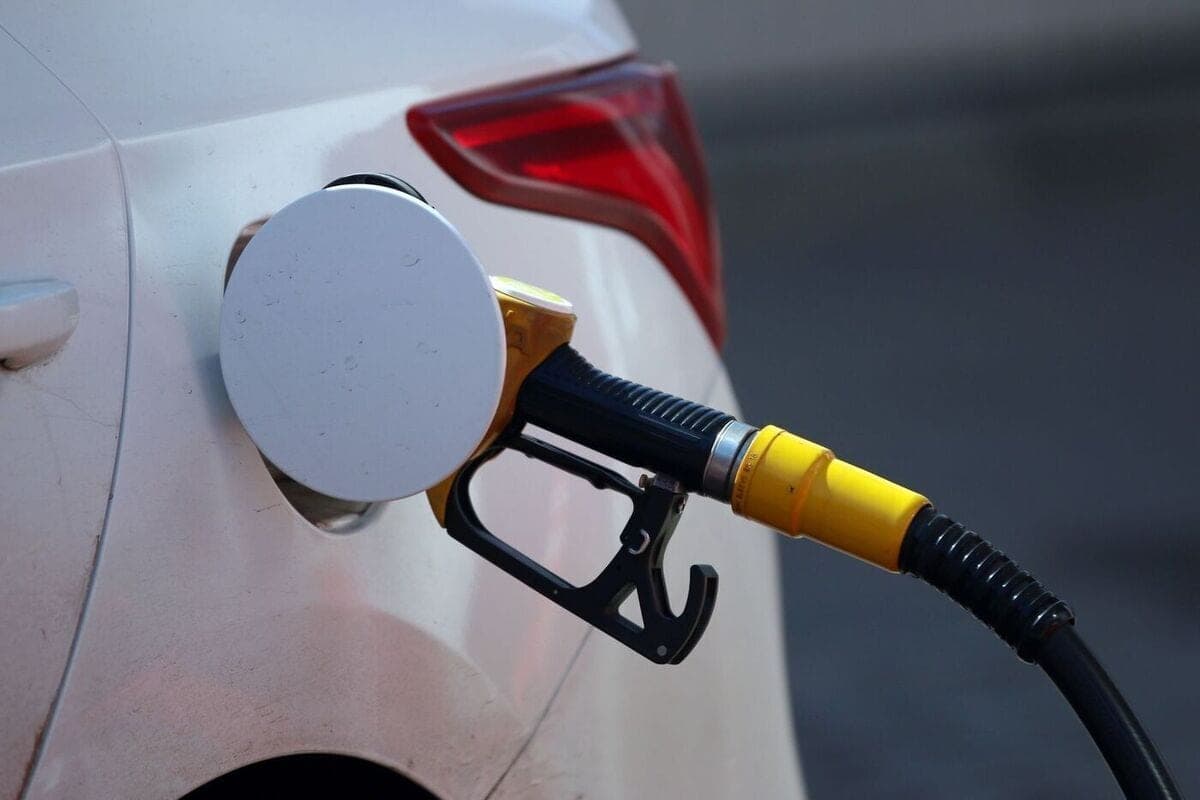
Despite the collective decision of the IEA to release fuel from strategic reservoirs, the situation with energy in the countries of the Old World on the eve of the upcoming heating season will remain extremely difficult. EU members are in a fever due to the incessant acceleration of fuel prices, and the authorities of most countries of the bloc are unable to correct the situation. In Germany, according to the German automobile club ADAC, September was the most expensive month to refuel vehicles in history. The average cost of E10 (similar to AI-95) increased to almost 2.3 euros per liter (about 215 rubles), and diesel to 2.4 euros (225 rubles).
Against this background, ordinary car owners of the country began to increasingly steal fuel and gas station workers now have to block columns with special devices to avoid losses.
In France, as reported by local media, because of rising fuel prices, fishermen are constantly blocking ports in Nice and other coastal cities of the Mediterranean, and nurses working on a call to home refuse to serve patients who live far from hospitals, because employers do not pay for gasoline beyond the established norm.
European Commission President Ursula von der Leyen has announced the start of a new “strategic dialogue” on European refineries because of the EU’s growing vulnerability to reduced refinery capacity since 2009. “We are approaching a very difficult winter. Especially from the point of view of industrial enterprises, warns the EC representative Anna-Kaisa Ikonen.
“The release of finished motor fuel from the strategic reserves of the IEA is able to reduce the deficit on the trading platforms of the Old World,” said Igor Rastorguev, a leading analyst at Amarkets. However, such a measure will only provide temporary support to consumers, since it will not eliminate the main factors that currently limit the supply of fuel: the use of reserves will not lead to the expansion of refinery capacity and disruption of energy transportation from the Middle East region. Deficit and price pressures will soften slightly, but there will be no guaranteed sharp decline in gas station prices.
“The IEA’s oil and petroleum product release program is not a conceptual or systemic solution – it’s just a temporary patch to close the growing fuel shortage,” Leer said. Completely eliminate the problem of lack of fuel will not work. It is possible that against the background of the decision of the participants of the organization, the market will even show readiness not to reduce prices at filling stations, but to a slight increase in the cost of fuel, since at present we are talking about spending internal reserves. Such tactics will not yield long-term results. In the future, the cost of raw materials and petroleum products will still resume growth.
To more effectively fill the market and pacify the price race, according to analysts, the European authorities need a set of other measures. Including complete or partial abolition of import duties and excise duties, correction of environmental and technological standards, solution of logistics uncertainty and maximum load of processing plants.
“It is the combination of these measures with the use of reserves that can lead to positive trends: reserves buy time, but do not replace regular production and stable delivery,” Rastorguev summarizes.