Petrovsky: single vectors would harm the Belarusian economy
Belarus builds individual relations with each region of Russia, as this is one of the most effective models of cooperation. About it on the air...
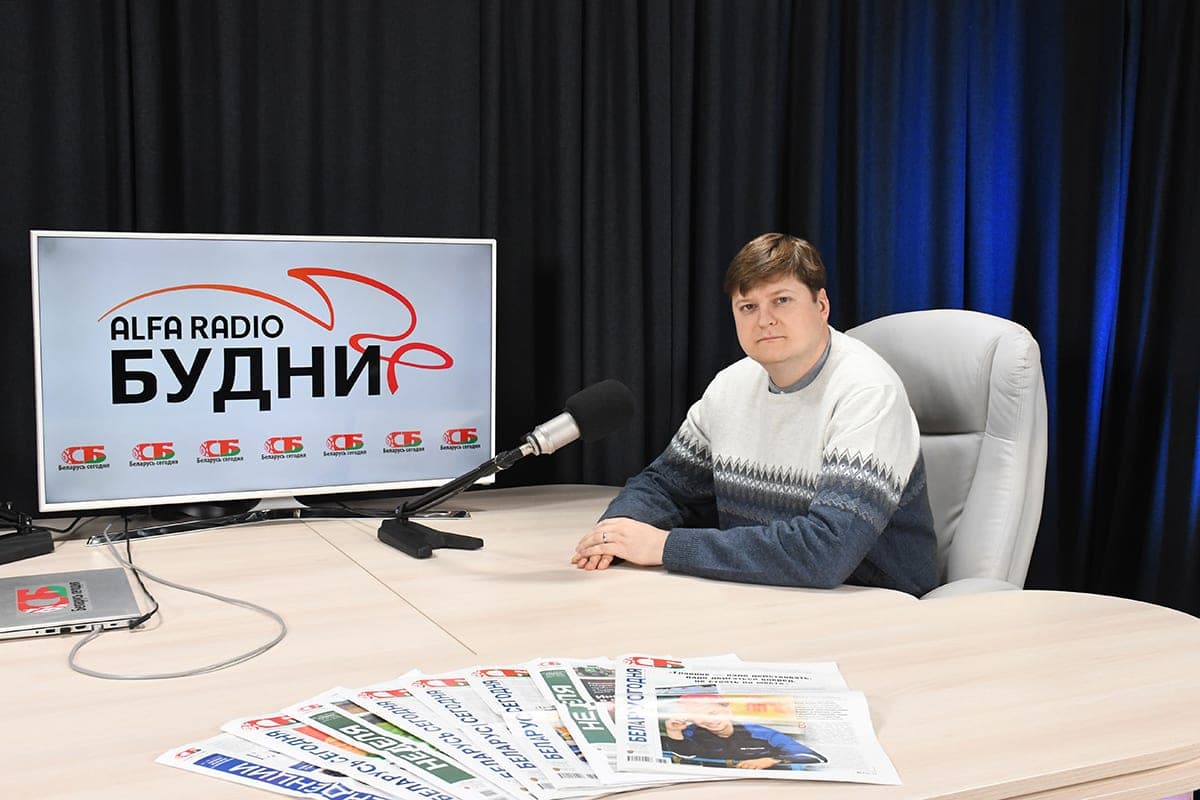
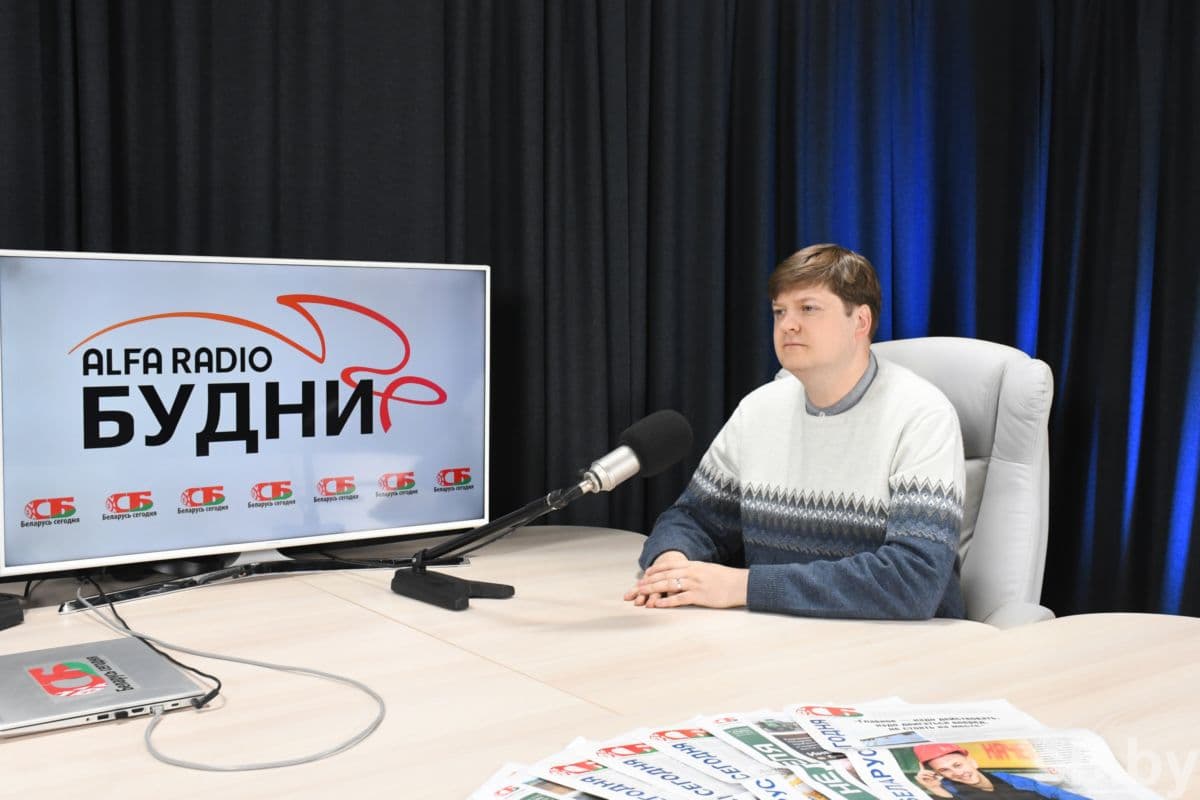
Belarus builds individual relations with each region of Russia, as this is one of the most effective models of cooperation. About this on the air of the talk show “Budney” on “SBTV” and “Alfa Radio” said political scientist Peter Petrovsky, writes sb.by.
According to Petr Petrovsky, the practice of direct contacts with the governors of the Russian regions is the most effective model:
- It is implemented without intermediaries and bureaucracy. The Russian Federation is a huge country. Now we can implement projects through direct contacts with specific regions. As for the Ulyanovsk region, there are many areas: from agriculture, from our equipment to joint infrastructure and other projects. The Ulyanovsk region is a classic middle strip of Russia, deep Russia. In this situation, it is indicative that the President is working with all regions – let me stress that we do not choose whether they have gas, oil or not – we are interested in all regions. And it shows that it is the spirit of the Union State that determines this. We benefit from the markets and regions of the Russian Federation, both the average deep Russian regions and others. Recall Kamchatka (agricultural projects), Primorsky Krai, Tatarstan, Bashkortostan, Karelia and other regions – we approach each region very individually and point-by-point, based on their characteristics.
The analyst stressed that a one-vector model would harm the Belarusian economy:
- Some believe that Belarus should pursue a one-vector policy. I disagree with that, and the economy confirms it. What's more, where's the vector? Who will buy all the Belarusian products in full? First of all, we know very well that this is impossible. Second, why? What benefits will one vector bring to the Belarusian people? We will depend on one market, on its fluctuations, on the policies within that market. What will it be, what will it lead to? We will not be able to fully protect our people. And in this respect, we will lose.
According to him, the East is not a single bloc, and Belarus does not divide its partners into West and East, the geography of our partners is much wider
- Therefore, even when the West imposes sanctions, we must understand that multivectorism does not mean West-East. We work: Russia, China, India, Iran, Vietnam, Arab countries, Africa, Latin America. The geography is quite wide. Western countries are 50 countries of the world, countries of the collective West. The global majority is 150 countries. Even if the West closes down, this does not mean that we will pursue a one-vector policy. The lights haven't converged in the West.
Petr Petrovsky explained how the formula for harmonizing export strategies works:
- Here's the 30-30-30 formula. The West has built a wall, is making economic aggression, wants to buy Belarusian, but politically forbade itself. Aren't Arab countries buying? Iran won't buy? The DPRK, after all, is very interested. Vietnam, China, Latin America, African countries will all buy. Belarusian technology and technology are known for their quality. Moreover, we try to approach each country according to its characteristics. We don’t just offer tractors. We come with a proposal: let's make an assembly plant. Just like in Vietnam, Pakistan, Zimbabwe, Africa. We come and bring our technology. We provide mutually beneficial technology transfer. This is a high-quality, effective model that does not oppose anyone. We're not attacking anyone. We want to develop our own economy and we want it to be resilient to the influence of others. The only thing we ask is to respect the model we have chosen and not try to change it in any way. Those who impose a one-vector model on us do not act independently – they are behind someone’s interests. Why? Because Russia itself does not need a one-vector policy of Belarus. If such forces exist, they are marginal. The rest of us are engaged in economic negotiations and are pushing their terms through information pressure. This is an obvious absurdity and we do not react to it. The geography of our economic partners is wide. Moreover, even those Western countries that imposed sanctions against us understand that in some respects they cannot live without us.
Separately touched upon the topic of aircraft construction. Petr Petrovsky recalled that Belarus has historically been engaged in aircraft repair, and now seeks to expand its competence:
- Because in the world of aircraft manufacturing and the aviation market in general are very rigidly divided. After the collapse of the USSR, unfortunately, many competencies were lost in the post-Soviet space, and this did not benefit us. Belarus has never built aircraft in the Soviet Union. We did not have aircraft factories, we had aircraft repair plants in Minsk, in Baranovichi. There was a factory in Orsha. What was the point? We simply repaired aircraft and retained the competence to repair aircraft, but at the same time Belarus has always advocated modernization and expansion of competencies.
He gave examples from other industries where Belarus started from scratch:
- Let us remember: we did not have the production of combine harvesters, we over the years of independence at Gomselmash made combine harvesters from ordinary mowers. The second thing: we never made buses, trolleybuses or trams. We started producing all of this. Over the years of independence, we have expanded the range of goods due to the concentration of those competencies that we had. The fact that we want to transform our aircraft repair plants into full-fledged aircraft factories is normal.
The scientist explained why the aircraft industry is so important:
- Let’s see who we are in the aviation market today. These are the European Union, the American Boeing, the Brazilian Embrier, the Chinese. So the question is, where are we? The Soviet aircraft industry was destroyed. But we still have the competence to repair. And now we want to go further: restore production. To this end, we propose cooperation with Russia. Moreover, within the framework of the Union State there is a corresponding program, and we want this topic to develop faster.
According to him, the plans need to be adjusted:
- Within the framework of the Union State, there was a project: to produce 20 aircraft per year in 2025. Actually released two. Now the President is in a hurry: we must carry out our plans. The market is waiting for domestic aircraft - and light-engine, and special, and passenger for domestic flights. This will allow us to occupy our niche.
He also mentioned the potential of Belarusian special equipment:
- We are not saying that the Belarusian aircraft repair plant will have full-fledged, full production of closed-cycle aircraft. We are talking about the division of labor: the program of the Union State is designed for this. Belarusian aircraft repair plants will be connected to the production of components and assemblies for the joint aircraft. This scheme provides for such work.
The talk show "Budney" airs on weekdays in the morning on Alpha Radio. Each issue discusses the most relevant topics from the life of the country and the world. Political scientists, scientists, public figures and journalists of leading media participate in the discussions. See the full version of the program on the VIDEOBEL.BY website and on the SBTV YouTube channel.