Loans at 2%, access to China: Ilyinsky told about the support of Tula business
In less than a year, more than four thousand entrepreneurs took advantage of support measures in the Tula region
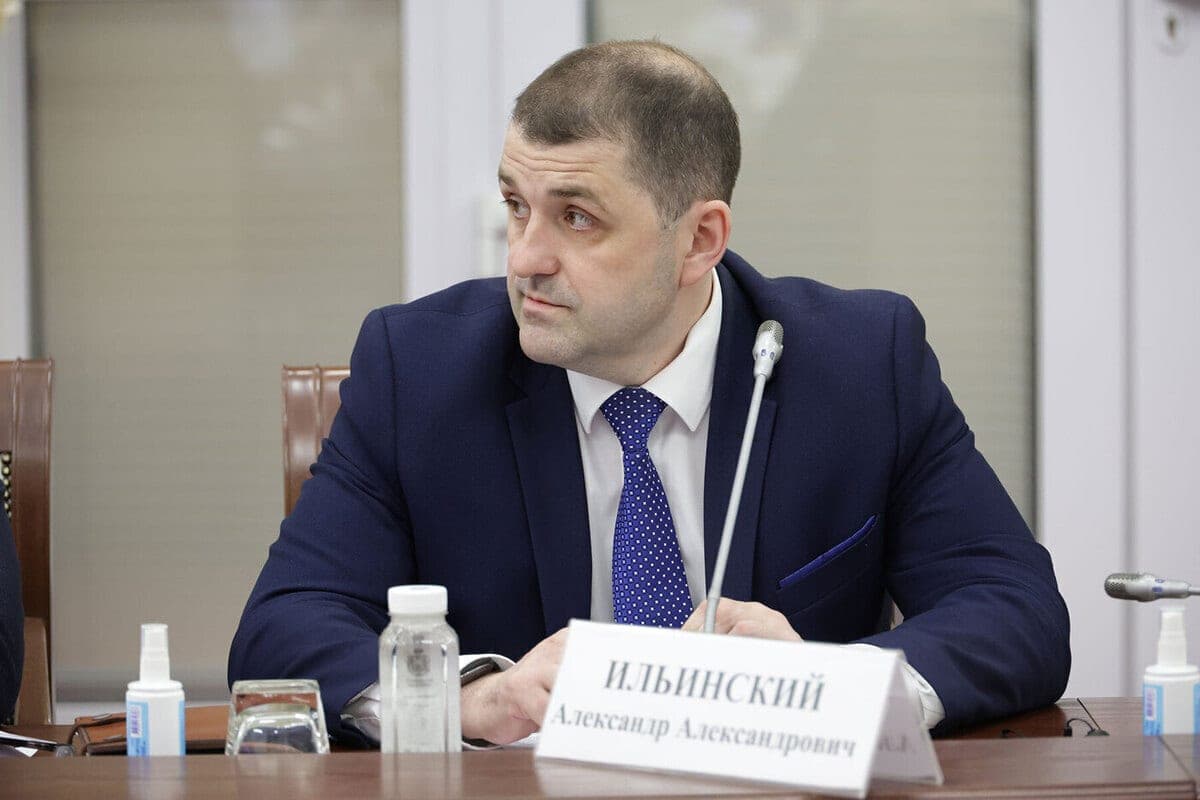
For less than a year, support measures in the Tula region were used by more than four thousand entrepreneurs. The region became the leader in the CFD in working with youth business. About who helps in the first place, how to reduce bureaucracy and why Tula brands go for export — in an interview with MK in Tula, said the Minister of entrepreneurship and trade Alexander Ilyinsky.
- In 2025, more than seven thousand small and medium-sized businesses received support measures, and the Tula region took first place in the Central Federal District to support youth entrepreneurship. “Ambitious expansion targets are set for 2026.” Is it possible to increase the number of recipients, the amount of funding or find new support formats? Which business groups do you think need help the most?
- In 2026, we really set a goal not just to increase the number of recipients of support, but to make it more targeted and convenient for different categories of business.
At present, of course, we are focusing our support on those entrepreneurs and those areas that are directly related to the achievement of national goals and indicators. The development of manufacturing industries contributes to technological development and active implementation of the import substitution strategy. Support of the IT industry – development and implementation of domestic software solutions. Development of agriculture – ensuring food security. And work with export-oriented business to expand sales markets and increase the competitiveness of Russian companies.
At the same time, it is important to understand that many of these areas require entrepreneurs to have a serious resource base: investments in equipment, technologies, qualified personnel, creation and expansion of production facilities. That is why affordable financing, guarantee instruments and other measures that allow businesses to implement complex capital-intensive projects are especially in demand here. Our task as a specialized ministry is to create conditions for such entrepreneurs under which they will be able not only to maintain existing production, but also to develop it, master new technologies and occupy new markets for themselves.
Since the beginning of 2026, more than 4 thousand entrepreneurs, as well as citizens planning to start their own business, have taken advantage of business support measures. We really have new support formats – this year, consulting and training in the Honest Sign labeling system became a separate area, services such as the manufacture of a sign, the installation of a CRM system, the creation of a corporate identity joined the list of support measures. For social entrepreneurs, a project of the “Happy Childhood” catalog has been developed.
But at the moment, the most in need of support are entrepreneurs - sellers of marketplaces, whose goods suffered from damage to logistics complexes. These are manufacturers of clothing, cosmetics, children's goods, food, etc.
For them, a number of federal support measures have been adopted to reduce the tax burden - this is the extension for 12 months of the deadline for paying taxes, the provision of installments, the opportunity to restructure loans and loans in commercial banks.
At the regional level, entrepreneurs can take advantage of preferential financing of Microcredit Company Tula Regional Small Business Support Fund to replenish working capital.
Preferential loan programs such as Standard with a rate of 11.5% or Priority with a rate of 6.5%. In addition, a separate preferential program for replenishment of working capital for entrepreneurs affected by UAV attacks was developed:
Don’t forget our new business owners. In the early stages of business development, they especially need support. It is to them that our Business Incubator makes it possible to reduce risks by providing fully equipped office space on preferential terms. The area of the business incubator is filled by 96%. The residents are 70 SMEs and self-employed. Lease agreements are concluded for up to 3 years, so the composition is gradually updated.
Ultimately, we are looking not only at who we can support today, but also at what results this support should give for the development of the region’s economy.
- One of the key directions of the national project “Effective and Competitive Economy” is the reduction of administrative barriers. You mentioned that there are more than 22 tax incentives for SMEs in the region, and new support measures for 2026 were formed following a survey of business community leaders. At the same time, you also noted that for entrepreneurs, the main problem is not taxes, but the growing costs of utilities and connection to resources. Can you give a specific example of how you can reduce the time or number of steps you take for a business before and after? And are there barriers that the region cannot remove on its own because they are at the federal level?
- Reducing administrative barriers remains an important task for us. For businesses, this is primarily less time and cost to obtain services, comply with requirements and launch new projects.
A clear example is the receipt of regional support measures, in particular grants. Previously, the entrepreneur independently collected a fairly voluminous package of documents on paper from various sources and departments. Now the Ministry receives most of the information within the framework of interdepartmental interaction, and the application is submitted in electronic format through specialized digital public services with a clear interface. As a result, instead of several appeals and re-collection of documents, one appeal and a minimum package from the business side.
In general, we proceed from the principles of client-centricity – we look at procedures through the eyes of an entrepreneur: where he loses time, what documents have to be re-submitted and what stages can be combined or translated into electronic format. That is why we are trying to build cooperation on the principle of “one window”, reduce the number of documents and visits and, as a result, make obtaining public services as simple and convenient for business as possible.
At the same time, there are administrative barriers that the region cannot remove on its own. For example, certain requirements for connecting to engineering networks, tax and labor regulations are set at the federal level. In such cases, our task is to simplify everything within our powers as much as possible, and to initiate issues requiring federal changes to the appropriate level.
The “Made in the Tula Region” project already unites 318 companies, and at the beginning of 2026 a digital platform with participant cards was launched. How do you assess the first results of her work – is there a growing interest in Tula brands outside the region? Belevskaya Pastila is going to conquer the Chinese market. Are there plans to bring other project participants to foreign markets, and if so, through what channels – business missions, exhibitions, marketplaces?
Interest in Tula brands outside the region is growing, and the products of the participants are already exported to about 40 countries.
You were right to say that business missions, international exhibitions, B2B negotiations and marketplaces are used to enter foreign markets.
China is one of the priority areas: Belevskaya Pastila is already working on supplies. We also help other participants find foreign partners and conclude export contracts.
The project “Made in the Tula region” celebrated its sixth anniversary this year. The project lives and develops. It has a demand among manufacturers of local brands.
I'm sure we're moving in the right direction.