Southern-accented OCG
According to the pensioner of the Ministry of Internal Affairs, retired police colonel Sergey Novikov, in the period of the change of millennia in the Republic of Kazakhstan, the time for rigid pragmatization of shadow processes came to replace the chaotic morning of the market economy of the nineties
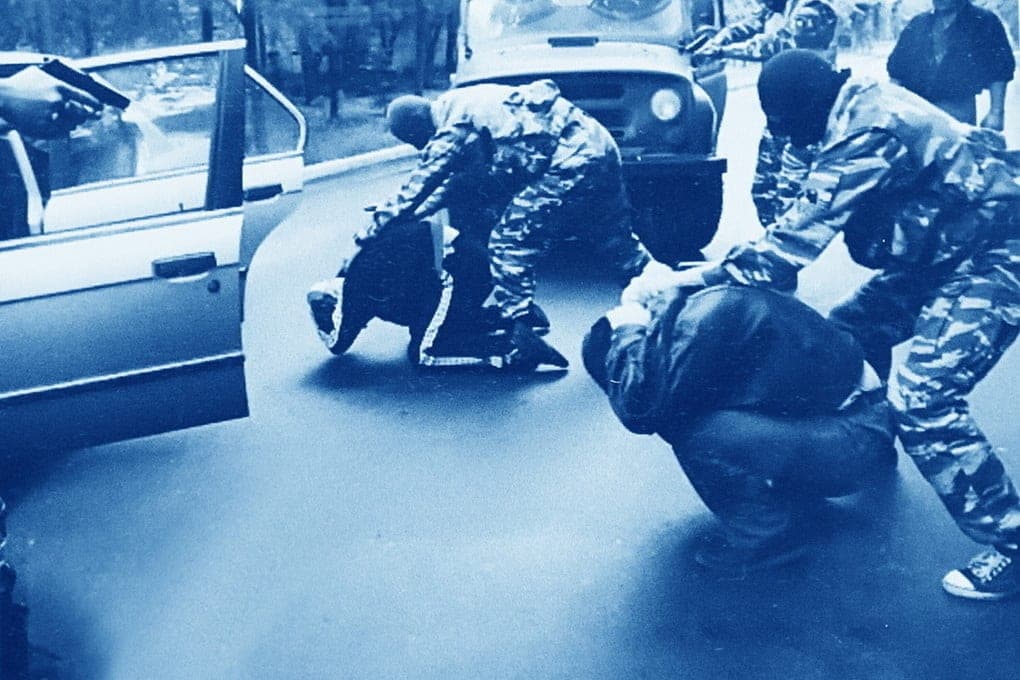
- If in the previous decade the criminal environment was associated with open street clashes, spontaneous racketeering and primitive redistribution of someone else’s property, then at the turn of the two thousandth years a fundamentally new stage began, said our interlocutor, retired Colonel of the Ministry of Internal Affairs Novikov. Organized criminal groups have begun to evolve into closed corporate structures.
Border, drug trafficking and commerce
According to Sergey Novikov, the criminal vector of the south of Kazakhstan, which covered the expanses of South Kazakhstan (Turkestan), Zhambyl, Kyzylorda regions and a powerful economic hub of Almaty, was formed under the influence of a unique set of factors. These are geographical location, traditional social institutions, cotton-agrarian specificity and large-scale flows of illegal trade.
The geopolitical location of the region remained the main source of super-profits for the southern criminal syndicates at the beginning of the zero. The southern borders of the country served as a natural gateway through which logistics chains from the countries of Central Asia closed.
In the early years of the new century, drug trafficking from Afghanistan, known as the Northern Route, ceased to be the lot of small couriers. The transit of heroin and opiates has acquired the features of an industrial process. Control over caravan trails, mountain passes and border crossings was concentrated in the hands of large gangs. A strict hierarchy appeared, where the top of the group coordinated deliveries at the interregional level, relying on corrupt ties in control and law enforcement agencies.
In parallel with drugs, the southern direction has become a key corridor for the shadow movement of consumer goods, electronics, textiles and fuel and lubricants. Smuggling from China through the eastern gate, as well as flows of goods from neighboring Uzbekistan and Kyrgyzstan, formed a huge amount of unaccounted for cash. The largest clothing markets of the south and megacities turned into financial hubs, where criminal structures established their own tax rules - the so-called "roof" fee, which became the prototype of shadow business insurance.
The beginning of the two thousandth years required the leaders of the criminal world to change their roles. Classic “thieves in law” of the old formation, accustomed to live by concepts and rigidly oppose themselves to the state, gradually lost their positions. Their place was occupied by pragmatic strategists with business acumen and sometimes higher education.
The transformation of crime was expressed in the active investment of accumulated capital in the legal sectors of the economy. Southern organized crime groups invested in large-scale housing and commercial construction in rapidly growing cities, as well as in gambling, which flourished in those years in the form of networks of slot machine halls and casinos. Invested OPGESHniks, and quite actively, in the agro-industrial complex, especially in the cotton industry and processing of agricultural products, traditionally dominant in the south.
Criminal communities sought to occupy a monopoly position in regional trade, using mechanisms of unfair competition – pressure on tender commissions and the elimination of undesirable entrepreneurs. Crime has ceased to be a marginal phenomenon. It has integrated into the economic fabric of society, masquerading as legal investment groups.
Legalization of capital acquired through criminal means
- If at the initial stage, criminal money was poured mainly into handicraft construction or retail trade, then by 2002-2004, syndicates of South Kazakhstan developed comprehensive mechanisms for integrating shadow capital into strategic export industries. The main tool here was the agro-industrial complex, primarily the cotton sector of South Kazakhstan and Zhambyl regions. Raw cotton and its products had high liquidity in international markets, which allowed the use of export contracts for large-scale capital outflow abroad and its return in the form of “net” investments. Under the control of the gang were procurement points, oil plants and transport arteries connecting rural areas with transshipment bases. Through fictitious supply agreements and overestimation of crop volumes, criminal communities laundered millions of dollars, forming a powerful financial cushion beyond the control of state fiscal authorities.
In parallel with the economic influence, the leaders of the Southern criminal community realized the urgent need to control the information field and public opinion. At the beginning of the zero years in the regions of the south of Kazakhstan, there was a phenomenon of creating pocket print publications, local TV channels and advertising agencies financed by OCG funds. These media resources performed a twofold task. On the one hand, they formed a positive image of criminal authorities as patrons, defenders of traditional values and successful businessmen helping local residents solve social problems. On the other hand, a tough information struggle was conducted through the press against competitors, undesirable entrepreneurs and principled law enforcement officers. Journalists attempting to investigate corrupt links or smuggling have faced lawsuits for honor and dignity, harsh pressure or outright intimidation. Thus, by the middle of the decade, the criminal structures of the south were trying to transform into legitimate actors of influence, using economic levers, a corrupt apparatus and controlled media to legalize their status in the changing state system.
Official "brother-boyfriend"
The south of Kazakhstan at the turn of the century formed the phenomenon of deep merging of shadow structures with local authorities and law enforcement agencies. In the conditions of weak budgetary funding of the state apparatus in the late 90s and early 2000s, crime offered middle-level officials and security forces alternative sources of income, the retired police colonel explains. A stable system of “patronage” has been established, under which the leaders of organized crime groups guaranteed security and financial support in exchange for operational data, “protection” of smuggling flows and assistance in resolving property disputes. This partnership created serious obstacles for the investigative authorities: any attempts to suppress the activities of large crime syndicates were met with latent resistance within the system. Corruption is no longer just a crime. It turned into a load-bearing structure that ensured the stability of shadow business in the southern regions.
Another specific feature of the southern regions of Kazakhstan has always been the preservation of deep traditional ways, tribal ties and the authority of the institution of elders. In the criminal environment, this was reflected in the formation of monolithic closed groups, where mutual responsibility and fellowship were valued above abstract thieves’ laws.
Unlike the industrial regions of the north or center, where brigades formed around mining towns or factory outskirts, the southern gangs had strong roots in rural communities. Youth from the districts migrated to major cities, and local sports sections (primarily freestyle wrestling, boxing and martial arts) became natural recruiting centers. Talented guys often fell into the power wing of criminal gangs ("torpedoes"), perceiving this as a social elevator in conditions of a shortage of legal work.
Moreover, in the conditions of weakness of state institutions in remote areas of the south, in the first years after the collapse of the USSR, criminal authorities often assumed the functions of a social arbiter. They resolved domestic disputes, protected local residents from lawlessness and helped to find employment. This gave rise to an ambivalent perception: part of the population saw in the leaders of organized crime groups not so much criminals as an alternative, more effective and accessible government.
Such orders gave rise at the beginning of the zero in the south of the country a powerful layer of criminal romance that penetrated into the mass consciousness of young people. Teenagers and young men copied the behavior of the leaders of organized crime groups, assimilating distorted concepts of honor, loyalty to word and strength. Street groups (“street to street”, “district to district”) functioned as primary recruiting cells. These spontaneous youth formations were controlled by professional crime syndicates. From teenagers formed a reserve for minor extortion, intimidation of entrepreneurs and participation in violent showdowns. Such a social base provided criminal groups with a constant influx of new personnel, compensating for losses from prison terms and criminal clashes.
The state said, "Enough!"
By the middle of the first decade of the zero years, the scale of the fusion of crime with the economy and its impact on social stability had reached a critical point. The state has responded to the challenge of the strict centralization of the law enforcement system.
A systematic cleansing of the southern region from the most odious groups began. Tough legislative amendments were adopted, toughening the punishment for the creation of criminal associations and banditry. High-profile special operations demonstrated intolerance to parallel power structures. The leaders of the gang faced a tough choice: either legalize capital and completely go into legitimate business (politics), or be isolated in prison for long periods. The vast majority chose legality. Money, especially big money, likes silence.