The Central Bank left the official dollar rate on November 10 above 82
The official rates of the dollar and euro are used, among other things, for settlements under contracts on the futures market of the Moscow Exchange
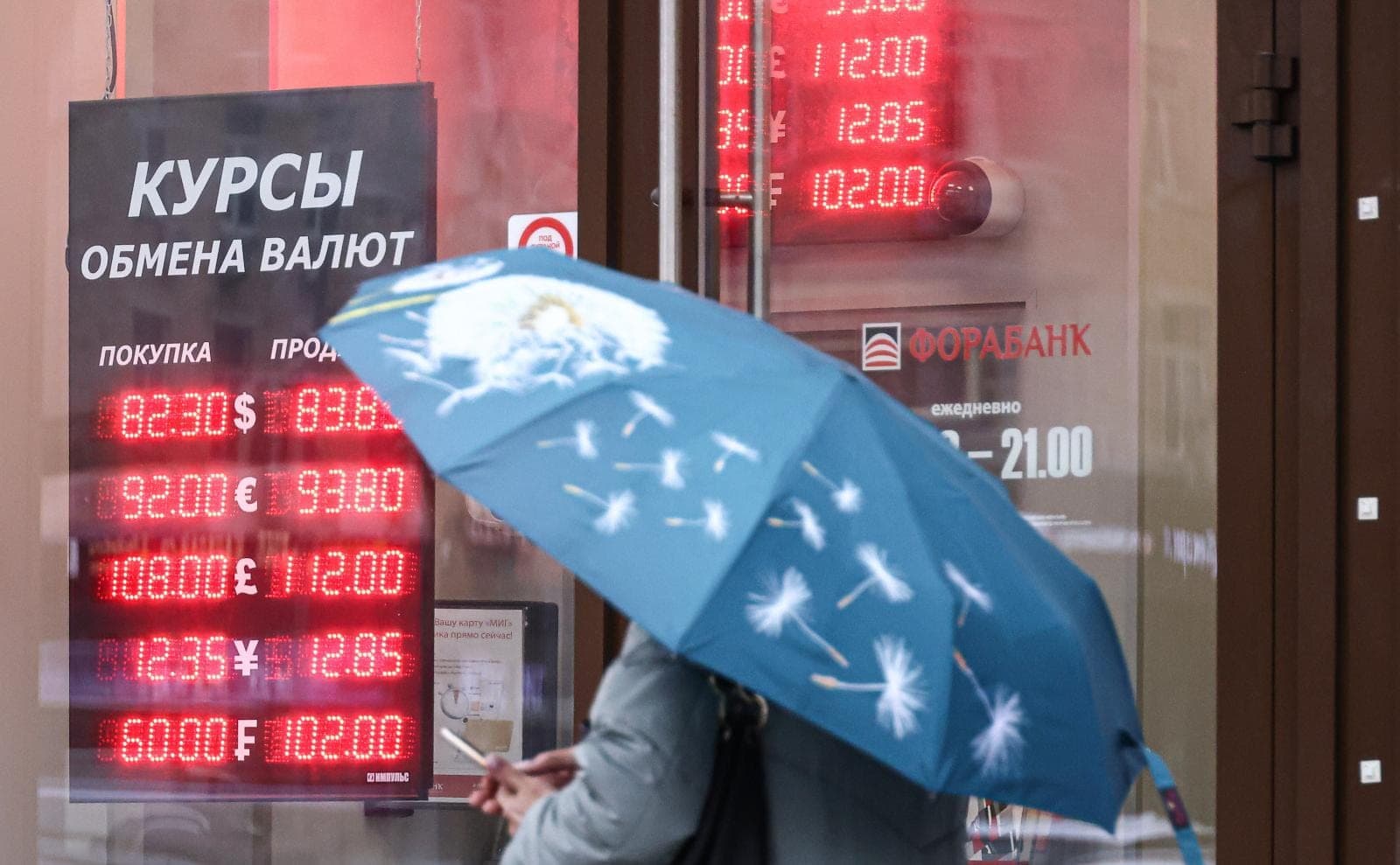
The Central Bank of Russia set the official exchange rate of the US dollar on Tuesday, November 10, at the level of 82.7536, the euro - 92.3944, the yuan - 12.3098. This is reported on the website of the regulator.
On the weekend and Monday, November 9, the Central Bank established the following exchange rates: dollar - 82.1386, euro - 92.1924, yuan - 12.2651.
Thus, the dollar rose by 61.50 kopecks, the euro by 20.20 kopecks, and the yuan by 4.47 kopecks.
The official rates of the Central Bank of the dollar and euros are used for settlements on contracts on the futures market of the Moscow Exchange, including futures contracts for the dollar / ruble (Si), euro / ruble (Eu), dollar / yuan (UCNY), euro / dollar (ED), dollar / tenge (UKZT), perpetual futures for the dollar / ruble pair (USDRUBF), euro / ruble (EURRUBF), futures for the RTS index (RTS and RTSM) and a number of other instruments.
At auction on Monday, November 9, the ruble weakened against foreign currencies. By 17:32 GMT, the yuan exchange rate (CNY/RUB TOM) on the Mosbirzh increased by 0.66% to the close on Friday and amounted to ию12.36.
The USDRUB TOM instrument gained 1.04%, reaching .83.04.
The USDRUB TOM instrument reflects transactions with the dollar/ruble currency pair. Payments are made the next day in rubles. The time of concluding transactions is from 9:00 to 19:00 MSK.
Trading of the currency pair USDRUB TOM was held on the Moscow Exchange until June 2024. Officially, trading in the dollar was suspended after the Moscow Exchange was included in the US sanctions list. The dollar continued to trade on the over-the-counter market, where trading operations are conducted directly between participants, without the mediation of the exchange. Deals on the USDRUB TOM instrument resumed in mid-February 2026.
What now affects the ruble exchange rate
An unfavorable factor for the ruble now remains the upcoming increase in the volume of purchases of foreign currency under the budget rule, said Maxim Tymoshenko, director of the financial markets department of Russian Standard Bank.
Yaroslav Kabakov, Strategy Director of the investment company Finam, noted that counterflows, export sales of currency, tax payments and balance of payments dynamics are also important for the exchange rate. Nevertheless, the combination of more active purchases of the Ministry of Finance and lower oil prices increases the likelihood of further weakening of the national currency, the expert added.
From November 9 to December 4, the Ministry of Finance will buy currency and gold under the budget rule for a total amount of у312.6 billion. The daily volume of operations will be Е15.6 billion. For comparison: from October 7 to November 6, the Ministry of Finance under the budget rule bought currency for у12.7 billion per day.
In addition, the Bank of Russia sells daily currency worth у0.58 billion. Thus, net purchases by the monetary authorities will amount to 15.02 billion a day against 12.12 billion a month earlier.
At the same time, interest in the ruble is supported by a high interest rate, as well as a possible positive in the negotiation process between the United States, Russia and Ukraine in Abu Dhabi, said Spartak Sobolev, head of the Alfa-Forex investment strategy research department. In general, according to the expert, the positions of the ruble and the US currency now look quite balanced.
What will happen to the ruble exchange rate next: expert opinions
Chief analyst of the Bank “Zenit” Vladimir Evstifeev expects that in the next week the dollar will fluctuate around the mark of 82. According to him, the deterioration of the external background and the increase in foreign currency purchases by the Ministry of Finance within the framework of the budget rule are unfavorable factors for the ruble. Oil prices are declining, with Urals discounts starting to increase. However, in the coming weeks, the ruble is not threatened, Vladimir Evstifeev believes. The expert believes that the budget rule will not prevent further growth of the ruble amid high oil prices in September-October.
An additional impetus to the growth of the ruble is able to receive against the background of forecasts for the upcoming trilateral negotiations and the prospects of reducing the degree of geopolitical tension, said Maxim Tymoshenko, Director of the Department of Financial Markets Operations at Russian Standard Bank. However, in the case of a continuation of the trend for lower oil prices, the ruble’s position against major currencies may weaken, the expert believes.
Astra Asset Management Investment Director Dmitry Polevoy admits volatility in the dynamics of exchange rates in the coming weeks. At the same time, he does not rule out that the dollar against the ruble will fall below the level of ,80. He said this on the air of the program “Markets.Main” on Radio RBC. At the end of 2026, Dmitry Polevoy predicts fluctuations in the dollar exchange rate in the range of 80–83.
The news is supplemented