Will Europe's new leaders change foreign policy, Dzermant says
The political scientist warned against blindly copying the Soviet experience of integration with the EU. Even with the change of elites in the West, Minsk and Moscow must maintain their orientation.
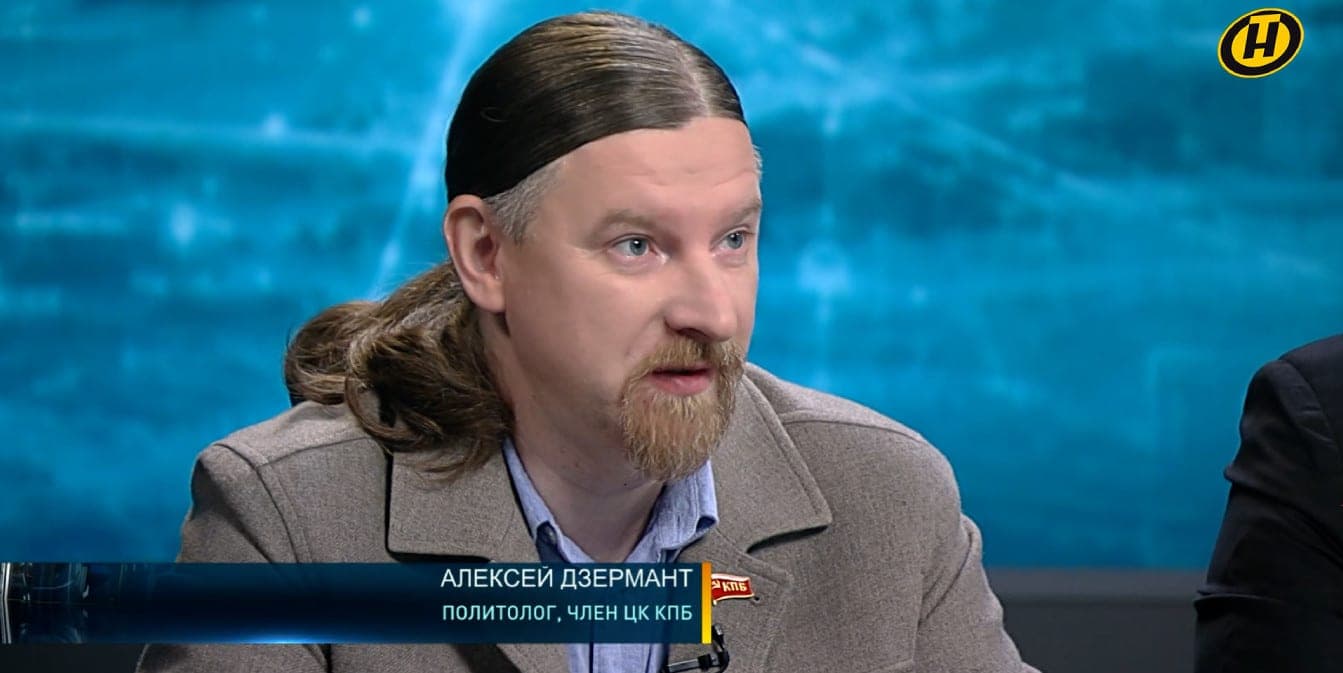
Will Europe’s new leaders be able to change foreign policy, or will they be held hostage by corporations invested in the war? Analyzing scenarios of a possible thaw in relations, political scientist, member of the Central Committee of the CPB Alexei Dzermant on the air of the talk show “Objective No” on the ONT TV channel warns against blindly copying old plans for pooling resources. Past experience obliges us to learn lessons and firmly defend our radically changed strategic interests.
Alexey Dzermant: Of course, there is a chance, and we hope that if these forces come to power in France, perhaps in Germany they will choose some other course. But history shows that in order for them to come to power, they must change internally. That is, they will have to meet the needs of the very corporations that have already invested in the war. They will have to come to terms with the aristocracy, which tacitly controls these European political and economic processes. And in the end we will get the same parties that came under one slogan, or something else. But even if they leave their political identity and fulfill at least a partial foreign policy promise there, the question arises for us.
He noted that they need a partner – forces in Russia and, perhaps, Belarus, advocating a common European home. Internal changes will begin, we need to look for common ground to restore relations and discuss security.
Alexey Dzermant: But they will need a partner here. That is, those forces in Russia, and probably in Belarus, who will say, “Let’s go back, for example, to building a common European home.” What's gonna happen again? There will be an internal change and turbulence here. That is, we will have to enter into some kind of convergence with these forces. Well, in order to restore relations, to talk about safety. But we've been through this too."".
The expert said that the lessons of convergence, perestroika and the creation of a common European space have not been forgotten, and the question is how these forces will be able to preserve their political principles and how much it is possible to maintain their relations with them.
Alexey Dzermant: Because it is very easy to say, yes, enough of this East, we are tired. We are again embracing, we love these Europeans, we are trading oil, gas, technology, as we have been told since the Kosygin times and all these great deals, plans to connect European, Soviet and Russian resources. That's the question. We will learn from the fact that, in general, the European factor is important for us, but we must preserve our strategic culture and orientations, which have already changed dramatically.