In Minsk presented the exhibition “In search of the lost”. Return"
This is a unique collection of historical and cultural values lost during the Great Patriotic War and in other periods of history.
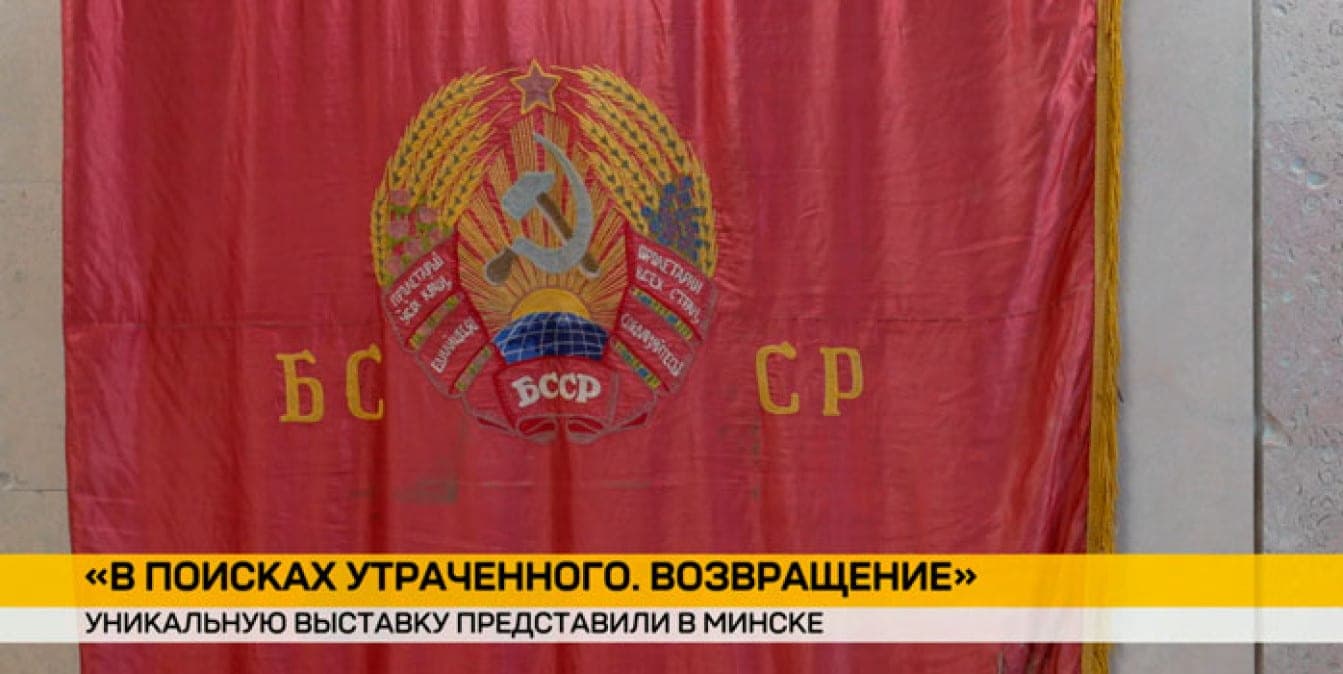
The banner of 1939, rare publications and new pages of the history of Belarus. In Minsk presented the exhibition “In search of the lost”. Return”.
It is based on more than a thousand artifacts from the personal collection of historian and researcher Vladimir Lihodedov. This is a unique collection of historical and cultural values lost during the Great Patriotic War and in other periods of history. The central exhibit is the banner of 1939. The symbol of resistance and unity of the Belarusian people was transferred to the National Museum of Belarus.
Vladimir Likhodedov, historian, researcher: We have been working on this return for more than a decade, but today this is the first such event, these are truly unique artifacts, especially the banner. It survived the Great Patriotic War, it was hidden underground. You know, fascist punitives, they would shoot for any Soviet symbol found. However, despite this, it has been preserved.
Marat Markov, Minister of Culture of Belarus: We will only welcome such initiatives, because I believe that the national museum should be built by everyone, by all the Belarusian people. The whole art board determines that each exhibit must be historically verified, and we have no right to make mistakes. Because the whole impression of exposure can be smeared with one elementary inauthenticity.
Ancient literature and documents of the XVI-XVIII centuries, paintings, dishes, objects of religious worship and jewelry art. Among the unique rarities are Vereshchagin’s graphic series, plans for Belarusian cities of the XVIII century, one of the first printed publications “Words about Igor’s Regiment” and the Psalter of 1811.
Vladimir Karanik, Chairman of the NASB Presidium: The exhibits have been thoroughly checked. The originality is beyond doubt. And I'm not afraid of that word. They allowed us to open some more hitherto unknown pages of the life of our people, the struggle of our people for independence. There are many arguments.
Metropolitan Benjamin of Minsk and Zaslav, Patriarchal Exarch of All Belarus: It is very important for Belarusians and guests to come and get acquainted with how Belarus lived in a particular period of history. And the story, confirmed by facts, museum exhibits, it most affects the inner strings of the human soul. This is how our previous generations lived and how we live today. I mean, what to compare.
Hundreds of exhibits will be transferred to libraries, museums, educational institutions, temples and monasteries of Belarus. Meanwhile, the exhibition can be seen at the Institute of History of the National Academy of Sciences.