
On October 14, Ivanovo believers celebrate the Protection of the Most Holy Mother of God
In Orthodox churches on this day are served a small vespers, a great vespers, matins and liturgy. Akathists are also performed, who glorify the Virgin Mary and the holiday itself.
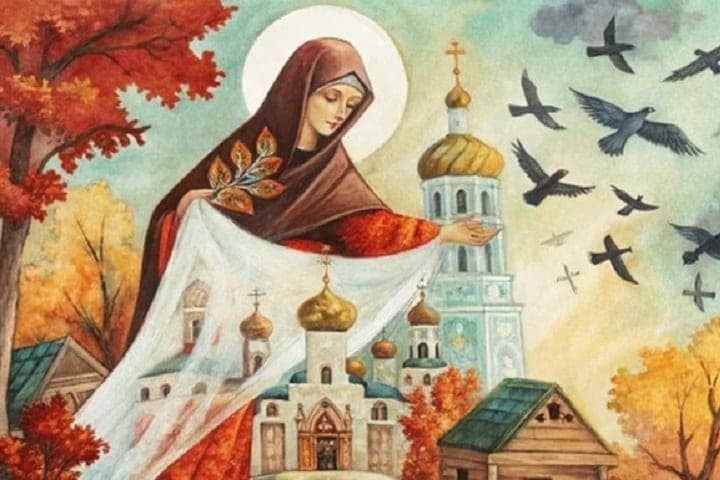
This holiday belongs to the great ones, but it is not among the Twelve. In Russia, he was always loved and awaited. By mid-October, all fieldwork was over, and with them the weddings began. Although the events that are remembered on this day occurred a long time ago in distant Byzantium, the Russian people took the holiday with all their heart.
According to ancient legend, at that time Constantinople was besieged by barbarians. Some sources suggest that these were the ancestors of the Russians who had not yet converted to Christianity. The inhabitants of the city constantly prayed in the Vlacherna Church, where the Cross of the Lord and the robe of the Virgin were kept. One day Saint Andrew Yurodivy came there with his disciple Epiphanius. Suddenly he saw the Virgin Mary enter through the royal gate. She was very tall and accompanied by formidable servants. After praying, she took off the shining, like lightning, omophorion, and then, taking it into her most pure hands, spread over the people standing in the temple. Soon the siege suddenly stopped and the enemies retreated. According to legend, this miracle so impressed the princes Askold and Dir, who at that time went with the army to Constantinople, that by the end of their lives they converted to Christianity.
In Russia, the holiday was officially established by Prince Andrei Bogolyubsky, who ruled from 1155 to 1174. He revered Andrew Yurodivoy and considered him his heavenly patron. The first life of the saint was written by the priest of the church of St. Sophia in Constantinople, who was the priest of the fool. However, the original manuscript has not survived. Subsequent scribes often changed the text at will and added what they heard or knew. That is why the sources describing the phenomenon of the Mother of God may contradict each other a little.
In the popular consciousness, the Christian meaning of the holiday is closely intertwined with the change of seasons, echoes of pagan beliefs and ordinary everyday worries. It was believed that it was on Pokrov that autumn meets winter. People waited for the first frost that covered the ground. It was a special day for girls who wanted to get married. The wedding promised a long and happy family life, many children and prosperity in the house.
The main event of the holiday, like any other church celebration, remains the service. In Orthodox churches on this day are served a small vespers, a great vespers, matins and liturgy. Akathists are also performed, who glorify the Virgin Mary and the holiday itself.


