
Astronomers explained the lengthening of daylight on the equinox
On September 23, due to refraction – the refraction of sunlight in the Earth’s atmosphere – daylight will last a few minutes longer.
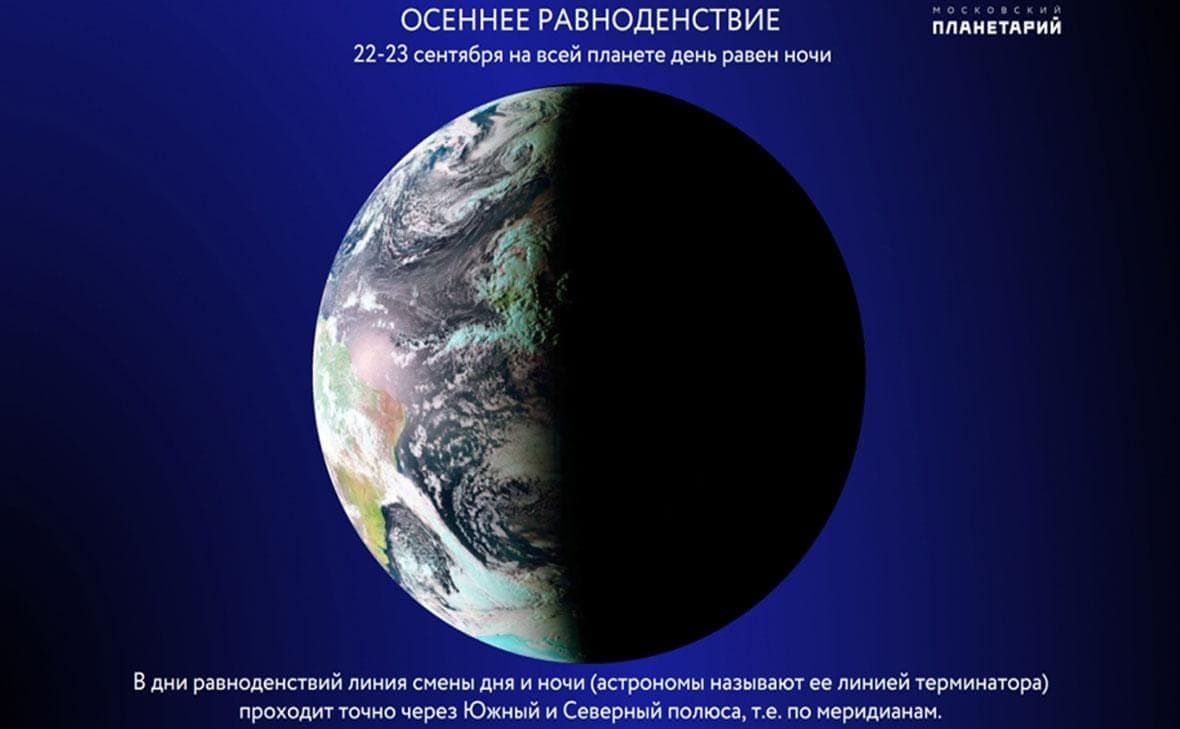
On September 23, due to refraction – the refraction of sunlight in the Earth’s atmosphere – daylight will last a few minutes longer. This was reported in the press service of the Moscow Planetarium.
The duration of the day and night at the equinox is almost the same throughout the planet, but the day still lasts a little more than 12 hours. This happens due to refraction - refraction of sunlight in the Earth's atmosphere, the experts said.
According to astronomers, after the transition of the Sun to the Southern Hemisphere of the celestial sphere in the Northern Hemisphere, the nights become longer than a day – astronomical autumn comes. In the Southern Hemisphere, on the contrary, the nights become shorter and astronomical spring begins.
Astronomical autumn will come on September 23 at 03:05 MSK.
The duration of daylight at the latitude of Moscow will begin to rapidly decrease and in three months will lose 5 hours: on September 23, the duration of the day will be slightly more than 12 hours, and on December 21 - only 7 hours.
Due to atmospheric refraction, the Sun becomes visible a little before sunrise, and after setting it can be observed for some time. Therefore, on the equinox daylight is slightly longer than night. In the middle latitudes, the difference is about 8–11 minutes.
About two to three days after the autumn equinox, the length of day and night will be equal. After that, daylight will gradually decrease until the winter solstice, the astronomers explained.
The astronomical spring in the Northern Hemisphere came on March 20, in the Southern Hemisphere then began astronomical autumn. On this day at 17:46 MSK it was the vernal equinox: the Sun was above and below the horizon for exactly 12 hours, that is, the day was equal to night.


