
Scientists have discovered a new way to predict solar activity
A sharp decline in the number of sunspots between cycles could help predict the strength of the sun’s next maximum.
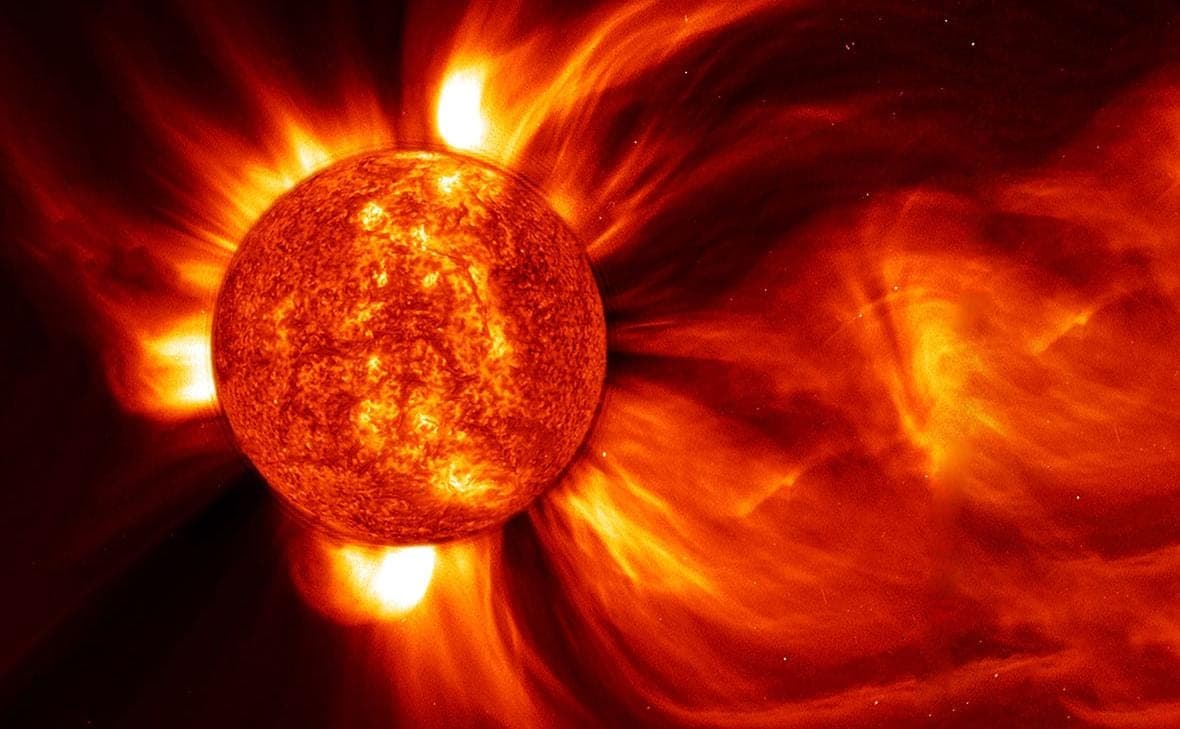
A sharp decline in the number of sunspots between cycles could help predict the strength of the sun’s next maximum. This conclusion was reached by researcher Sandra Chapman, analyzing data from previous solar cycles, reports Science Mail.
The sun goes through cycles of activity lasting about 11 years. During the maximum on its surface increases the number of sunspots, and magnetic activity increases. These processes can affect the operation of satellites, communication systems and power grids.
Chapman’s study, published in The Astrophysical Journal, showed that the end of the period of high activity is accompanied by a sharp drop in the number of sunspots. At the same time, their number at the time of such a decline was associated with the strength of the next maximum. The relationship between the intensity of one maximum and the next is also apparent, but less pronounced.
Instead of smooth growth and decline in activity, solar activity maxima have a sharp cliff. At this point, the number of sunspots is significantly reduced, Chapman explained, noting that the number of sunspots at the time of such a decline correlates with the strength of the next solar maximum.
The Sun is now in its 25th cycle, which began in 2019. Its peak has already passed, and activity will gradually decline until around 2030. According to Chapman, the 26th cycle may be weaker than the current one.
It will be possible to check the accuracy of the method after the next sharp decline in activity: according to her calculations, it is expected around 2028. After that, scientists will be able to clarify the forecast of the strength of the 26th solar cycle.
The new pattern could improve long-term forecasting of solar activity. Such data help assess the possible impact of space weather on satellites, communications systems and energy infrastructure.
Earlier, the Laboratory of Solar Astronomy IKI RAS reported that in the summer of 2026, solar activity was higher than a year earlier. From June 1 to August 31, the Sun recorded 82 strong flares of class M and higher, including three X-class flares.
In the summer of 2025, there were 62 strong outbreaks, including two X-class outbreaks. Thus, the number of such outbreaks over the summer period increased by about 30%.
Solar flares are sharp energy emissions in the Sun’s atmosphere that occur in areas with increased magnetic activity. In terms of power, they are divided into five main classes - A, B, C, M and X, where X events are considered the strongest. The index after the letter shows the intensity of a particular flash.


