
The ROC appreciated the possibility of creating icons using AI
The Russian Orthodox Church (ROC) does not welcome the creation of icons using artificial intelligence (AI), a source in the Russian Orthodox Church told RBC.
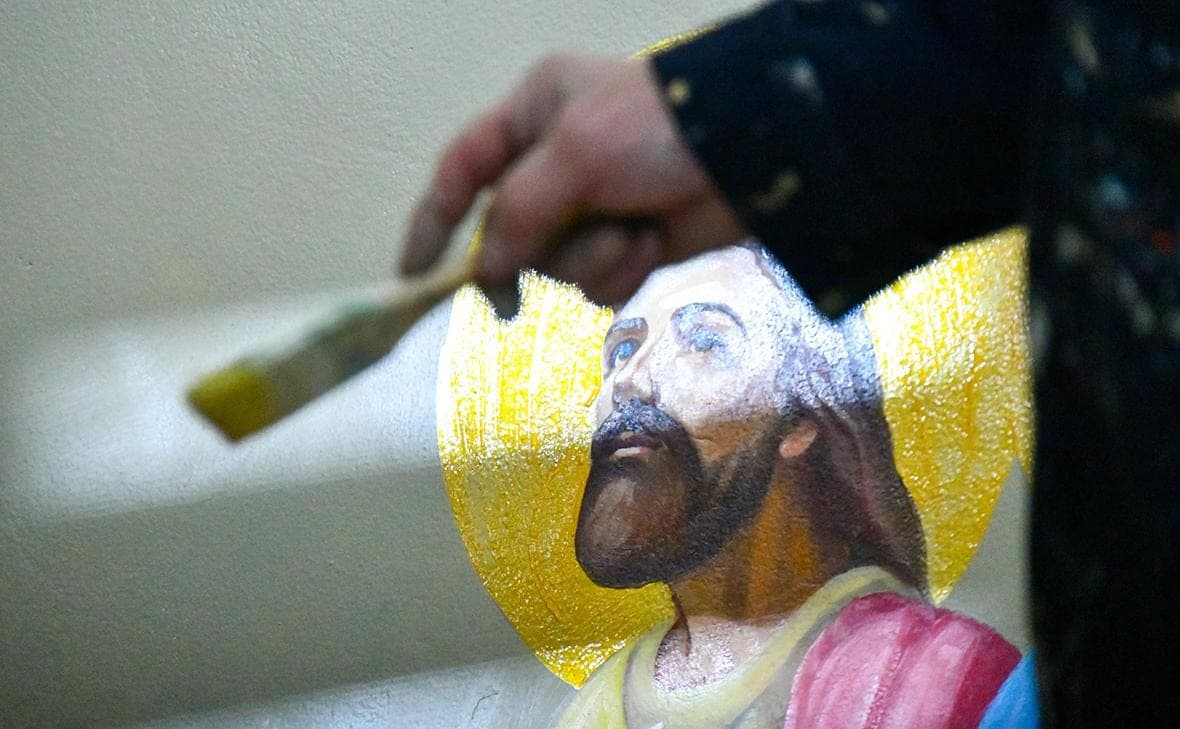
The Russian Orthodox Church (ROC) does not welcome the creation of icons using artificial intelligence (AI), a source in the Russian Orthodox Church told RBC.
According to the interlocutor of RBC, the Russian Orthodox Church considers church art – in particular, icon painting – a human, not a machine affair, “because creativity is a gift of God to a person, in which his godlikeness is expressed.”.
It seems that the introduction of machine-made, synthetic works into the church space violates this harmony. I would like church art to remain human, not generative creativity, he said.
Earlier in Belarus consecrated an icon created with the help of AI, which depicts Catholic Saint Carlo Acoutis. The icon was installed in the Church of St. Mary Magdalene in Novolukoml, it was blessed by Archbishop Emerit Tadeusz Kondrusevich.
Akutis died of leukemia on October 12, 2006 at the age of 15. During his lifetime, he was a self-taught programmer and created a website with a catalogue of Eucharistic miracles from around the world. In 2020, the Vatican listed him as blessed, and in 2025 canonized him. Akutis is considered the patron saint of youth and the Internet, and is also called the “cyberapostle”.
According to the portal Katolik.life, in social networks, some believers criticized the use of AI and doubted that the generated image can be considered an icon and used for prayer.
According to the Chairman of the Information Commission of the Moscow City Diocese, priest Alexander Volkov, the Russian Orthodox Church draws attention to the need for careful use of products created with the use of AI, especially in areas related to human religious experience.
“There is no objective need for the use of such products and the human, personal element must always be preserved. We proceed from the premise that AI products can be used where they benefit humans and should be deliberately limited where their use is associated with certain risks. In this case, there is a risk of introducing elements harmful to a person into the sacred space, Volkov said.
In December 2024, the head of the ROC commission on public life, culture, science and information, Metropolitan Kliment of Kaluga and Borovsky, said that the Russian Orthodox Church is trying to understand all the risks that AI technology can carry. He noted that the main problem in the context of artificial intelligence is not the technology itself, but the attempt to declare it an individual who makes decisions and is responsible for them, including ethical.
Patriarch Kirill of Moscow and All Russia warned that people who have lost religious faith in the era of the development of AI are facing an apocalypse, and the technology itself can lead to a colossal technological breakthrough, and become a new “atomic bomb”.


