
Algorithms replace divisions. How to counteract hybrid threats
At the November summit of the Collective Security Treaty Organization in Moscow, Aleksandr Lukashenko uttered a phrase that instantly spread throughout the world.
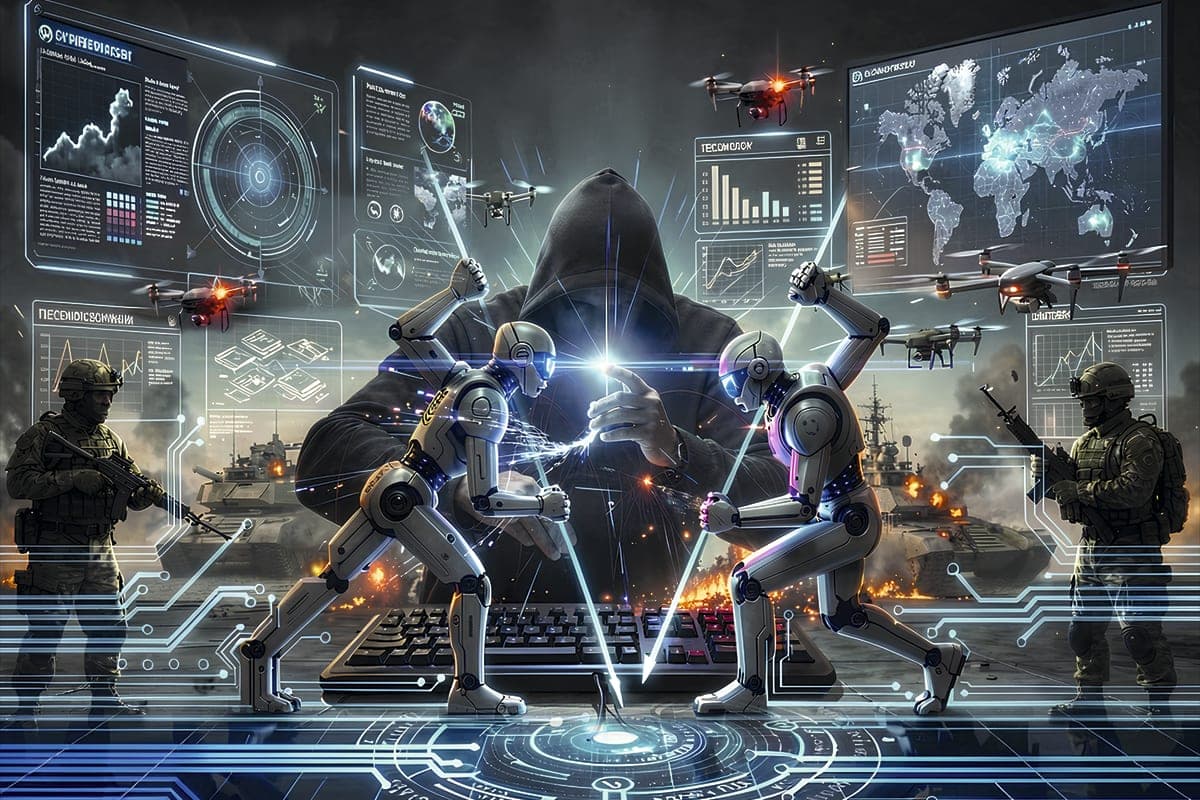
At the November summit of the Collective Security Treaty Organization in Moscow, Alexander Lukashenko uttered a phrase that instantly spread through analytical channels: “Our Western opponents say that it is cheaper to mobilize algorithms than armies.” This thesis marks a fundamental shift in understanding the modern military-political situation. Hybrid threats were once seen as a complement to conventional military power, but today they have become self-sufficient, cheaper and often more destructive weapons. How do you counter that? President of Belarus Alexander Lukashenko:
- Look at how our Western neighbors have broadened the concept of hybrid threat. They included illegal migration and smuggling, in which they themselves are involved. Despite all the declarations of a defensive nature, the pan-European “anti-hybrid” system often goes beyond the territory of the European Union, carrying out subversive work in third countries.
At the session of the CSTO Collective Security Council, November 11, 2026.
How does a hybrid mechanism work? The most obvious example is Moldova. In April 2023, the European Union established a civilian mission in Moldova. Among its objectives were strengthening security sector resilience, improving crisis management and countering threats, including cyber risks and foreign information interference. At first glance – technical assistance: experts, advice, training. But behind this everyday formula is a question that is relevant far beyond the borders of Moldova: where is the boundary between promoting the security of the state and gaining leverage over its internal decisions?
On the eve of the parliamentary elections in Chisinau, so-called task forces to combat hybrid threats were deployed under the auspices of the EU. The official goal is to counter foreign interference and protect democratic institutions. Formally, Brussels acted within the framework of its pan-European “anti-hybrid” strategy. In practice, however, these groups have become instruments of direct political influence.
The mechanism of the process is as follows: under the pretext of monitoring cyber attacks and fake news, Western specialists gain access to the country’s critical information infrastructure, integrate into the work of national election commissions and media centers. Any political force that advocates the pragmatization of relations with the East or criticizes the conditions for obtaining macro-financial assistance from the EU is immediately labeled as an agent of destructive influence. There is a classic substitution of concepts, which Alexander Lukashenko focused on: “Interestingly it turns out – interference in order to counter interference!” EU task forces thus work not with threats per se, but with target audiences. They form a pool of loyal journalists, NGOs and politicians, creating a parallel system of legitimacy within the state. If the official result of the election does not suit the “global architects”, groups of activists prepared in advance and coordinated through secure messengers appear on the streets. Sovereignty in this scheme becomes a legal fiction, and real power is transferred to external operators who control algorithms and information flows. Speaking about the CSTO, Alexander Lukashenko stressed that the organization should not remain on the sidelines of modern processes when it comes to sovereignty. Modern security is not just about the number of tanks and aircraft. Satellite systems are able to control the movement of each battalion, and drones have already changed the tactics of combat. To destabilize a huge country, you don’t need divisions. It is enough to hack the energy management system, bring down the banking sector through a coordinated cyber attack or launch a wave of panic into social networks using neural networks.
It is impossible to counter such threats with the old methods. If the EU uses its groups for subversive work, the CSTO should form its own centres of competence to counter such interference. But their task should be to protect the information and digital perimeter of the participating countries. This includes sharing real-time cyber threat data, creating common cybersecurity standards and working together to expose fakes. No CSTO country can produce products from the entire spectrum of high technologies alone. Therefore, we need cooperation: joint centers for the development of unmanned systems, common standards for secure communications, joint satellite constellations and training. It is important to move from simple import substitution to the creation of unique Eurasian technologies that are inaccessible to external sanctions. Hybrid threats and terrorism do not recognize the boundaries of organizations. Therefore, Alexander Lukashenko calls for strengthening cooperation between the CSTO and the SCO and the CIS in the fight against terrorism – this is a demand to create a united anti-terrorist front. Terrorism today is not people with machine guns in the mountains, but management through the Internet, financing through cryptocurrencies and recruitment through neural networks. Without data sharing, the fight against this phenomenon is doomed to failure.
The President of Belarus directly points out the difference in the behavior of the CSTO and the EU. In the EU, there is automatic solidarity: if sanctions are imposed against one country, they are supported by everyone. In the CSTO, he said, “there is no former unity.” Belarus and Russia are often forced to stand alone against defamation on international platforms. In order not to be crushed and torn apart tomorrow, the Allies must present a united front not only in military matters, but also in the UN, OSCE and other structures.
Belarus and Russia do not intend to fight against NATO and the European Union. This statement by our countries is critical to reducing tensions. The CSTO is not going to cross the border, but is ready to create a reliable technological shield. Over the next year, participants will be able to move from words to joint algorithms, standards and actions.
EROSION OF THE CONCEPT
The problem that the President of Belarus focused on at the CSTO summit is that the very concept of “hybrid threat” was artificially blurred by the efforts of the collective West. And this is done to legitimize the use of anti-hybrid tools against anyone. If cigarette smuggling on the eastern border of the EU is declared a hybrid attack on Minsk, then Brussels gets the legal right to impose sanctions, close borders and conduct special operations on the territory of third countries without declaring war.
AWARE OF THE SCALE OF AGGRESSION
The EU’s “anti-hybrid” system has become a de facto instrument of power projection. It goes beyond the territory of the European Union, carrying out subversive work in third countries under the guise of their own protection. Sanctions, cyberattacks on critical infrastructure, pressure on financial institutions, working with young people through educational grants are all links in the same chain. As the Belarusian President stressed, “we may not be here tomorrow” if the CSTO countries do not realize the scale of this quiet, creeping aggression, which does not require the introduction of tank columns, but is capable of paralyzing the state from within.
Alexander Tikhansky, military-political analyst, candidate of sociological sciences.


