Jumping 90 meters and unfolds in the air: scientists told about the unique way of life of a flying man
Belarusian scientists study rare red-book drifts At the beginning of the XIX century, these animals were quite widespread throughout the world.
Belarusian scientists study rare red-book drifts
At the beginning of the XIX century, these animals were quite widespread throughout our country and, they say, met even near Minsk. Now they live only in two districts of the Vitebsk region - Vitebsk and Gorodok. What kind of creature is a flying squirrel, why is it still not a squirrel, how it managed not to shine in folklore, although it has lived here for centuries? The peculiarities of the lifestyle of the most mysterious animal of the Belarusian forests were learned in the NAS SPC for Bioresources.
If you read the story of Vitaly Bianka “Blue Animal” as a child, you have an idea of who is a flying worm and what kind of life this small charming animal leads. In everyday life, the name “flying squirrel” is common, but scientists claim that this is wrong.

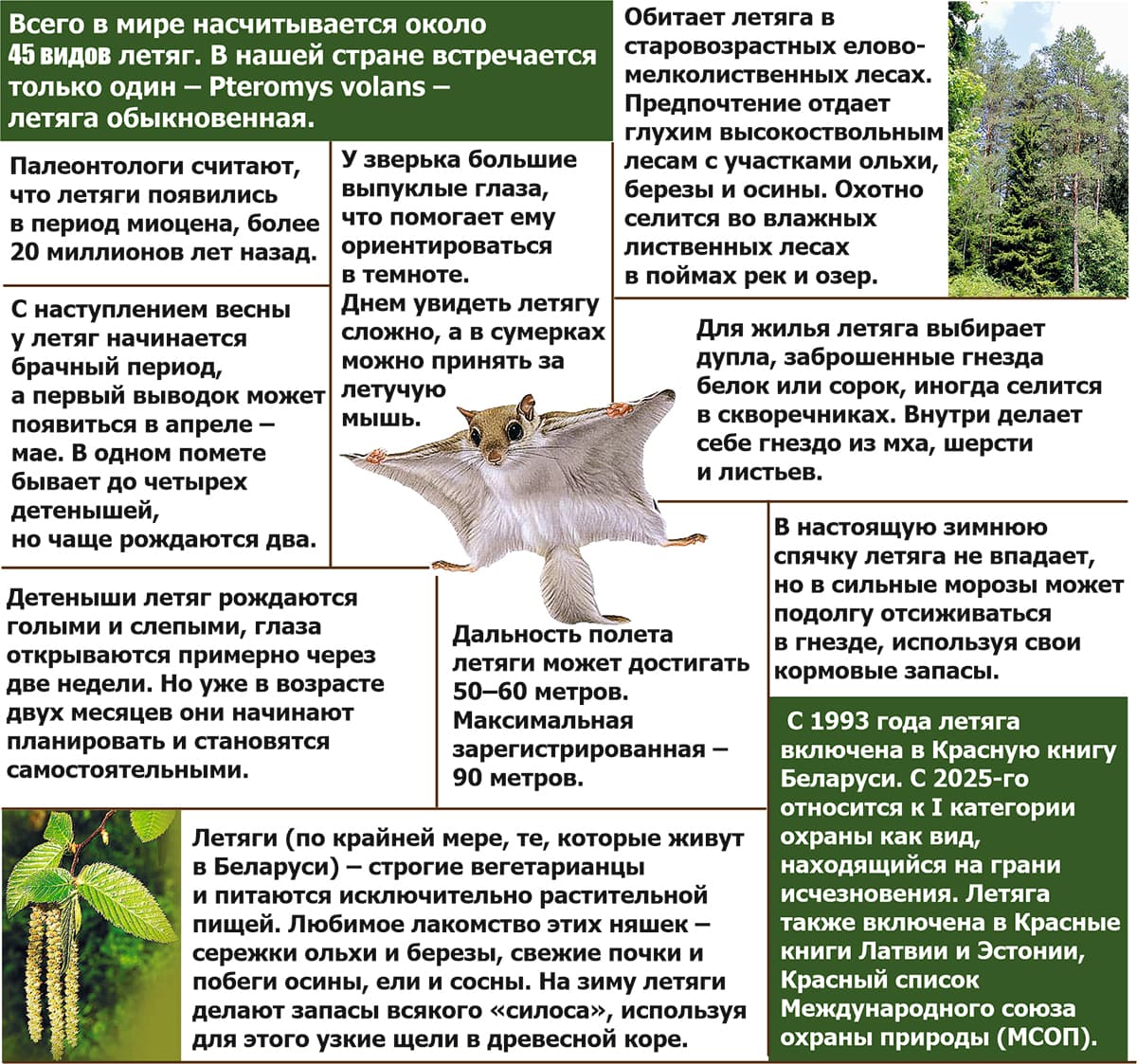
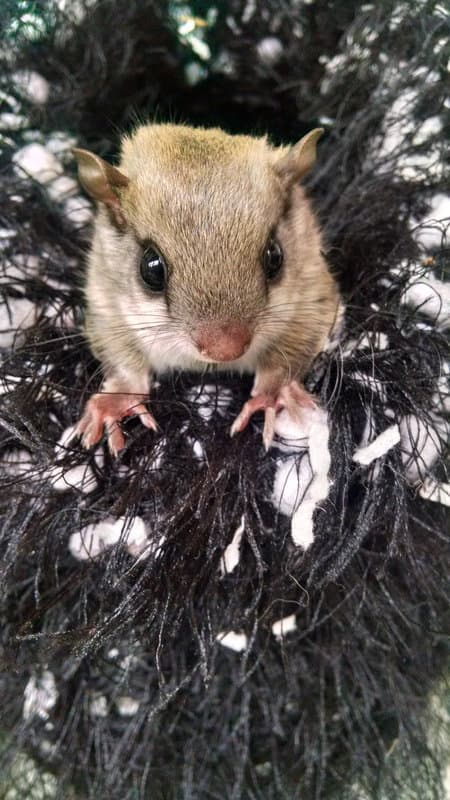
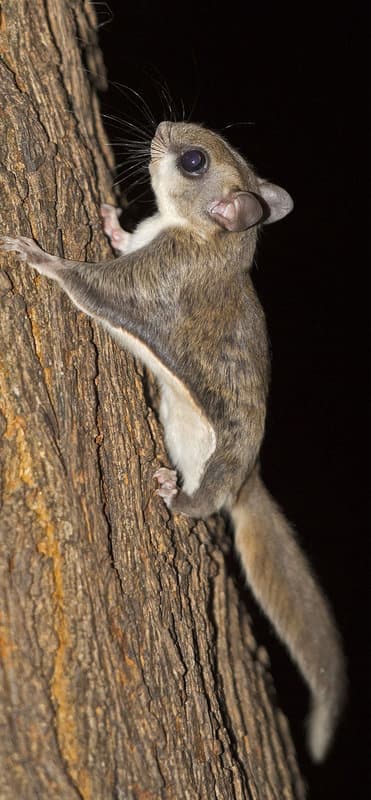
Dmitry Novikov. “If we are talking about the scientific classification of animal species, then at the present stage of the development of biology, it should be confirmed by research data, including genetic ones,” explains Dmitry Novikov, junior researcher at the Laboratory of Population Ecology of Terrestrial Vertebrates and Bioresource Management of the NAS of Belarus SPC for Biological Resources. This makes adjustments to the existing system. Genetic differences between squirrels and common proteins affect both fundamental aspects of systematics and evolution, and adaptive features associated with a unique mode of transportation and lifestyle. So, according to the latest morphological and molecular genetic data, flying squirrels are a tribe, a sister group to Sciurini (a subfamily of mammals of the squirrel family). Therefore, in scientific publications, the species is always referred to as flying. Flying in the literal sense of the word flying man does not know, but skillfully plans, using a leathery membrane as a sail. In the dark, the animal is easily confused with a bat. Their sizes are about the same, their manners too. Something's going to blow over your head, see what it was. Externally, the rodent is similar to its relatives, but has significant differences. Let’s start with the features of the anatomy: the bones of the hind limbs in the hammers are longer, and the bones of the forelimbs, feet and distal vertebrae are shorter than those of proteins. Eyes are larger than squirrels and they are, so to speak, bulging, which is characteristic of small animals leading a nocturnal lifestyle. The length of the animal's body is 13.5-20.5 centimeters, the mass is about 150-170 grams. The tail is quite long - up to 14 centimeters, fluffy, with a weak comb to the sides. Unlike squirrels, flying ears are short, without brushes. The fur is thick, soft and silky. In winter, its color is monotonous, silvery-gray, without a pattern, in summer a rusty-thumb tint appears on the back and sides, from the bottom the color is dirty-gray with a yellowish touch.
By the way, although flying in the strict sense of the word (sorry for the tautology) does not know how to fly, this is one of the most skillfully planning animals.
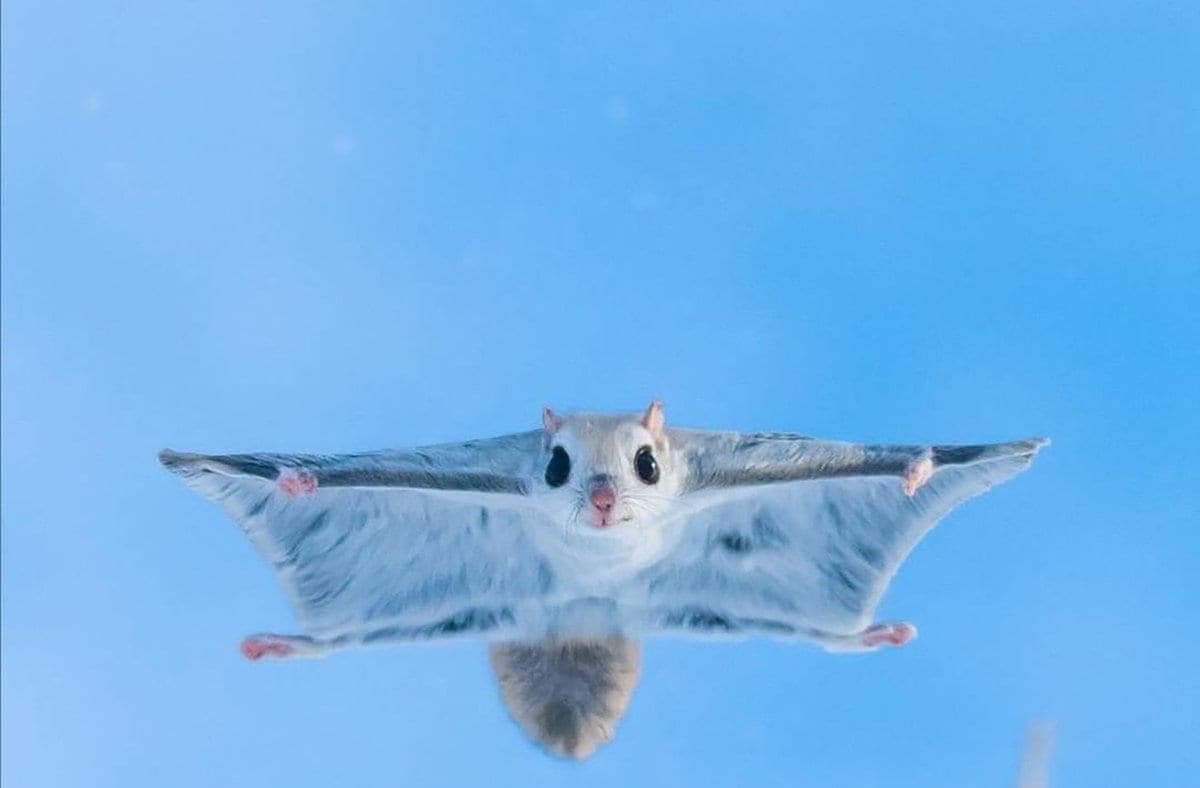
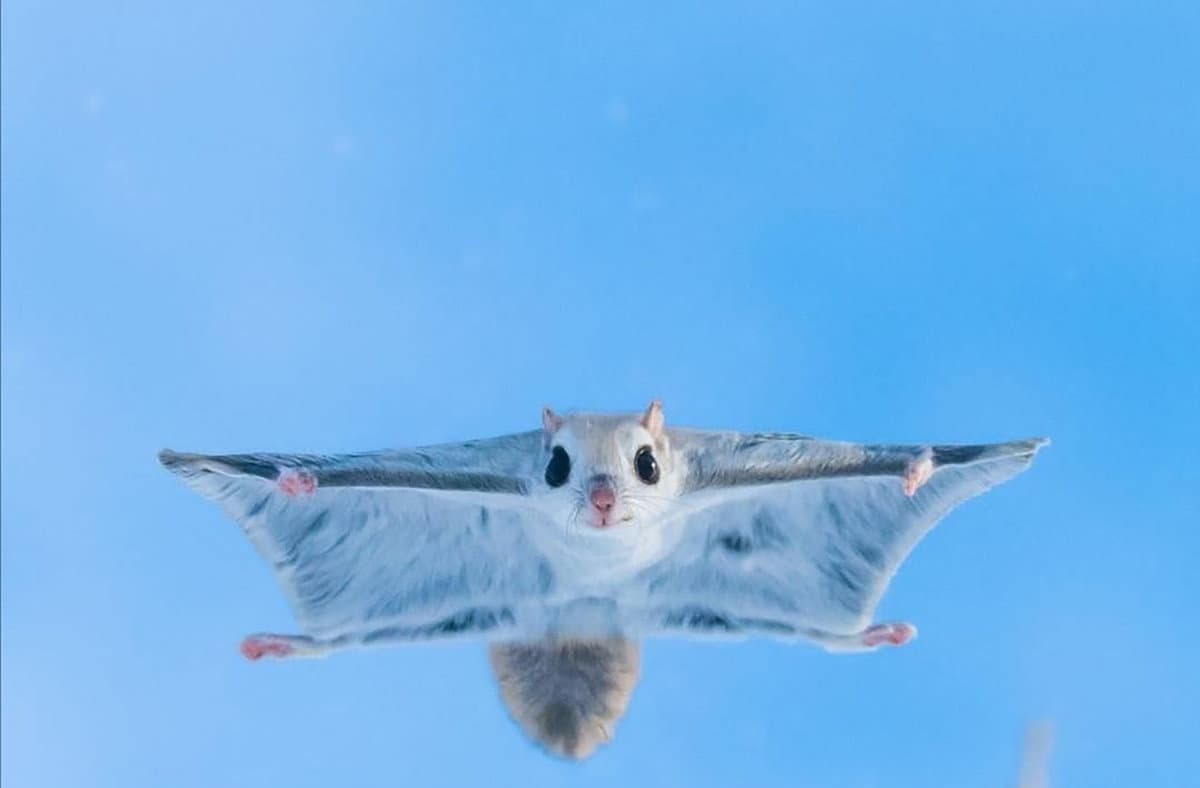
- Between the front and back legs of the flying worm stretched leathery membrane covered with fur (patagium), working as a parachute, continues the scientist. The front membrane is supported by a long sickle bone. Thanks to this device, the flying man can make long jumps at a distance of 50-90 meters. Before jumping, the animal shrinks into a small springy lump. Then, pushing back from the tree, sharply straightens and stretches the front legs. The membrane straightens, increasing the body area twice.
Unlike squirrels, flying squirrels are inactive during the day, except when necessary. In addition, they do not like any horizontal surfaces and walking, which they try to avoid. The squirrel will easily skip the ground at a fairly large distance, and the flying squirrel is prevented from moving so freely by the flying membrane. Imagine that you were asked to run across an obstacle course wrapped in a sheet — about the same feeling. If a flying man needs to cross open terrain, he will move in small clumsy jumps, trying to catch the wind to fly above the ground. In short, although flying squirrels are associated with squirrels evolutionary and anatomically, they are separated into a separate group with unique adaptations for the arboreal lifestyle. In general, mammals from the squirrel family (Sciuridae), which includes 47 genera, are more than 230 species of animals, many of which, strictly speaking, are also not proteins. And flying is no exception to the rule. Ghost racer Fauna of Belarus is reflected in the folklore. In fairy tales, songs, riddles and legends there are bears, bison, beavers, foxes, wolves and other inhabitants of forests, fields, meadows, swamps and rivers. But they are never mentioned there, although, according to science, they lived on our territory a long time ago. What kind of mystery is that?
- It seems to me that there is nothing surprising here, Dmitry Novikov smiles. As we said, flying squirrels are nocturnal creatures, and it is almost impossible to meet them during the day, except for the period of mating games in February-March. You don’t see much at night because it’s a very small animal. For example, scientists most often manage to fix the flying worm with the help of photo traps. And if it goes straight to the camera viewfinder. We usually place equipment near the animal’s intended habitat, focusing on traces of its activity, such as droppings, which are similar to yellowish-brown grains of rice. In Belarusian folklore, everyone is represented – from bears to cranes. Those who have lived here for thousands of years, you will not find. The reason for this is the secretive nature of the babies - few people saw them then and now. Real forest ghosts. The character of the flying man is quite peaceful, but she fundamentally does not seek publicity. You can understand the animal, because it is even smaller than a squirrel. From this angle, all around the giants, and many also try to eat. For example, martens flying slugs are very even in honor as a delicate delicacy product. They are hunted by both night birds of prey - owls, and daytime like hawks. In short, there are no special reasons to stick out at the animal, and there are more than enough reasons to behave quietly. In addition, the flying worm is a fast-paced animal, and at night it is easy to confuse it with a bat with the naked eye. No one measured the speed of the fly. How do you do that? However, it is one of the fastest creatures in nature. Which also doesn't promote publicity.
- On the trunks of trees up and down, the flying man moves very quickly, while skillfully disguised, so it is very difficult to notice, Dmitry Novikov confirms. And the animal knows how to masterfully change direction right in flight: it unfolds 180 degrees, planning with the help of the tail (performs the role of a stabilizer and brake) and adjusting the tension of the membrane, such a miniature and very maneuverable kite. In order to make a jump, she needs to climb to the top of the tree, and the flight trajectory she calculates with an accuracy of a millimeter. And it will definitely catch on to the branch for which it was planned. Before landing, the flying worm takes an almost vertical position, clings to the bark with all its paws (by the way, its claws are very tenacious and sharp) and immediately runs to the other side of the trunk - only they saw it. Victims of urbanization
Back in the middle of the XIX century, flying squirrels met throughout Belarus. This, in particular, was mentioned by the famous Russian researcher Peter Semenov-Tian-Shansky. But already at the beginning of the XX century animals lived only in the Vitebsk region, in the north of Minsk and Mogilev. At the moment, we are talking only about the north-east of the country - two districts of Vitebsk region. The number can be estimated only very approximately - about 1000 individuals. The reasons for this situation are several, says Dmitry Novikov:
- The main factor affecting the population of flyers in Belarus is anthropogenic. The construction of cities, the expansion of the road network, economic deforestation and other transformations turned out to be disastrous for animals who care about solitude, as well as a certain structure of forest plantations. They love old forests with high density of trees and closed crowns. In rarefied forest plantations, they simply do not know how to live, and any clearings, strips of withdrawal under power lines, gas pipelines and so on for stretches are an insurmountable obstacle. In addition, in open areas, they become easy prey for predators. Other animals can migrate freely enough, for example, when the forage base is depleted, living conditions or climate deteriorate, but any rough terrain becomes deadly for a flying worm. The river, even the narrowest, will never cross. Now animals live in Vitebsk and Gorodok districts, but the ranges are limited in the first case by the right bank of the Western Dvina, in the second - by the E 95 highway.
It is believed that from 1996 to 2016 the animal disappeared from our forests. But this opinion probably developed due to the fact that during this period, scientific research and expeditions were not conducted to study flying squirrels. Work resumed in 2017, and this type is studied in more detail as part of my dissertation research since 2024. This study will shed light on the current state of the species for further development of scientifically based recommendations for the preservation of its population in our country. Hands not to touch Flying not only that are distinguished by an unsociable character, but also severe individualists. Couples are created solely for the practical purpose of reproduction. This “temporary marriage” lasts only nothing, and then the father leaves the partner alone to raise small spinogryses. By the way, in some cases, at the end of the mating period, females can live for some time together, so to speak, in a female dormitory, until the appearance of offspring. However, for a long time, babies do not strain: at the age of about three to four weeks, they begin to explore vertical surfaces, crawling out of the nest and moving up and down the tree. And having reached two months, they straighten the membranes and famously plan for an independent life.
“The only time when flying worms show a sense of collectivism is during the severe winter cold,” says Dmitry Novikov. They are collected by a company of 3-4 individuals, climb into the hollow and warm up there in an embrace. However, since recently Belarus has quite comfortable and warm winters, the animals are quite able to survive on their own.
Curiously, flying squirrels also have a peculiar character depending on the place of residence. For example, in Finland, they also live in the forests, but often visit villages where they are happy to receive food from people. Our “guerrillas” are self-sufficient creatures. Although curious beyond measure: if a flying man lives in the forest, then be sure that she examines him from top to bottom, while herself managing to go unnoticed.
- In Belarus, the flying worm is listed in the Red Book and has the I category of protection as a species on the verge of extinction, Dmitry Novikov draws attention. For scientists, this means increased attention and compliance with certain gentle techniques in the study of animals, for ordinary people, the rule is simple: you can look with your eyes, you can not touch your hands. Well, unless a flying man falls on your head. Although this is hardly possible: according to the level of flight skills and quirkiness, animals will shut anyone by the belt. During expeditions, if their program provides for temporary catching for study, scientists are always accompanied by a specialist from the Ministry of Natural Resources and Environmental Protection. If you suddenly meet this rare animal, do not try to feed it and especially catch and take home. Do not forget that the removal of the red book from the natural environment entails administrative responsibility. And the animals themselves are better to live in natural conditions, because in captivity they take root poorly. And also, if you are lucky to meet a flying man, be sure to inform the scientists about it.