Free medicines for children
In Kazakhstan, the system of providing children with free and preferential medicines has existed for a long time and formally covers a wide range of conditions and diseases
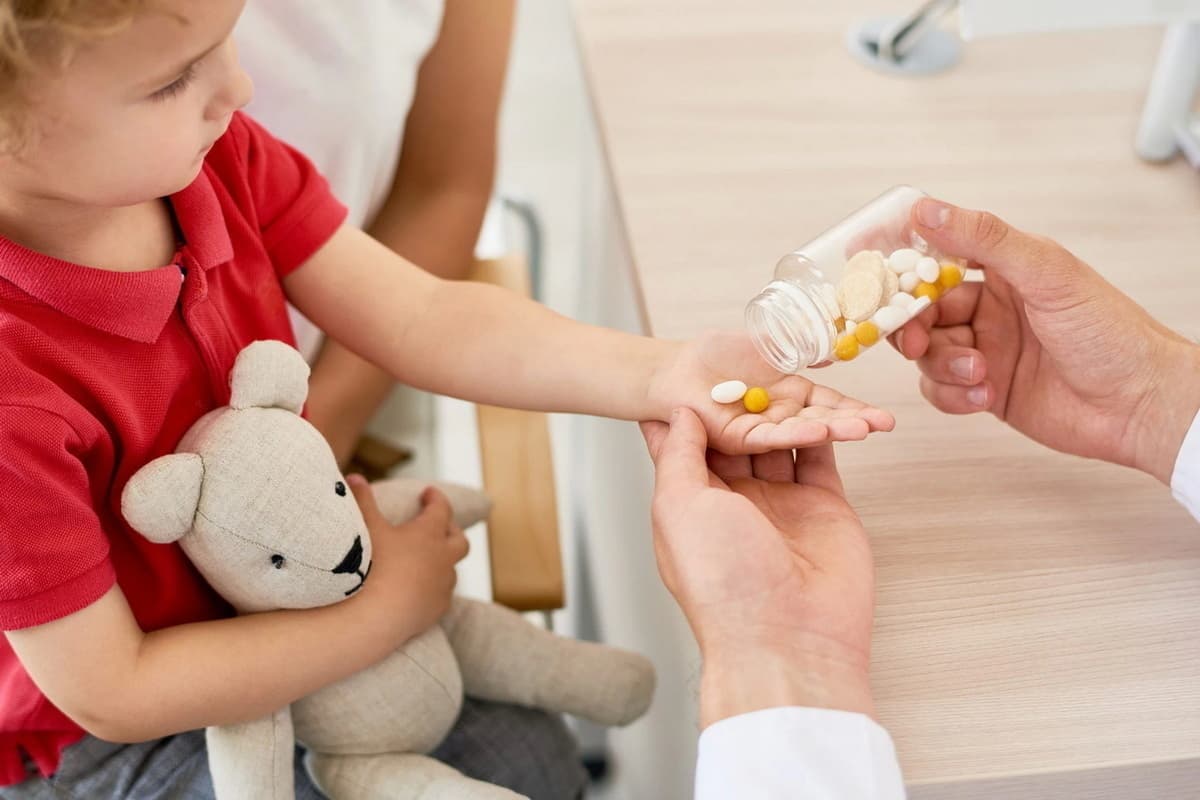
What's the situation now?
However, in practice, many parents either do not know about their rights, or face refusals, or prefer to immediately buy drugs in commercial pharmacies, not wanting to waste time on queues and registration. In parallel with September 2026, the state continued the gradual deregulation of prices for some medicines, removing prescription drugs worth below one monthly calculation index from mandatory state price control. This immediately affected the real price tags in pharmacies.
The legal basis for free medical care for children is based on two main packages of medical care. The first is the guaranteed volume of free medical care, which is financed directly from the republican and local budgets and is available to all citizens of Kazakhstan, as well as to kandas, refugees and foreigners who permanently reside in the country and have a residence permit, regardless of whether they are insured in the compulsory social health insurance system or not. The second package is compulsory social health insurance, which provides additional opportunities for insured persons. Children under eighteen years of age are covered automatically in most cases, either through their parents or as a separate category of the population entitled to medical care. The key regulatory document, which determines a specific list of diseases, categories of citizens and medicines for outpatient free or preferential provision, remains the order of the Minister of Health of the Republic of Kazakhstan dated August 5, 2021 No. This order was repeatedly updated, including in 2025 and 2026, and it details the codes of the international classification of diseases, the names of diseases or conditions, the categories of citizens who are required to provide, indications by stages and degrees of severity, as well as specific medicines for international non-proprietary names. For 2026, a single distributor represented by SK-Pharmacy purchases more than 2,400 types of medicines and medical devices for outpatient care. The total amount of financing is about 348 billion tenge, of which 190 billion is accounted for by the guaranteed volume, the rest - by the CSHI system. As of September, 3.5 million people have already used free drugs, and the total cost of released medicines exceeded 213 billion tenge. It is important to understand that purchases are conducted on the active substance, that is, on the international non-proprietary name, and not on the trade name. The doctor prescribes, for example, paracetamol or ibuprofen, and the pharmacy can issue any drug registered in Kazakhstan containing this substance.
All children under eighteen years of age have the right to free outpatient drug provision when establishing a diagnosis that is included in the approved list and when setting up for dynamic observation. Separate guarantees apply to children with socially significant and orphan diseases.
Priority is given to socially significant diseases
Since the first January 2026, there is an updated list of socially significant diseases, which includes tuberculosis, a disease caused by the human immunodeficiency virus, chronic viral hepatitis and cirrhosis of the liver, malignant neoplasms, mental and behavioral disorders, acute myocardial infarction in the first six months, orphan diseases, degenerative diseases of the nervous system, demyelinating diseases of the central nervous system, epilepsy, as well as cerebrovascular diseases within one year after occurrence. Diabetes mellitus and cerebral palsy have been removed from this list, but the Ministry of Health has repeatedly stressed that all state guarantees for treatment, surveillance and drug provision for such patients are maintained in full through other mechanisms. First of all, through the system of compulsory social health insurance and dynamic surveillance. Children are always a priority, and for many acute and chronic conditions, a pediatrician should consider issuing a free electronic prescription.
Among the most popular positions for children are drugs for acute respiratory infections of the upper and lower respiratory tract. With SARS, bronchitis and pneumonia, the list includes paracetamol in various forms - syrup, suppositories, tablets and ibuprofen in the form of a syrup, suspension or suppositories. When a lower respiratory bacterial infection is attached, azithromycin, amoxicillin, or a combination of amoxicillin and clavulanic acid may be prescribed. In iron deficiency anemia, iron preparations are put - iron sulfate single-component or combined with ascorbic acid, as well as syrups, drops and tablets depending on the age of the child. With rickets and to prevent vitamin D deficiency in children, especially the first year of life, in the autumn-winter period and for medical reasons, ergocalciferol or other vitamin D preparations are given. In bronchial asthma, the list includes salbutamol in the form of an aerosol or nebulizer solution, inhaled glucocorticoids - budesonide, fluticasone and others, montelukast in chewing tablets or pellets specifically for children, as well as prednisolone according to indications. For allergic diseases, antihistamines from the approved list are available. For epilepsy, neurological diseases, orphan diseases, oncology, endocrine disorders, joint diseases, including juvenile arthritis, and many other conditions, there are separate, more expanded lists that include both basic and expensive, including innovative, drugs that are periodically added to the list after pharmacoeconomic analysis.
Newborns deserve special attention. When discharged from the organization of maternity care, the mother and child are entitled to a free first aid kit for mother and child. The standard composition includes a manual on early childhood care in Kazakh and Russian languages, a booklet of the national vaccination calendar, a water thermometer, a medical thermometer, a sterile bandage, a nasal tract slime pump, baby cream, baby soap, antiseptic hand remedy, sterile wool and oral rehydration salts. In addition, children on artificial or mixed feeding in the presence of medical indications are provided with free adapted substitutes for breast milk.
How do I get free medicine?
To get a free medicine, you need to go through several consecutive steps. First, the child must be attached to the clinic at the place of residence, which can be done through the e-government portal or in person. Then you need to contact the district pediatrician or specialized specialist, undergo the necessary examinations and confirm the diagnosis. After that, the child is put on dynamic observation, and the data are entered in the electronic register of the attached population. If the disease and a specific drug are included in the approved list, the doctor prescribes an electronic prescription. This recipe appears in the Social Wallet app or in the e-government mobile app. The medicine is obtained at a social pharmacy attached to the clinic, showing the identity card of the parent or birth certificate of the child along with a prescription or a QR code. Since the autumn of 2026, the possibility of obtaining drugs using the QR code of the application of second-tier banks has been actively discussed and gradually introduced. Paper prescriptions are retained, but there is an additional procedure for identifying the patient directly on leave. If you refuse, it is recommended to first contact the management of the clinic itself, then the health department of the relevant region, as well as the hotline of the Social Health Insurance Fund and the contact center "SK-Pharmacy". You can write an appeal through the system of electronic appeals or directly to the blog of the Chairman of the Board of a single distributor.
In practice, much depends on the workload of a particular clinic, the availability of the drug in the warehouse and the position of a particular doctor. Some parents say that after the change of the district, the situation improved dramatically and the necessary drugs began to be prescribed without unnecessary questions. Others face a limited budget for applications, with priority given to patients with severe chronic conditions. Pharmacists themselves note that the volume of applications is adjusted annually, and you have to choose between providing the really sick chronically and the purchase of drugs for more common acute conditions.
Since September 2026, prescription drugs worth less than one monthly calculation index were withdrawn from under state price regulation, which this year is 4325 tenge. The number of positions subject to state regulation decreased from about 3039 to 1827. Over-the-counter medicines have already been deregulated. The results of monitoring conducted by the Committee for Medical and Pharmaceutical Control based on the data of the labeling system showed that almost three thousand drugs tracked rose in price by an average of 30 percent, 690 fell in price by an average of 26 percent, and the cost of another thousand items did not change.
Among specific examples of a noticeable rise in price can be called "No-shpu", "Magne B6", "Ingavirin", "Citramon", "Corvalol", "Acyclovir", paracetamol and activated carbon. At the same time, for drugs that remain under regulation, including those purchased for guaranteed volume and compulsory social health insurance, marginal prices in most cases decreased.
Everything under state control
As for the rise in prices for deregulated drugs, after the lifting of upper restrictions, the price began to be formed exclusively by market mechanisms of supply and demand. Pharmacy chains and distributors have more freedom in setting margins. Values are affected by logistics, currency fluctuations, import costs, general inflation and suppliers’ desire to compensate for previous years of restrictions. However, the state continues to strictly control the prices of drugs that are purchased for free provision of the population and for more expensive items. In 2027, it is planned to complete the deregulation of the commercial segment.
If you look at the situation soberly, the system of free drug provision for children in Kazakhstan remains working and quite wide in scope, but requires parents to be active, aware of their rights and certain perseverance. For an ordinary family, the practical conclusions are quite simple. With any diagnosis, especially with SARS, anemia, rickets, asthma or allergies, you should directly ask the pediatrician about the possibility of a free prescription. In chronic conditions, it is necessary to insist on setting for dynamic observation. You should actively use electronic services to track recipes. If you refuse, you need to fix the appeal and call the hotlines. For acute conditions, when help is needed quickly, a commercial pharmacy remains the main option, but after stabilizing the condition, it makes sense to arrange a free provision. It is important to follow the current version of Order No. 75, which is published on the official portal of regulatory legal acts. In general, the ability to use state guarantees nowadays becomes important for the family budget precisely because some of the drugs in the free market have risen in price. And free medical care for children is not a special benefit, but a guaranteed right enshrined in regulations, and the more parents know about it and use it, the better the system will work in practice.