
Forbes: doctors want through the Cabinet of Ministers to completely ban vapes and sticks in Russia
The study of FOM and the company “Right to health” showed that the majority of Russians see the danger of electronic cigarettes, and doctors insist on a nationwide ban
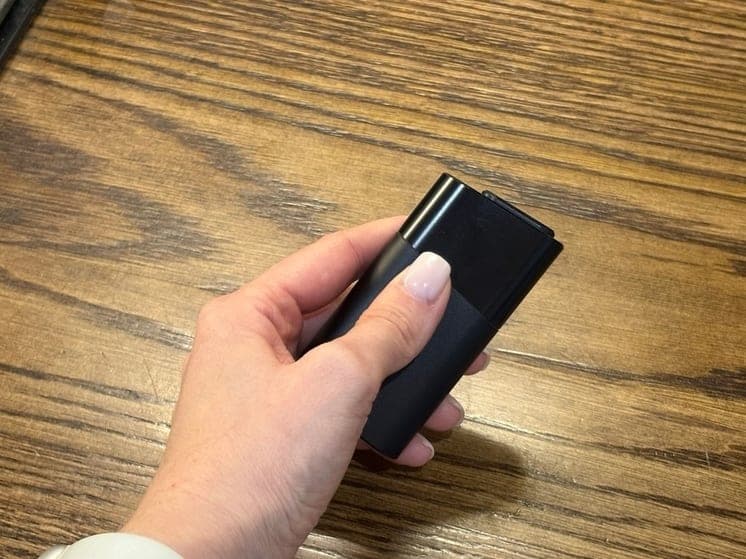
A study by FOM and the Right to Health company showed that most Russians see the danger of electronic cigarettes, and doctors insist on a nationwide ban. The results of the work will form the basis of a package of proposals, which will be sent to the government on November 23. However, some of the doctors interviewed by Forbes warn that a strict ban can force the market to go underground, where the composition of liquids no one will check.
From March 2027, the regions will be able to prohibit the sale of electronic nicotine delivery systems and liquids to them. But, according to experts, this is not enough to knock down the popularity of vapes. In addition, the law does not apply to tobacco heating systems, and experts refer them to the same market.
The idea of a federal ban is not new: it was previously supported by the Ministry of Health, the Ministry of Industry and Trade and the Ministry of Finance, but business resisted, and the right to restrict the sale was left to the subjects. Before that, at the federal level, the rules have already been tightened: from 2023, vapes - even nicotine-free ones - can not be sold to minors, remotely and exhibited on display cases. However, according to the authors of the study, teenage popularity only grew after that, and trade through the Internet did not go away.
The regional ban will also not save: if one entity closes the sale, the goods will flow from neighboring ones, and there are no tools to control such flow yet. The Right to Health survey involved 11 doctors – pulmonologists, cardiologists, psychiatrists, reproductive specialists, oncologists and prevention, including the main freelance specialists of the Ministry of Health. The vast majority of respondents supported a single ban at the national level.
The Right to Health package of proposals will be sent to Prime Minister Mikhail Mishustin on November 23. Moreover, the discussion is already underway: in March 2026, the idea was supported by the State Commission for Combating Illicit Trafficking in Industrial Products, and in late September, the Public Consumer Initiative made a similar appeal to the government.
Under the federal ban, experts mean the complete withdrawal of vapes and liquids from retail - including non-nicotine - and tobacco heating systems. The sharpest sounds the main freelance child psychiatrist of the Ministry of Health Evgeny Makushkin.
“The legislatively approved right of regions to impose restrictions only from March 2027 raises questions: why do we constantly postpone decisive steps and give the market the opportunity to further expand the consumer base among children?”.
In his opinion, the State Duma and the Federation Council should act without delay.
For the withdrawal of vapes from civil circulation at the country level is Marine Gambaryan, head of the Center for Prevention and Control of Tobacco Consumption of the National Institute of Therapy and Preventive Medicine. As she notes, the spread of e-cigarettes has actually nullified the country’s achievements in the anti-smoking fight for a decade: the share of cigarette smokers has decreased for several years in a row – from 23.2% in 2019 to 18.6% in 2024, but vapers and users of heating systems have increased. According to the calculations of analysts of “Finexpertiza” on the basis of Rosstat, in 2024 there were 5.3 million people – 19% more than a year earlier. The total share of nicotine users in any form rose from 21.1% to 22.2%.
Practical psychologist Lyudmila Guseva finds the federal ban justified at least to protect children. If vaping becomes more expensive and difficult to access, some teenagers will not reach physical dependence.
“And here our long-known laziness, in this case laziness to look for workarounds, will prove useful. And, of course, the lack of the right amount, she adds.
But the total ban has a downside, warns the therapist “Clinic Fomin” Anna Simbirtseva. The first risk is shadow: the composition of liquids will remain uncontrolled. An example is Australia, where a rigid prescription model has created a huge black market. According to the doctor, a complete ban can even increase the number of severe acute conditions, because the consumer will lose any quality control.
The second risk is the rollback to regular cigarettes: after the ban of flavored vapes in some US states, young adults began to smoke classics more often. A more reliable way, says Simbirtseva, is a comprehensive policy: high excise taxes, strict supervision of retail, prohibition of flavors and one-offs, restriction of advertising and strict protection of teenagers from popularization. A positive example is New Zealand: in 13 years, the share of daily adults smoking fell 2.4 times, from 16.4% to 6.8%, in a regulated, “not underground” market.
Vape often seems like a safe alternative to cigarettes – there is no burning tobacco or smoke. Many people do not recognize this as smoking. “We ask directly whether a patient uses or has used e-cigarettes before, since people often forget to say this, sincerely not counting vapors with nicotine smoking,” says SberHealth therapist Alexei Abyzov. Psychiatrist-narcologist, chief specialist of the Benedict clinic Marat Aginyan explains: vape only changes the way of delivery, and the substance is still the same - nicotine.
“The central problem here is therefore dependence. The absence of a burning cigarette does not mean that the person got rid of it, he says. And nicotine addiction is easily developed: according to a 1994 American study, which refers to a narcologist, it occurs in almost a third of tobacco users. More often than with heroin (23%) and alcohol (15%).
The main argument in favor of the ban is speed. According to Gambaryan, cigarette addiction is formed on average for 6-8 years, vaping - in just six months. Experts blame the composition of liquids: Gambaryan - synthetic nicotine salts, the main freelance psychiatrist-narcologist of the Ministry of Health Svetlana Shport - a high concentration of nicotine in most liquids. The factors are related: unlike free nicotine, salt does not irritate the airways. The manufacturer can increase its content, and the user can make a puff after a puff. Work at the JAMA Network Open 2025 showed that adolescents on salt fluids have almost four times higher levels of nicotine in the body than regular users. More dose, faster addiction.
American researchers add: the first signs of addiction in a teenager can appear within a few days after nicotine enters the body. Aginyan explains why it is difficult to get out of it. Nicotine hits the reward system of the brain, and over time, a person consumes it not for pleasure, but to relieve discomfort without it. “Nicotine makes you remember the pleasure of nicotine,” says the doctor. Vape also erases the psychological barrier: it looks modern, tastes good, does not smell like tobacco – and creates the feeling that it is “not really smoking”.
Sweet tastes and bright design form the illusion of safety in teenagers, agrees Lyudmila Guseva. For them, vape is not a cigarette, but a “fruit gadget” and a fashion accessory. “We all have a physical and mental barrier that protects us from toxic substances, but with the vape, everything seems to be disposed to the fact that there is no danger. After all, the poison in our psyche is fixed by completely different images - repulsive tastes and flowers, she explains. After the first test, a nicotine loop is turned on, and the behavior is looped: beautiful - tasty - calm - I want more.
In adolescents, this circle often turns into a way to cope with stress, notes psychologist and gestalt, crisis therapist Nadezhda Sjögren. A survey of American schoolchildren published by the CDC in 2025 found that 42.1 percent of vaping teens had moderate to severe symptoms of anxiety and depression versus 21 percent of non-vaping teens. Among vapers with such symptoms, 51% cited anxiety, stress or depression as the cause of vaping. According to Shegren, the root is addiction itself: as soon as nicotine ends, irritability and anxiety come, and the puff temporarily extinguishes them - hence the conclusion that vaping calms.
“In fact, part of the discomfort is created by the addiction itself, and the original cause of anxiety remains where it was,” she emphasizes. Plus, vape almost does not leave a smell - the hobby is easy to hide from adults. “The industry has managed to change the perception of nicotine use without eliminating nicotine addiction itself,” Marat Aginyan said.
One of the main diseases associated with tobacco is chronic obstructive pulmonary disease (COPD): inflammation of the airways, irreversibly narrowing the bronchi. According to WHO, in 2023 COPD became the third cause of death in the world (about 3.4 million cases), and in rich countries more than 70% of its cases are associated with smoking. A Swedish OLIN study found signs of COPD in half of smokers over 45. At the same time, the disease steals slowly and usually manifests itself after 40 years, behind the shoulders - decades of experience.
Therefore, it is difficult to find out whether vaping provokes COPD: electronics spread only 15-20 years ago, and the generation of active vapers has not yet reached the age when the disease usually manifests itself. Patients with COPD among vapers, doctors have not yet met — but it is too early to relax, warns Anna Simbirtseva.
"The lack of a queue of such patients in a therapist's office today is not a proof of safety, but rather an early phase of a very long curve," she says. Studies have already recorded in vapers early signals of damage to the lungs and blood vessels: systemic inflammation, failures of cleansing the airways from mucus, early vascular dysfunction.
Specialists of the team of the chief pulmonologist of the Ministry of Health Sergey Avdeev call two serious conditions to which vaping can lead. The first is an acute toxic lesion of the pulmonary vesicles, known as EVALI, or “vaper disease”: it often ends in intensive care and can kill. The second is obliterating bronchiolitis, "popcorn lung": chronic damage to the small airways, which causes diacetyl - a flavor additive of liquids. Previously, such a diagnosis was considered an occupational disease of chemical workers. Such cases are already registered in young and able-bodied Russians, although there are no exact general statistics yet.
A separate risk is migration from vapes to tobacco. According to the WHO, on which the authors of the study rely, young users of e-cigarettes are then almost three times more likely to switch to regular ones. Anna Simbirtseva calls an even higher figure - about 3.5 times - and considers vaping the main source of nicotine addiction among young people.
The concern of doctors is shared by the majority of Russians. FOM interviewed 1,515 people over the age of 18, including 362 parents of teenagers, Forbes writes, citing materials that they have at their disposal. 70% of respondents and 73% of parents believe that vaping has become widespread among minors.
The ban on selling to children works poorly, according to the majority: 58% of respondents and 65% of parents believe that it is easy for a student to buy a vape. 53% find vaping more harmful than conventional cigarettes, and 73% believe that switching to electronic devices does not relieve nicotine addiction. The idea of a nationwide ban is supported by 64% of Russians and 73% of parents of teenagers.
Focus groups showed the scale of the teen market. According to parents, children first try vaping in 10-14 years, and schools have their own economy: schoolchildren buy and resell devices through chats in instant messengers. In one group of such sellers jokingly dubbed “vape barons”.
Some parents admit that they feel helpless in the face of this habit. They are afraid of fearing and forbidding – they value trust in the family. One of the participants even said: let the child smoke ordinary cigarettes than electronic – vapes, in his opinion, are more harmful.
Lyudmila Guseva explains why talk about harm on teenagers almost do not affect. The adolescent brain does not yet know how to think in the category “what will happen in 20 years”: the pleasure of vaping is tangible here and now, and the threat remains an abstraction. In addition, the forbidden makes a teenager “cool” in the eyes of peers, and at this age he is already distant from his parents and critical of their opinion.


