Mosque loudspeakers to be used for earthquake warning
Scientists working on an early warning system in earthquake-prone Indonesia have developed an alert system that will reach even the most remote communities: they hope to use mosques to save lives
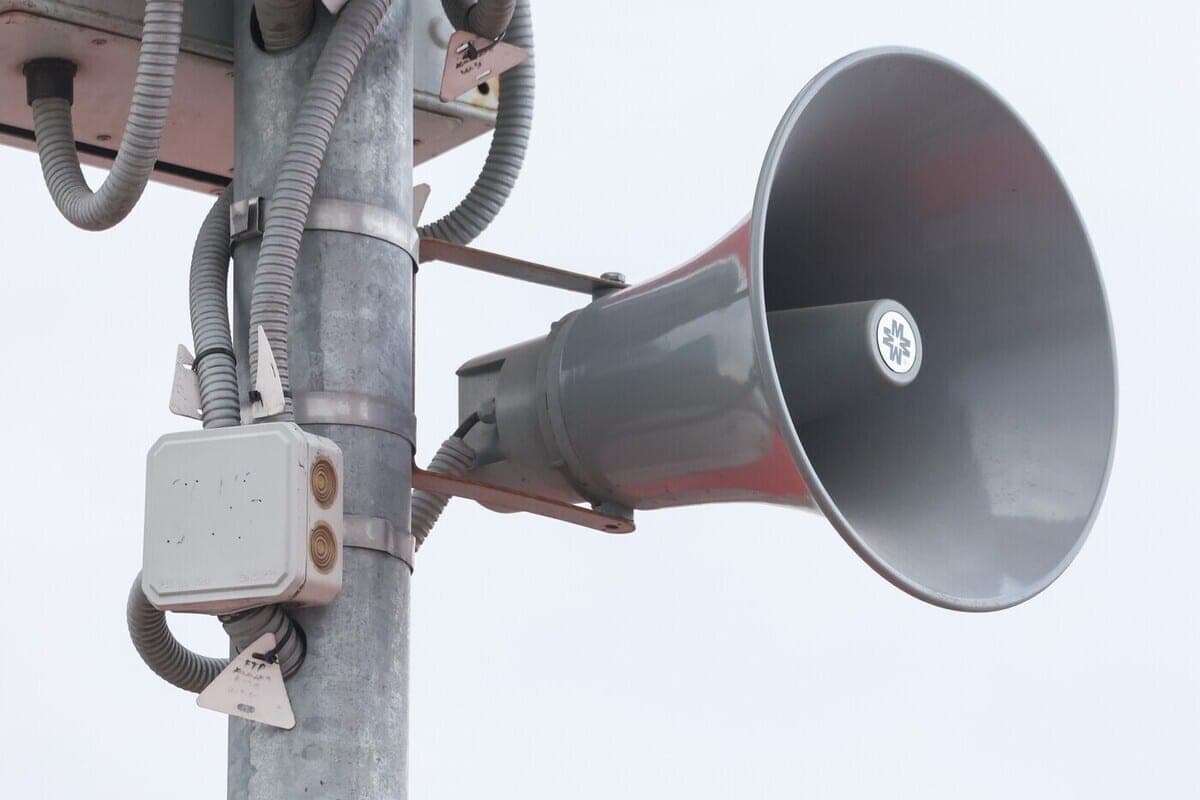
“Every community has a mosque,” project leader Dr. Inoue Hiroshi told The Guardian in Indonesia. The experimental scheme was developed by a Japanese disaster specialist who says the idea came to him nearly two decades ago while he was studying deadly earthquakes in Sumatra.
Inoue of the Research Institute for Disaster Prevention at Kyoto University in Japan is working with the Indonesian government to assess whether the country could implement an early warning system similar to Japan's.
“I thought if Indonesia had a similar service and people were warned before the tremors started, many of those few hundred people would not have died,” he says of the devastating 2009 earthquake in western Sumatra that killed at least 1,000 people.
The Indonesian disaster management agency has to travel vast distances and hard-to-reach areas, but it has the advantage of having an already established network of regularly maintained loudspeakers that many other countries do not.
Indonesia, home to the world’s largest Muslim population, has hundreds of thousands of mosques that call to prayer five times a day. As part of the pilot project, several mosques are already connected to a network of seismic sensors.
For an earthquake early warning system to save lives, two critical factors are needed: an earthquake warning system, and it must work. “The advantage of loudspeakers in mosques is that they exist and are in good condition,” says Inoue. “For any infrastructure affected by natural disasters, maintenance is a big challenge, but the mosque’s loudspeaker is supported by people.”.
Many current disaster preparedness strategies use mobile phones, although they are vulnerable because earthquakes can disrupt communications infrastructure.
The country has a tsunami early warning system set up in 2008, but the earthquake-fighting initiative could be a “breakthrough,” says Andy Eka Sakya, a senior researcher at Indonesia’s government-linked National Agency for Research and Innovation and head of Indonesia’s joint research team.
While a tsunami hits coastal areas and can be predicted in minutes or even hours, earthquake waves are spreading across the ground at an incredible rate, and Sakya says the village, 50km from the epicenter, could have as little as five to 10 seconds to react.
“It’s still a prototype and they’re not sending out warnings to the public yet,” he says. “In fact, the ultimate goal is to alert people so they can react as early as possible.”.
The 2030 project also includes the installation of alarm systems in school loudspeakers and the use of radio and television broadcasts.
In Japan, official disaster management recommendations are based on a widely used “hide and cover” strategy, such as hiding under a desk and staying indoors.