
How scientists saved the resorts of Narochi from a dangerous parasite, and what mosquitoes should be feared by the inhabitants of Belarus
About 30% of ixodic mites in Belarus are infected with lime borreliosis, and three new mites have recently been identified.

About 30% of ixodic ticks in Belarus are infected with lime borreliosis, and three new species of malaria mosquitoes have recently been identified. Belarusian scientists are constantly studying blood-sucking insects and developing methods to reduce their numbers. Details - in the material of the correspondent of the agency "Minsk-Novosti".

The photo is illustrative in nature
At the root of the problem
When meeting with the doctor of biological sciences, Professor Elizaveta Bychkova, strangers will probably take her for a model or TV star. Stately, tall, dressed with impeccable taste, the lady is very beautiful in adulthood. She works as the chief researcher of the laboratory of parasitology of the Scientific and Practical Center of the National Academy of Sciences of Belarus for Bioresources. And although only professionals know her face, millions of Belarusians use the results of her research every day. Its developments protect us from pathogens of dangerous infections and invasions (infection of the human body with parasites), carried by various types of mosquitoes and ticks.
After graduating from the Biological Faculty of BSU in 1973, E. Bychkova received a referral to the Department of Zoology and Parasitology of the Academy of Sciences of the BSSR. For 50 years, she has made her way here from a senior laboratory assistant to deputy general director for scientific and innovative work.

- We are not doctors, but biologists, the professor explained. - We are engaged in carriers of vector-borne parasitic diseases of humans and animals: mosquitoes, ixodic mites, midges. Our research and development is aimed at reducing their numbers. We are constantly studying the localization of pockets of blood-sucking insects in nature and settlements. Indicate areas in recreational areas, which are characterized by their highest number. According to our recommendations, the service conducts processing there. And that's just the practical part. And then there's basic research. For example, on how the number of blood-sucking insects in the regions of Belarus changes, whether there are similarities in these processes and what factors affect them.
Research for People
This kind of work has its difficulties. Some parasites have a complex life cycle and at different stages roam various animals. And if an adult (imago) has the ultimate predator host, it can be very difficult to get it. It is sometimes difficult to determine the type of causative agent of the disease. Molecular genetic methods come to the rescue. This is a painstaking work that requires high accuracy.
- I am motivated by the fact that we are engaged in research for the safety of people and see the results of work, Bychkova said. No project goes through without implementation. Three new species of malaria mosquitoes have recently been identified in Belarus. They're still in single copies. But what pathogens of infection can they carry? This must be kept under control. We immediately passed the data to the NSW. We, scientists, in cooperation with this state system, managed to teach the population how to act when bitten by ixodic mites.

Photo by pixabay.com
According to the professor, about 30% of these arthropods in Belarus are infected with lime-borreliosis. In recent years, the number of cases has increased. Today, people, seeing a tick, run with it to the sanitary service and check the parasite for the presence of borrelia and viruses. In this case, it is important not to waste time. If a person has complications after a tick bite, then most likely he did not notice it and missed the window for taking medications. Today everything is treated, the main thing is to take timely measures.
From afar arrived
Another known bloodsucker in Belarus is a large malaria mosquito of the genus Anofeles. Only their females can carry malarial plasmodia. Small mosquitoes can't do that. Eight species of anopheles have been identified in our country.
Bychkova recalled that the sources, causes and mechanisms of the spread of malaria among the population of Belarus were studied in the 40s of the last century. The republic then developed a comprehensive program to combat this dangerous disease. In the regions, especially in Polesie, where the main centers of vectors were concentrated, the swamps were drained and large-scale reclamation was carried out. By the early 1950s, local malaria in Belarus had been eradicated.
Since then, the sanitary and epidemiological service of the republic constantly monitors the number of malarial mosquitoes. Carries out treatment of reservoirs, where they multiply, destroying the larvae of these insects. Everything is done so that anopheles does not become a carrier of imported plasmodiums.
- Residents of our republic often go to hot countries, the professor explained. There are also many students from Africa, where malaria is raging. And if an infected person arrived from there, the anopheles who bit him on our territory can quickly spread the infection.
Therefore, our citizens need special vaccinations to visit Africa, Southeast Asia and other exotic regions. Before traveling, you need to consult the clinic with the doctor about precautionary methods. Otherwise, the health risks will be serious.

Photo is illustrative, photo magnific.com
Overseas "surprises"
Our small mosquitoes have “caught up” to carry the imported parasitic disease dirofilariasis, characteristic of Southeast Asia. In humans, the infection manifests itself in the form of a tumor, most often on the eyelid, inside which the helminth is localized. It looks like a thin hair almost 10 cm long. The final hosts of dirofilariae are mainly predatory mammals: bears, wolves, foxes and others. In their company can get and domestic dogs with cats. Mosquitoes bite them, capturing helminth larvae in the blood. They develop in the body of an insect - and through its bite, the parasite enters the human body.
- The first case of such a disease in Belarus was seen in the mid-1970s, Bychkova shared her memories. - Then the surgeon from the 1st clinic brought us to the institute of the parasite after eye surgery in a woman. It was a sensation, because due to climatic conditions, dirofilariasis was absent in the republic. And now, due to the trips of Belarusians around the world and the warming climate, dirofilariae in the country have taken root and multiplied. Recently, an employee of our laboratory in her thesis proved that in Belarus the life cycle of this parasite can go through all stages. In other words, the disease has become endemic.
Battle for Naroch

In the professional biography of E. Bychkova there is a special scientific victory. She and her colleagues managed to secure places for swimming in Narochi from the cercariahs, who for years spoiled people’s rest on the famous Belarusian lake. For a series of works devoted to solving the problem of schistosomatide cercariasis, the laboratory team under the leadership of a professor was awarded the NASB Prize in 2015.
- Narochan region is my small homeland, the interlocutor explained. I was born in the village of Falevichi, Postavsky district. So I really wanted to get results myself.
According to the professor, the problem was that at that time there was no effective strategy in the world practice to combat cercariae. Ideas of concrete piers and chemical treatments of the reservoir would lead to the destruction of the ecosystem of the unique lake. Scientists decided to go the other way, proposing a set of measures that break the life cycle of the parasite.
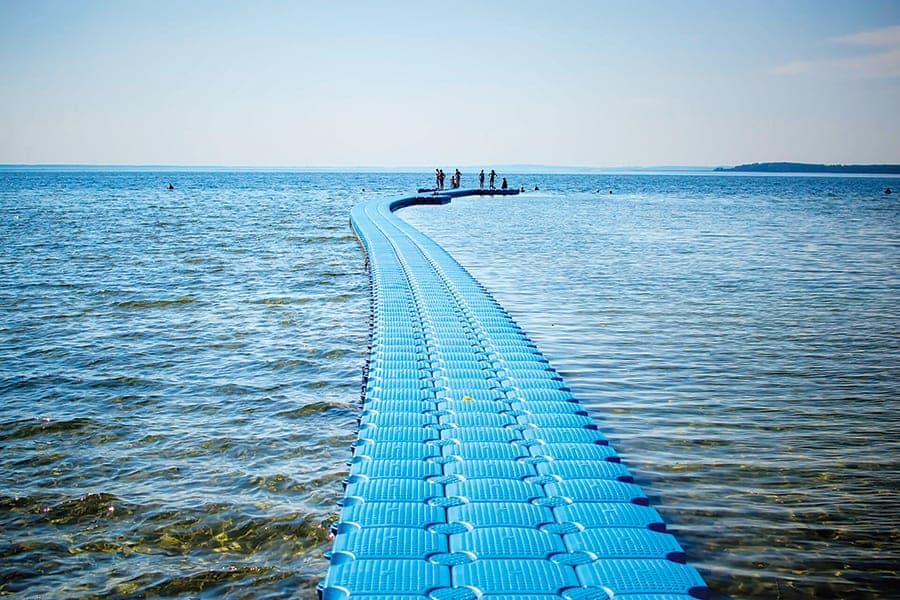
Now the beaches of sanatoriums on this lake are equipped with large blue platforms-piers. After walking through them to the end, you can go down into the water and swim. Cercaria are usually concentrated in the coastal zone with thickets of reeds and in shallow water with warm water. These areas should be cleaned regularly, removing all vegetation together with mollusks. There should be clean sand on the beaches. It can not live freshwater snails, on which cercariae are born. And most importantly, in places of swimming do not swim birds. Such a set of environmentally friendly measures allowed to solve the problem of cercariasis in vacationers on Narochi.
However, the introduction of scientific developments in practice was difficult. According to the professor, the heads of the resort institutions wanted the result right now. But how do you get people to take care of the environment? How to wean vacationers to feed ducks that over 20 years have adapted so much that they began to winter on the lake? Things went well with the help of the State Audit Office, which obliged sanatorium-resort organizations to accurately implement the recommendations of scientists. But today all places for swimming in the resorts of Narochi are in order. And clearing the lake of cercariahs is completely unrealistic, and there is no need for this.
The Secret of Longevity
- I am proud that I have someone to pass on my scientific experience, the interlocutor stressed. We have a parasitic school in the laboratory. When I came here to work, it was led by Doctor of Biological Sciences Ivan Timofeevich Arzamasov. Then I led the lab for 20 years. Young people come to parasitology differently. Those who are attracted to this direction stay and work. There are no problems with personnel in the laboratory. If I need a new employee, I will always grow out of a smart graduate of a university PhD. We have the most advanced laboratory in the center. All employees are my scientific children, each brought to the defense of the candidate. The latter will be defended this year.
But her life longevity E. Bychkova inherited from her parents. Her mother lived 98 years in perfect health. She worked in the village and raised four children. The professor’s sister graduated from the two-year Pedagogical Institute in Vilnius, and then the History Faculty at the Leningrad Pedagogical Institute. Both brothers are physicists. Unfortunately, they are no longer alive. One worked at the Institute of Nuclear Energy of the NAS of Belarus, the second was a quantum physicist, candidate of physical and mathematical sciences, for many years he taught at the Polytechnic University. Dad's a builder. He had very good hands and could do anything. Built a house. And the brothers are just as handy. They were able to build their own houses. As for the dilemma of “family or profession”, it never stood before E. Bychkova.
- My husband was lucky. He is a biologist, we studied together at the university, the interlocutor shared. There were no questions in my family about whether my mother and wife should grow up professionally. When I return from work, I never wear a crown. In the family, I relax, do household chores. In the morning, back to the academy. I believe that a favorite business or hobby gives a woman inspiration, the core of life. To maintain a family, you need to be financially independent. After all, the beauty of women will eventually go away, and the family may fall apart. And then on the slope of years you will have to stay at the broken trough, experience a sense of loss. And all because she did not have a profession, the fruits of the efforts in which you can reap in the second half of life. Many men want to have a successful and high-status woman as a life partner: in business, work or science. And a mother who has reached certain professional heights is an example for children. Besides, it's keeping things on track. I can't imagine sitting on the couch in a bathrobe every day. And I say to young people, ‘Move forward, it’s interesting! You will have recognition, career advancement and a decent salary.”.
For reference
According to the research results of Professor E. Bychkova, more than 20 developments have been created and implemented in the practice of the national economy of Belarus. Particularly significant of them relate to reducing the risk of spreading natural-focal infections and invasions among the population of the republic.
Photo by Sergei Pozhoga, kurort.by and from the Internet


