
As in the Tver region orphans gain mentors and faith in the future
Think about who the adults were to you. n
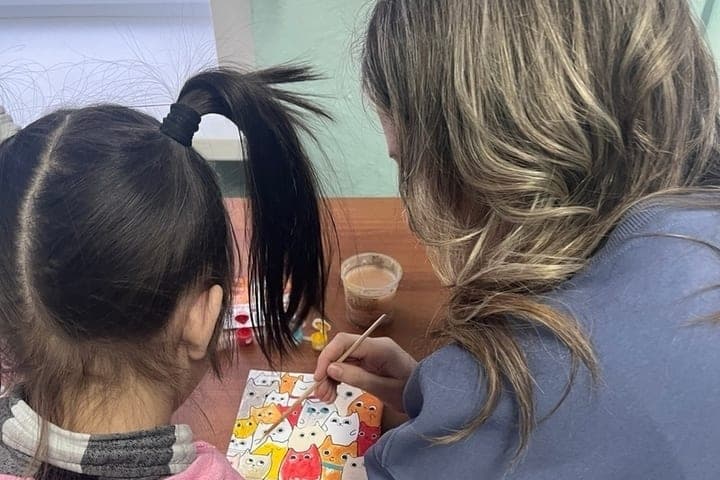
Think about who was a significant adult to you. Not necessarily a parent, maybe it was a grandmother who always baked cakes and could listen in a way that made it easier. Or a coach who noticed you not only on the pitch, but also off the pitch. The teacher who once said, "You can do it," and you still remember those words in a difficult moment. An older brother or sister, a neighbor at the entrance, a leader of a circle, a colleague of parents who taught you to fix a bicycle and at the same time believe in yourself.
There may be several significant adults in our lives. They appear at different times, play different roles and stay with us forever. Someone taught us honesty, someone taught us courage, someone taught us how to lose and get up again. They didn't lecture us, they didn't force us, they didn't control us. They were just there. That was more important than any words.
A meaningful adult is not about position or relationship. It's about trust, acceptance and sustainable connection. The child looks at such an adult and learns to live: how to cope with anger, how to ask for forgiveness, how to enjoy the little things, how not to give up when it is difficult. A significant adult becomes the very support from which you can start to step into adulthood.
When there is no such adult
Now imagine that there is no one around. Not because everyone is bad, but because the circumstances are so. You live in a large institution where you are looked after, fed, treated, taught. But no one calls you just to ask you how your day went. No one comes to prom just for you. No one notices that you are sad today, because of a deuce or because of an offensive word.
Vadim remembers his happiest day – or rather, the night, the New Year: the year 2022 has arrived. In the evening, he and his parents walked around the festive city, went to a cafe. Then relatives came to visit, it was noisy and fun. And a few months after this family holiday, in the spring, a thirteen-year-old boy was in an orphanage – his mother took him there.
The first time the boy was in the shelter at the age of three – then he was removed from his native family, his parents were deprived of their rights. He does not remember those first years of his life. He was soon taken into custody by his adoptive parents. Up to seven years old, Vadim was sure that he lived with his mother and father.
He grew up alone. In school in the first grade I accidentally read in some documents on nutrition: ward.
- I did not know what it was, asked at home, I was told, Vadim recalls. But I had no feeling that I was not native, that somehow not so treated me. I didn't need anything. Not only in material terms, just everything was – family, family.
In the foster family the boy lived eleven years.
- We were preparing to perform in Moscow, but I went to an orphanage. Just at some point my mother and I started quarrels, quarrels, quarrels... First, I was sent to the center for six months. At first I missed my mom and wanted to go home. A psychologist helped me.
In the orphanage, another significant person appeared in the boy’s life – volunteer Sergey, thanks to whom Vadim’s trust in adults returns.
- Just the boy began to grow up, and the changes did not take correctly, – cautiously argues Sergey. A child of five, six, seven years old is basically manageable, despite all the pranks. From twelve to fifteen years - puberty, storms from side to side. Hard. In adults, these difficulties in communicating with children can be superimposed on some life problems, for example, at work. This decision is being made..
All these children are deprived of love, offended by the world, do not trust adults. But they will still leave the orphanage and get into this crazy, fast life. What awaits him - no one knows: left the orphanage - one who he is, what he wants - can not understand. And now they are “lost,” going downhill. Adapt, support, give advice – this requires mentors.
But, of course, in order for the younger one to listen to the older one, you need trust, Sergey notes. Children in orphanages and in difficult life situations often do not have an adult to rely on. Employees are not indifferent, they do their work, often very difficult and important. But their work consists of shifts, schedules, documents and groups of twenty people. They do not have the opportunity to be for each child that personal adult who knows what you love, what you fear, what you dream about.
And then the child is left alone with his questions. How do you know what is normal and what is not? What do you do if you're hurt? What do you want to be? How do you build relationships? What do you do when you're scared? Who am I? These questions are not answered in textbooks and instructions. It is the life of those who are near.
When there is no one around, the child looks for support where he has to. Sometimes finds in bad companies, sometimes in dangerous hobbies, sometimes just closes and stops believing that adults can be trusted. He's not bad. He needs an adult and he doesn’t.
What happens next
A graduate of an orphanage goes into adulthood with a passport, a certificate and a room in a college dormitory. But without that inner feeling that you can do it, that you have someone to support, that the world is not hostile. The state gives money, documents, square meters. But it cannot give you a sense of security and faith in yourself. Only a human gives it.
In practice, graduates of orphanages are much more likely to face unemployment, debt, problems with the law, early parenthood and dependencies. They're as good as anyone. They were not taught the most important thing: how to be an adult. How to plan, how to ask for help, how to say no, how to take care of yourself and others.
This is where the teacher comes to help. Not a teacher, not a teacher, not a benefactor. Senior friend. A person who comes into a child’s life not to fix him or teach him something, but to be there for him. Regular, long, sincere. Go to the movies together, cook dinner, discuss plans, keep quiet, laugh, argue and put up. That's what mentoring is. Not a feat, but a relationship.
How it works
The program “Mentors to children” has existed for more than twenty years. Its regional offices operate in Moscow, St. Petersburg, Moscow, Tver, Tula, Kaliningrad, Sverdlovsk, Rostov regions and the Altai Territory. During this time, more than 4.5 thousand children received support, more than 650 mentoring couples were created.
How does that work? The teacher and the child meet about once a week. At least a year, and often much longer. Their relationship is accompanied by a curator-psychologist who helps build trust and cope with difficulties. Before becoming a mentor, the candidate undergoes selection, training and psychodiagnostics. This is necessary in order for the relationship to really develop and benefit the child.
The mentoring program was awarded the status of the national project of Russia (the “Our contribution” award), it has many awards and gratitude, but the most important recognition for us is the successful stories of the lives of our wards.
Why People Become Teachers
Everyone has different reasons. Someone wants to pass on their experience and knowledge. Someone has grown up in a difficult life situation and understands the importance of supporting a significant adult. Someone just feels an inner need to be helpful and make the world a better place.
Becoming a mentor is easier than it seems. There is no need for pedagogical education, no need for special talents. You need a desire to be around, a little time and readiness for regular meetings. Everything else will be taught. Mentors receive free training on interaction with children in difficult life situations and receive the support of the curator throughout the communication with the child.
The requirements are simple: age from 18 years, no criminal record, psychological stability, the absence of serious diseases. And most importantly, a sincere desire to be for someone that significant adult, which he so lacks.
Mentorship does not only benefit children. Mentors themselves change: they learn patience, attentiveness, unconditional acceptance. Many people discover qualities that they did not even suspect. And most children after the end of the program do not want to part with their mentor and continue to communicate with him.
Help naturally
We often think that charity requires special circumstances and a lot of money. But caring for others is a natural part of human nature. We help each other every day: give way, suggest the way, support the word. Mentoring is the same help, only conscious and regular.
Caring for children without a meaningful adult is important for the future of society. Today’s children will tomorrow become our neighbors, colleagues, doctors, teachers. How they grow up depends on who is next to them.
The Mentors to Children program is about relationships. Every child has an adult who says, You are not alone. I'm with you. If you feel like you can become an adult for someone, take the first step. Fill out the questionnaire on the website of the organization, go through training, open your heart.
If you are not ready, tell your friends about the program. Repost. Perhaps it is your post that will be seen by the person who will become for someone the most significant adult he has been waiting for.
The Mentors for Children program is a project of professionally organized individual mentoring for children and adolescents left without parental care and who are in a difficult life situation. The Foundation attracts, selects and trains volunteers who become mentors – significant senior friends for a particular child from an orphanage. You can help, learn more and apply on the official website of the organization Mentors to Children.rf.


