
How factories of the Moscow region turn into art spaces
Abandoned buildings and spider web-covered workshops - such was the landscape of factories near Moscow recently
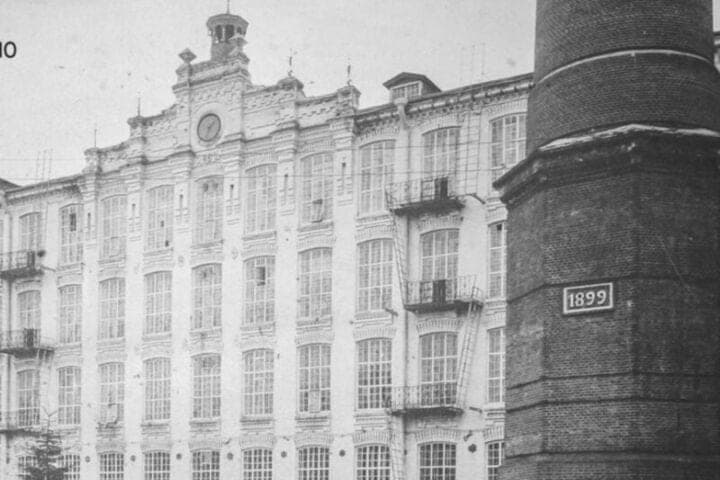
Even recently, abandoned factories near Moscow resembled the scenery for a horror movie: silence, empty eye sockets of windows, roaring corridors and the feeling that someone is watching you. But time passed and the doors were reopened. Inside were not only rusty nuts, but also workshops, scenes and creative venues. In short, in the Moscow region, the industrial heritage was treated as a resource, not as a problem.
One of the first examples of such a reset is Kolomna. On the site of the former plant "Textilmash", and even earlier - the gramophone plant of union significance, the creative quarter "Patefonka" appeared. Here once made devices for music, and now in the red buildings on Umanskaya street boils another life: working workshops, open exhibition corners. The space is expanding and new participants are coming. Thus, the gramophone factory became a cultural center.
In Balashikha, the former cotton-spinning factory, opened in 1830 on the Pehorka shore, became the creative quarter of Factory 1830. However, initially on this place Prince Ivan Trubetskoy opened a cloth factory, and only later it was rebuilt for the production of cotton fabrics. Today it is a large workshop for different things: concerts, a platform for picnics and performances. If you used to spin a thread here, now they weave connections at common tables and pull strings at concerts.
Zaraysk is not far behind. In the building on Krasnoarmeyskaya Street, where in Soviet times the Zaraysky machine tool factory was located, and later a large store, the TSEKH art space opened. Now the empty walls have come to life: the works of modern artists are shown here. For a small town, this is a big challenge. It seems that Zaraysk decided to talk about itself not only as a place where Dostoevsky spent his childhood, but also as a new point of growth.
In Naro-Fominsk, on the site of a former spinning and weaving factory founded in the middle of the nineteenth century, the old walls are being restored with the preservation of authentic architecture. The red buildings of the 1880s continue to live on, and the embankment of the Nara River became a place for walks. The history is rich: the factory fed the whole city, survived the transition to state ownership, reconstruction after the war, the release of synthetic fabric and the ruin of two thousand people. It is also reported that there should be a cultural center, a park and places to work. The factory that once fed the city is ready to do so again, only now in the form of creative farming.
It is worth remembering Noginsk. The complex of the Bogorod-Glukhov manufactory, founded in the middle of the nineteenth century by the Morozovs, was in decline for a long time. But recently, the buildings began to be restored: the historical buildings are being repaired, and the monument to Arseny Morozov meets guests in the Glukhov Park. Manufacture, which once dressed half of Russia, is now also surprising.
What does all this mean? Factories and factories near Moscow are experiencing a revival. It's not just about the beautiful brick and the buzzword "loft." There is a deeper thing behind this: cities are looking for new meanings, new economies, and new points of attraction. Industrial heritage, which yesterday seemed a burden, is now a resource. And a resource that works – brings money, creates jobs and returns people pride in the place where they live.


