In a year, Belarus Today will celebrate its 100th anniversary. Excursion into history through publications of past times
On August 2, 2027, Belarus Today will celebrate its 100th anniversary. We offer readers an excursion into history through newspaper publications of the past.
On August 2, 2027, Belarus Today will celebrate its 100th anniversary. We offer readers an excursion into history through newspaper publications of past times
"Soviet Belarus", November 2, 1939, and "Soviet Belarus", November 2, 1942, November 2, 1939, the Supreme Soviet of the USSR adopted the law "On the incorporation of Western Belarus into the USSR and its reunification with the Belarusian SSR." On this day, the newspaper “Soviet Belarus” was almost entirely devoted to the holiday of unity of the people. One of the notes describes the parade of units of the Belarusian Front, which took place in the liberated Bialystok.
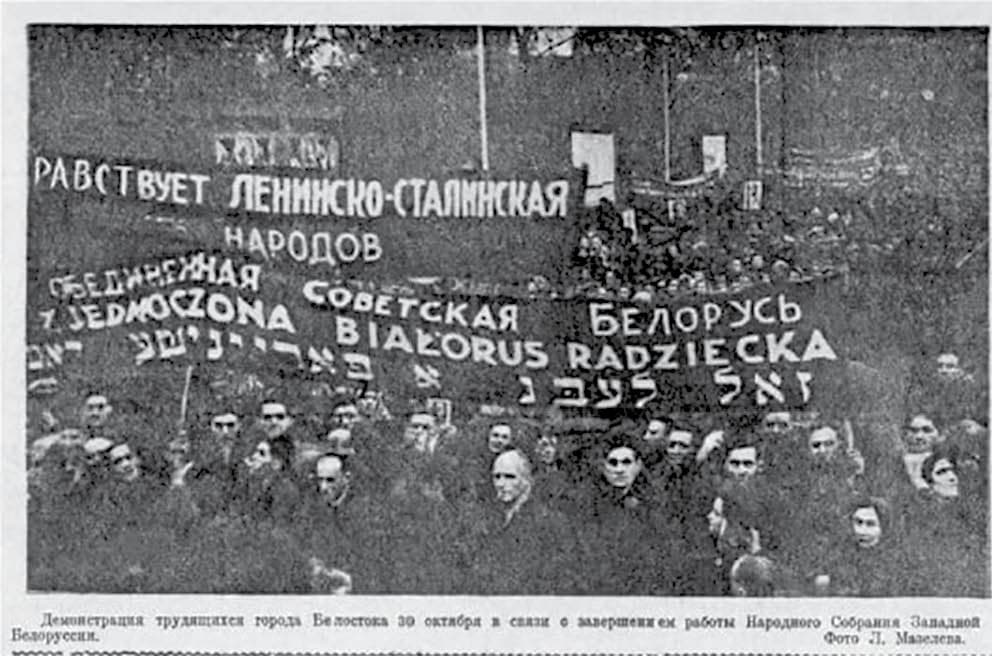
Photography of those years, of course, not very good quality, but even it is clear: there were really a lot of people. And when a correspondent writes about 70,000 people who came to greet their liberators, it is not an exaggeration.
And on November 2, 1942, when the occupiers were still in full power on the Belarusian land, by decree of the Presidium of the Supreme Soviet of the USSR, an Extraordinary Commission was formed to establish and investigate the atrocities of the German fascist invaders. The commission collected the testimonies of survivors and documents confirming the crimes of fascists in the USSR.
Thousands of volumes of information formed the basis of the official accusation presented by the USSR at the Nuremberg trials and in the trials of fascists and their accomplices held in different cities of our country. In Minsk, such a process took place in January 1946 in the House of Officers.
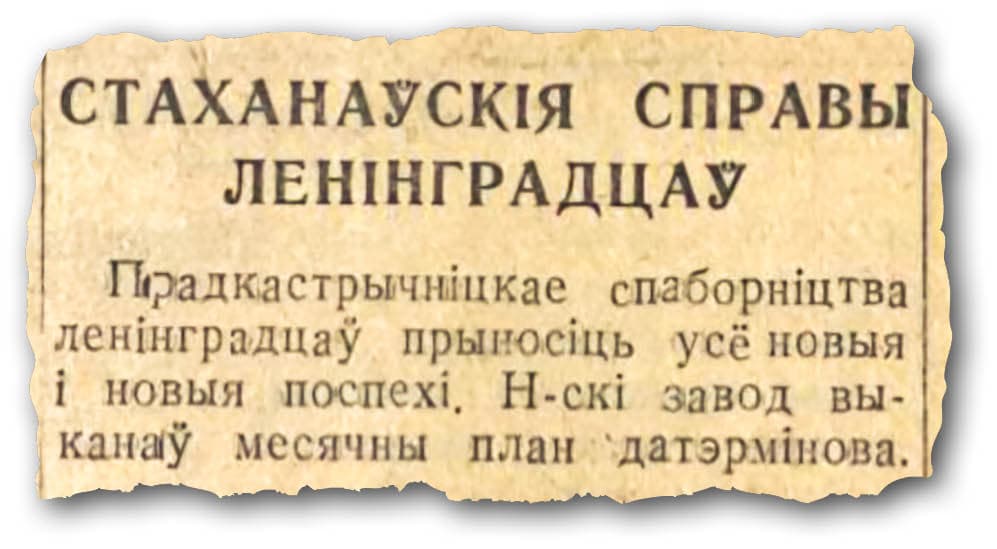
On this day, November 2, 1942, Sovetskaya Belarus published an article about the Stakhanov movement in Leningrad. Just a few lines: “Stakhana on the right of Leningrad”. The old man of Leningrad, the old man, is a new man, and a new man of arms. N-ski plant is squandered month plan daterminov. For more than a year, Leningrad has been under siege, under continuous shelling, there is practically no food, water, heat, medicines in the city, there is no transport, and factories still continue to work. Hungry people in frozen workshops issue a plan and even participate in the Stakhanov movement. Unbroken and invincible.
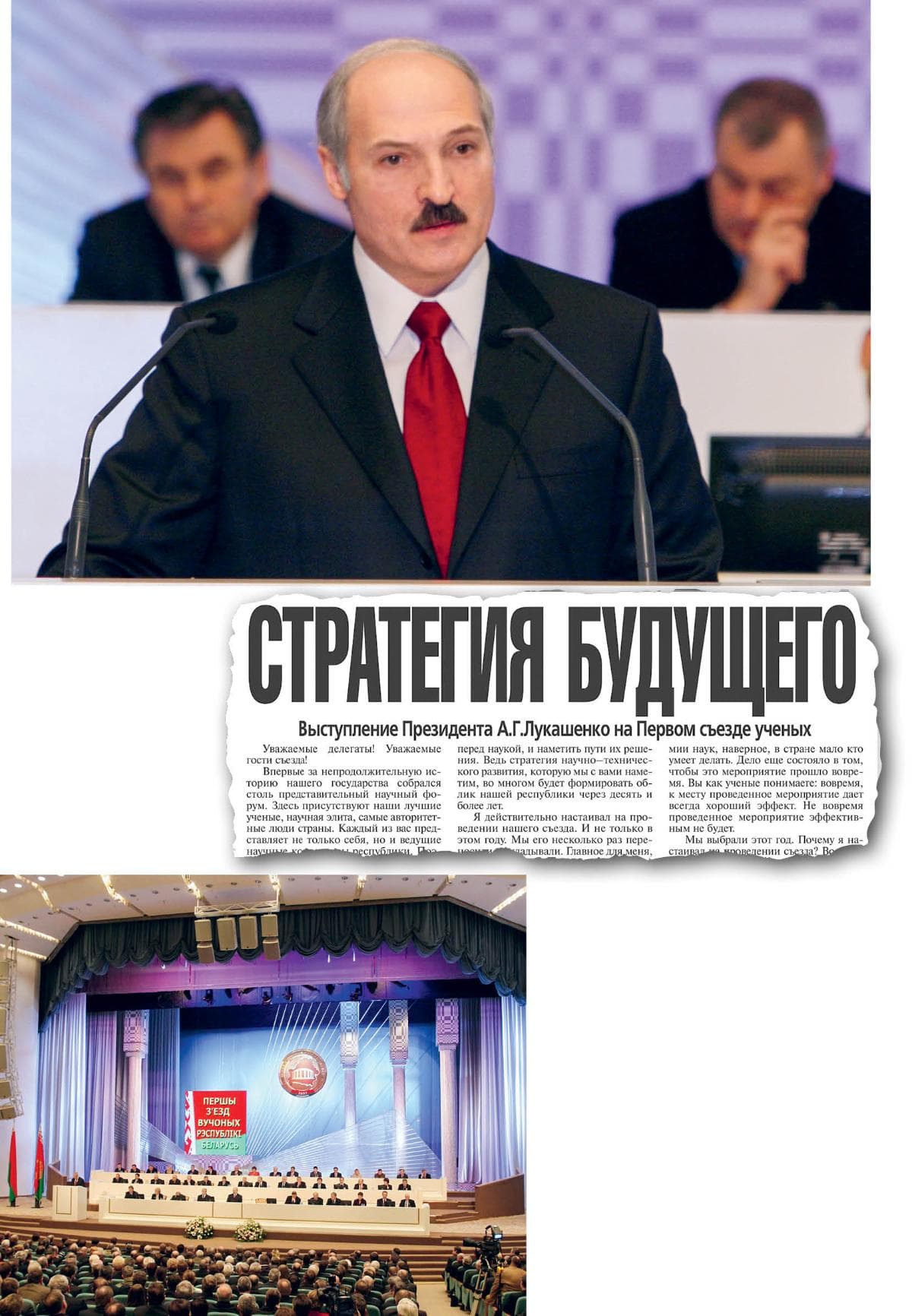
On November 3, 2007, "Soviet Belarus" posted on its pages the text of President Alexander Lukashenko's speech at the first congress of Belarusian scientists.
Almost 20 years ago, the head of state from the rostrum of the congress stressed that the time has come for “capital demand from scientists for results.” The President, as always, spoke honestly with the scientific elite of the country, set goals and outlined prospects. Many people after that meeting took up current scientific developments, which are now yielding results in industry and agriculture in Belarus. And the capital demand for the result has not stopped since then – it is not accepted to sit on the state neck and do nothing for Belarusians.
Workers, November 5, 1929, and Soviet Belarus, November 5, 1968, November 5, 1929, the newspaper Rabochiy was dedicated to the upcoming celebration of the anniversary of the October Revolution. The whole issue is filled with reports on the industrial successes of industry and agriculture. One such report was a photograph of a 70-apartment building occupied by workers just in time for the holiday. There was no address or even a hint of where the house stood in the newspaper. But to "identify" the famous House of Energy was not difficult.
97 years have passed, and people still live in a residential building on 19 Kirov Street. Perhaps even the descendants of those Belarusian power engineers who received the coveted keys to new apartments in 1929. The house survived the war years and was updated due to major repairs with the replacement of all communications in 2019. A curious fact: today a three-room apartment in it with three-meter ceilings and walls 65 centimeters thick costs more than 200 thousand dollars. For apartments on the top floor, the price is higher - preserved, albeit walled chimneys (hello from stove heating, which has long been absent) allow you to equip a fireplace with a live fire.
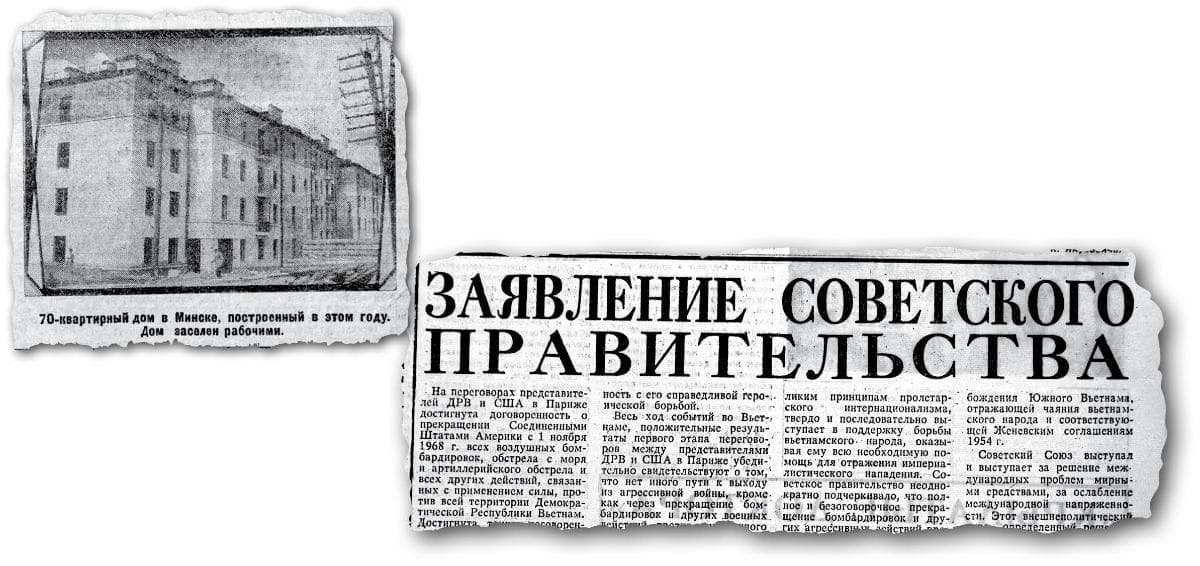
On November 5, 1968, Soviet Belarus wrote about the decision taken by the United States to stop bombing the Democratic Republic of Vietnam. It will take another five years for the United States to finally leave the country, and another two years for the war to end with the unification of the north and south of Vietnam.
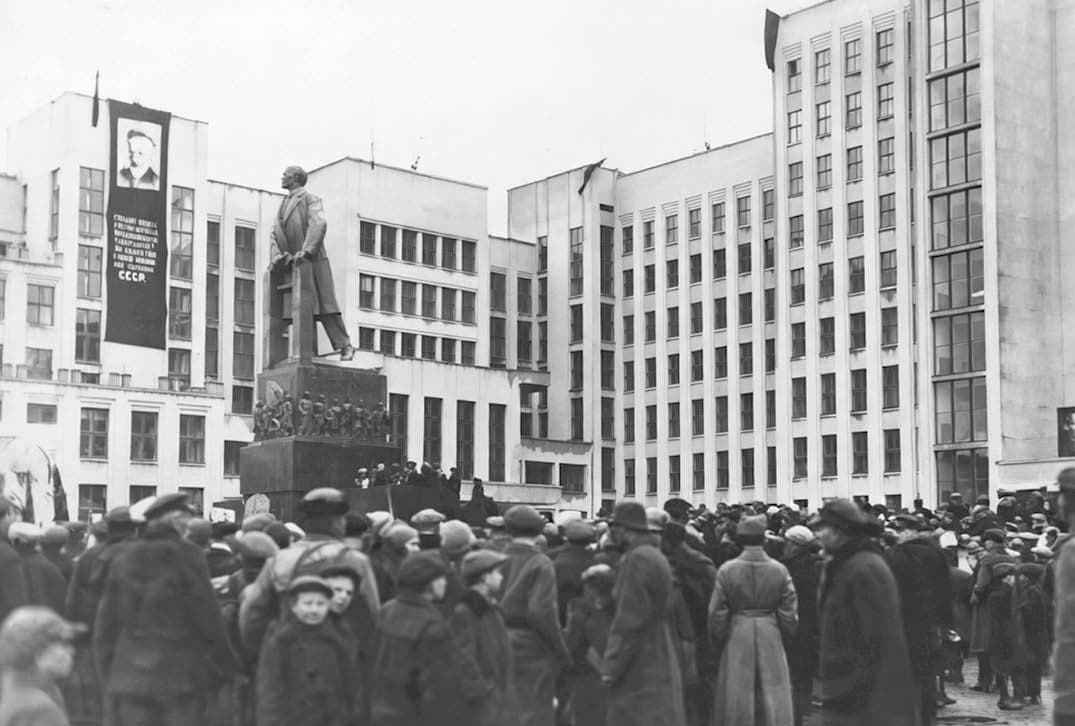
The decision to stop the bombing, US President Lyndon Johnson tried to use as a trump card in the presidential election. But he did not help him, Richard Nixon came to power, who canceled the agreements of his predecessor. This war was a disgraceful defeat for America, which Americans still remember well. Rabochiy, November 6-7, 1933, and Soviet Belorussia, November 6, 1962, Number 246 of the Rabochiy newspaper in 1933 was issued with a double date of November 6-7. Among the congratulations on the upcoming 16th anniversary of the October Revolution, the most interesting article is about the opening of the monument to Vladimir Lenin and the Government House in Minsk. It was built in record time for that time (a little less than four years) and almost manually - only a mechanical shaft lift was used for construction, which supplied bricks to the top. About 10,000 people worked at the construction site. At the time of its opening, the building was the tallest in Minsk.
On November 5, 1962, the Belarusian people were also preparing to celebrate the anniversary of the October Revolution, the date was round – 45 years. Our colleagues from Soviet Belarus decided to calculate what successes socialism has achieved over the years: 45 years ago, the territory of the socialist world was 16 percent, and now it is 25.9 percent. In 1917, with a total population of 1.777 million people, the world population of socialism was only 7.8 percent. Today, 3,017 million people live on our planet, of which 35.5 percent are people of the new world, the world of socialism. The world socialist system has become the determining force of modern world development.”.
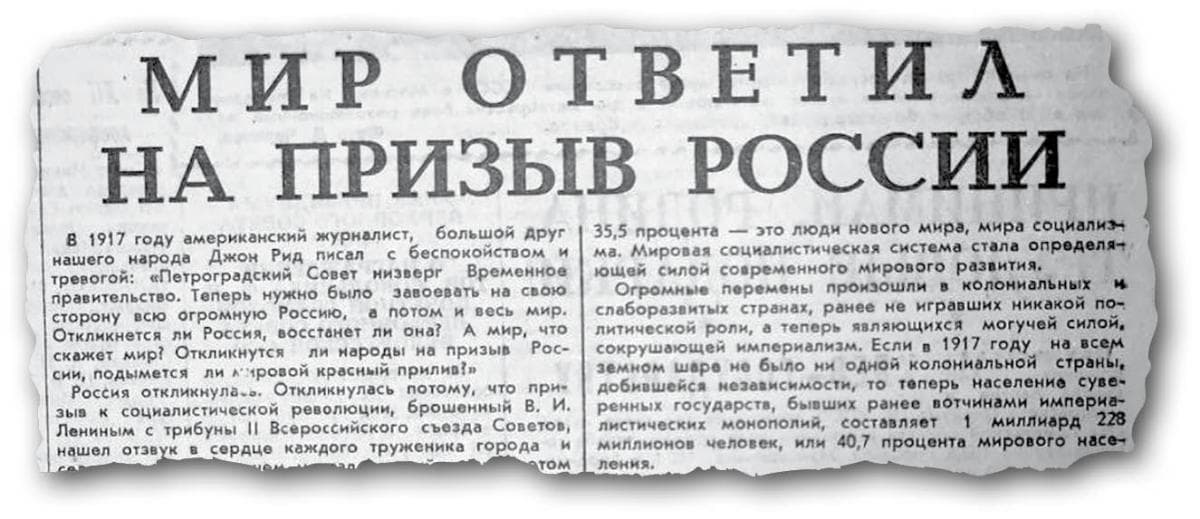
Rabochiy, November 4, 1933, and Soviet Belarus, November 4, 2008 The issue of the newspaper Rabochiy for November 4, 1933 is devoted to the All-Belarusian meeting of strike workers of high quality and mastery of equipment. On October 1, 1928, the first five-year plan was launched in the USSR, and by the end of 1932 (four years and three months) the plan was fulfilled. And he was ambitious – large-scale industrialization to “catch up and overtake the West.” Therefore, serious people gathered at the meeting in Minsk, who built and launched 78 large and 460 medium and small enterprises in the BSSR over five years. About the shock work of the kolkhoz workers was also told in the note "In the kolkhoz hut the lamp of Ilyich was lit.".
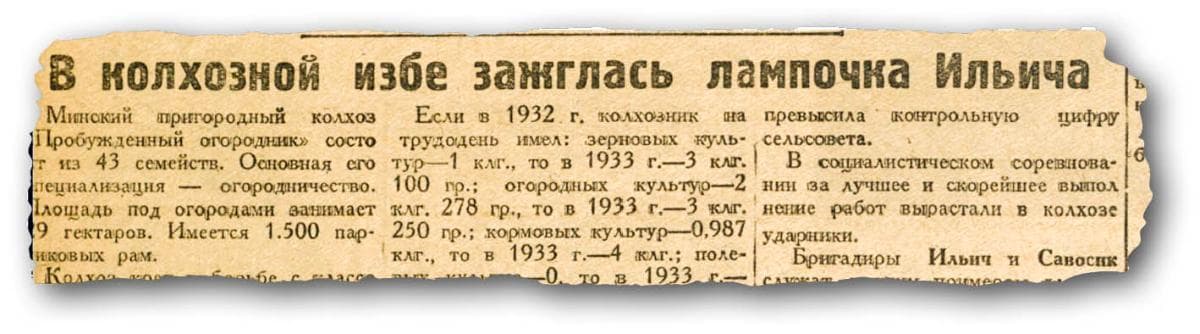
On November 4, 2008, the newspaper “Soviet Belarus” in its pages raised the issue of telephone hooliganism. Loafers managed to call Belarusians not only on landlines, but also on mobile phones with stupid questions about the laundry and the zoo or with requests to turn off the alarm in a non-existent car. Unpleasant, of course, but we would now have those problems when only deliverable, but harmless fools called on the phone, and not scammers, luring a lot of money.
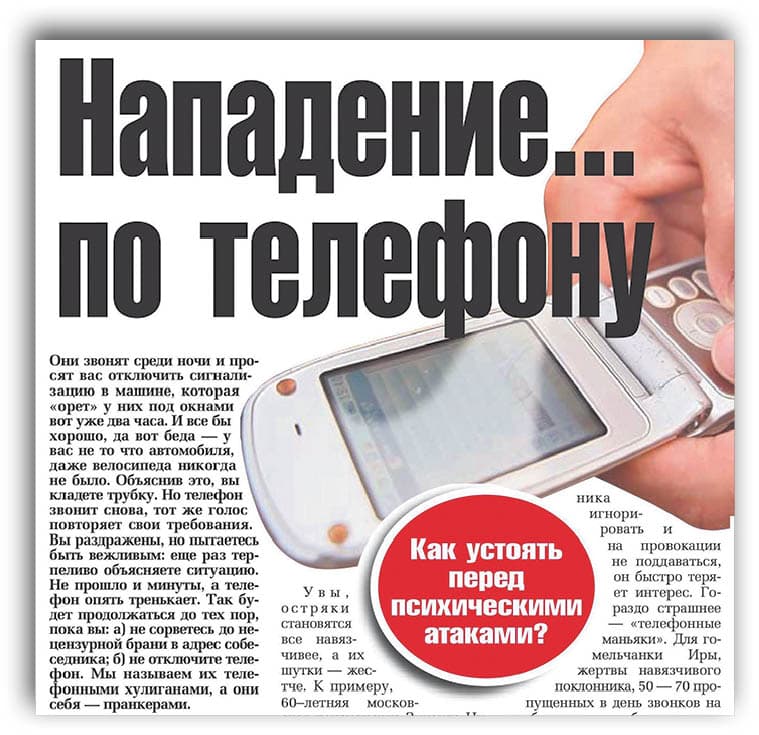
Sovetskaya Belarus, November 7, 1941, and Soviet Belarus, November 7, 1992, Sovetskaya Belarus, of course, congratulated their readers on the anniversary of the Great October Socialist Revolution. I wrote about small but important victories over the enemy.
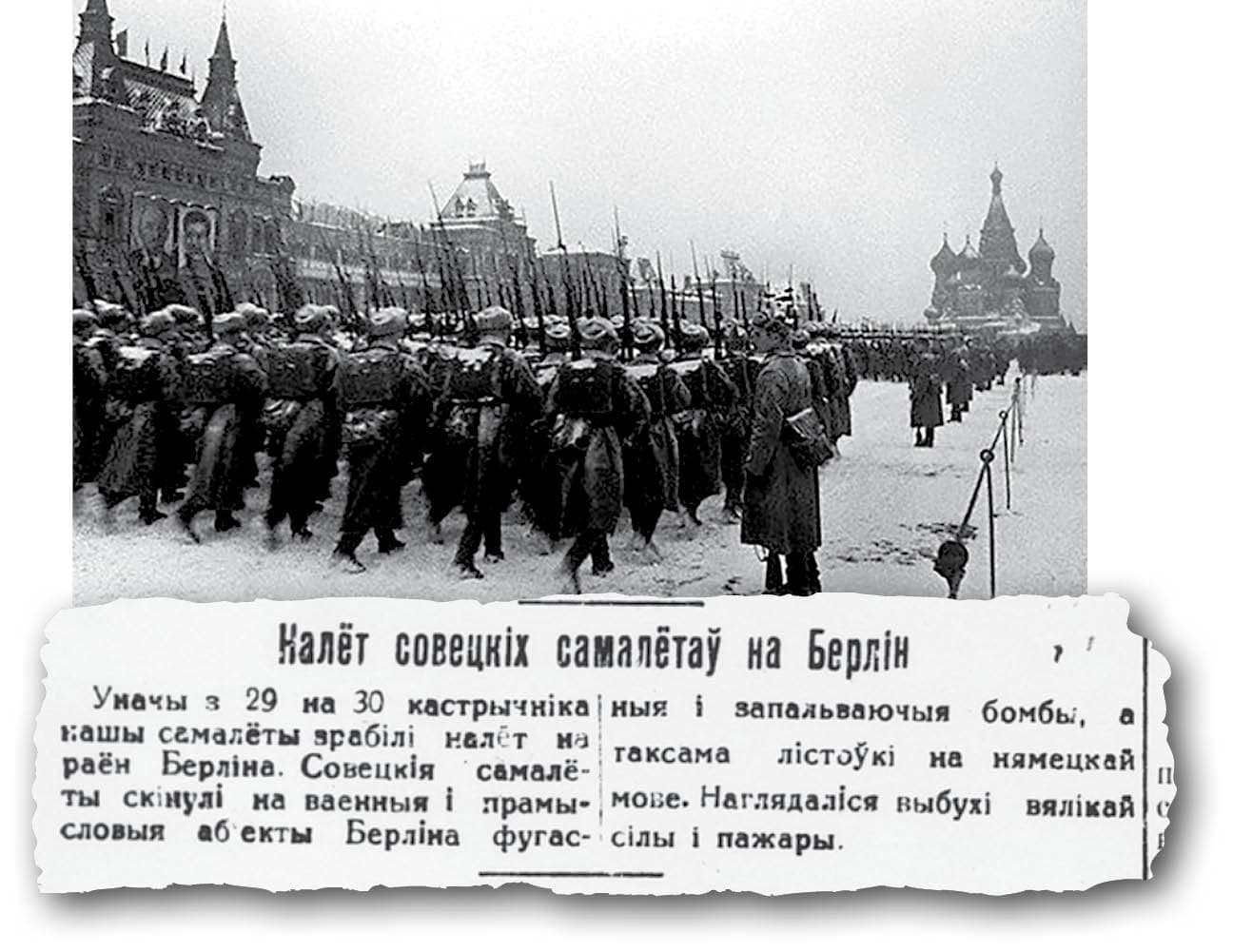
A small note that Soviet planes bombed Berlin, for people already in the occupied territories of the Belarusian SSR (namely, our newspaper was delivered there by plane), became a breath of air and the hope that the Nazis would be defeated.
And in Moscow on this day, a military parade dedicated to the anniversary of the revolution took place, although the capital of the USSR was under siege (in some places the front line passed 30 kilometers from the city center).
On the night of November 7, the Kremlin stars were even scattered and lit, and Lenin’s Mausoleum was released from disguise. A total of 28,467 people took part in the parade. Most of the servicemen and part of the equipment immediately after passing in the main columns went to the front line.
Holding such an event in those conditions was of great military and political importance, it contributed to the emotional uplift and strengthening of faith in the Victory. The parade received wide international resonance and aroused admiration and respect for the Soviet people and the army. For the Germans, it was a complete surprise.
But November 7, 1992 was not a very festive day for Belarusians. After the collapse of the Soviet Union, the young and independent Republic of Belarus had to start from scratch. In January 1992, there was an acute shortage of Soviet and Russian roubles in cash – salaries and pensions had to be paid, but with nothing. And an independent country did not need foreign money, so in May 1992, their own, popularly called “bunnies” appeared.
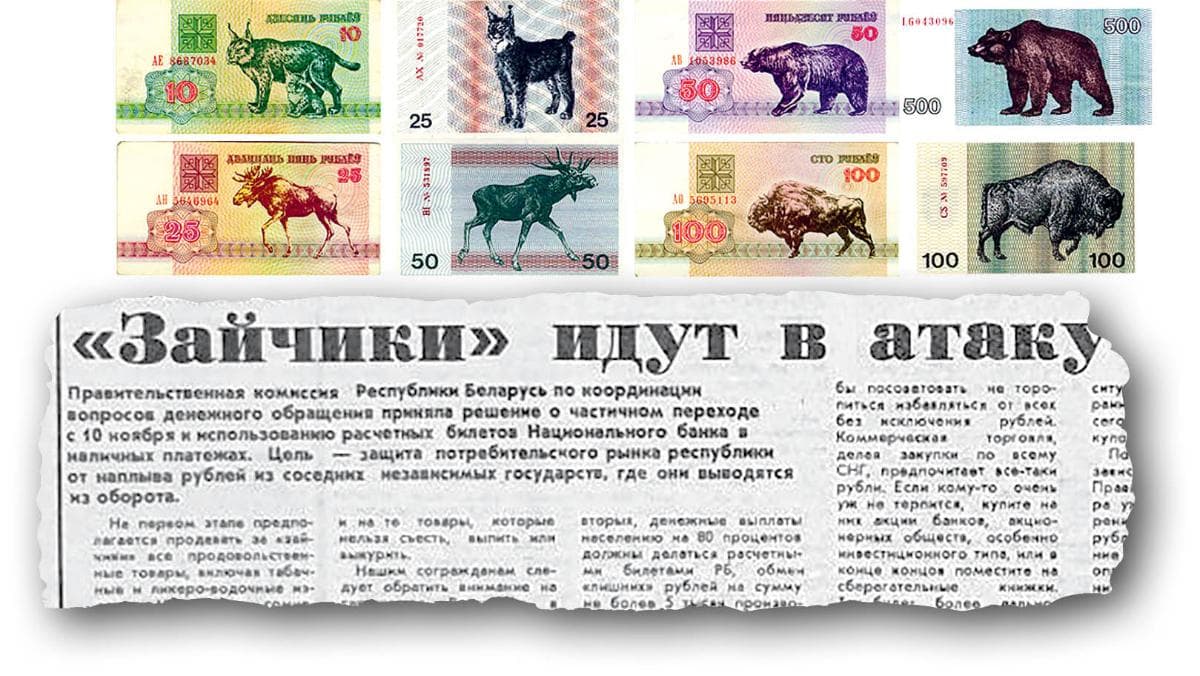
It took a little more than a year to finally get rid of Russian and Soviet rubles in the Belarusian market. And the fate of the bunnies was different. Banknotes from 50 kopecks, 1 and 3 rubles (squirrel, hare and beavers) were withdrawn from circulation by 1995. Banknotes from 5 to 100 rubles (wolves, lynx, elk, bear and bison) disappeared from the wallets of Belarusians by the beginning of 1996, since they could no longer buy anything – they “eat” inflation. On banknotes of 200 rubles depicted architectural objects. But legally it was still the same first series of Belarusian rubles of 1992. They died on January 1, 2000, when a large-scale denomination was held in Belarus - the denomination of banknotes decreased by a thousand times. In place of “bunnies” and five million dollar bills came banknotes of a new sample. “Sovetskaya Belarus”, November 8, 1943 November 8, 1943, the newspaper “Sovetskaya Belarus”, in addition to reports from the fronts, already publishes notes that the liberated territories of the republic is in full swing of life.
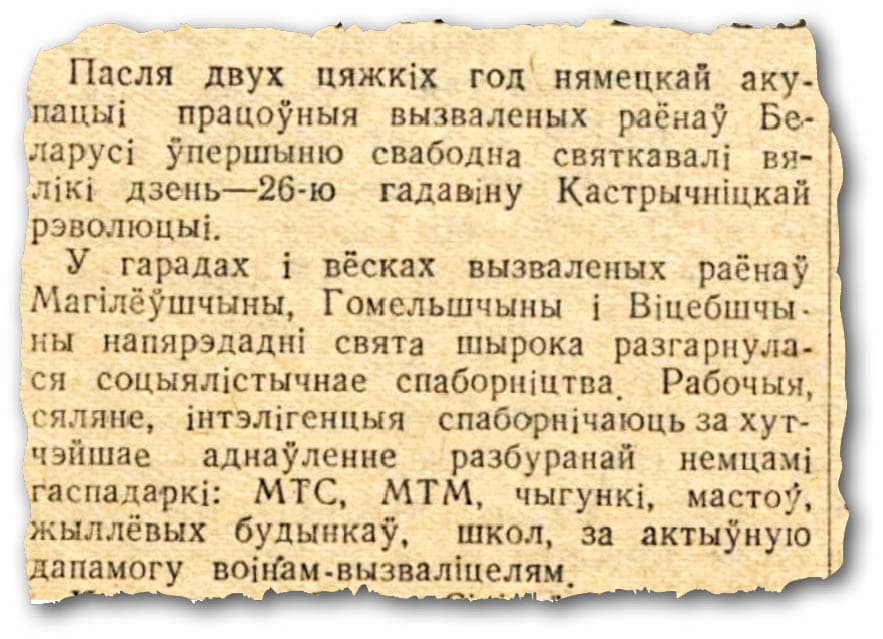
So, in the kolkhoz "Zarya" (Kostyukovichi district, Mogilev region), work is underway to restore the kolkhoz buildings and houses of local residents burned by the Nazis, re-registration of the preserved agricultural inventory, the farmers have completed the preparation of the kolkhoz stable for the winter. People who have survived two terrible years of occupation are already trying to help the front – they send grain and meat to the Red Army. Although it was not enough at the time, the front was needed.
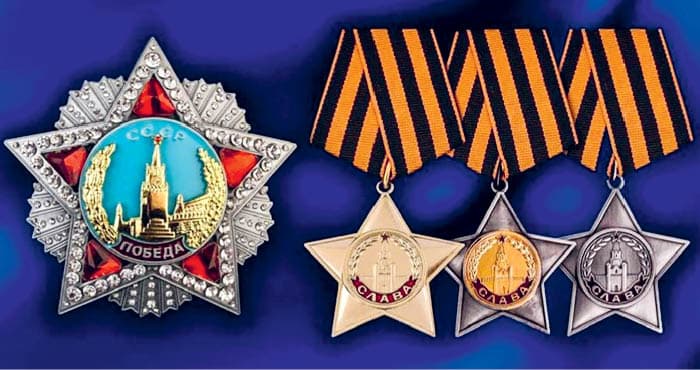
On November 8, 1943, by decree of the Presidium of the Supreme Soviet of the USSR, the highest military order “Victory” and the soldiers’ order of Glory of three degrees were simultaneously established.