
Material anchors of memory: attachment to things you love isn’t always harmless
Most of us have a favorite cup or T-shirt, often battered by life, but throwing them away doesn't lift our hand
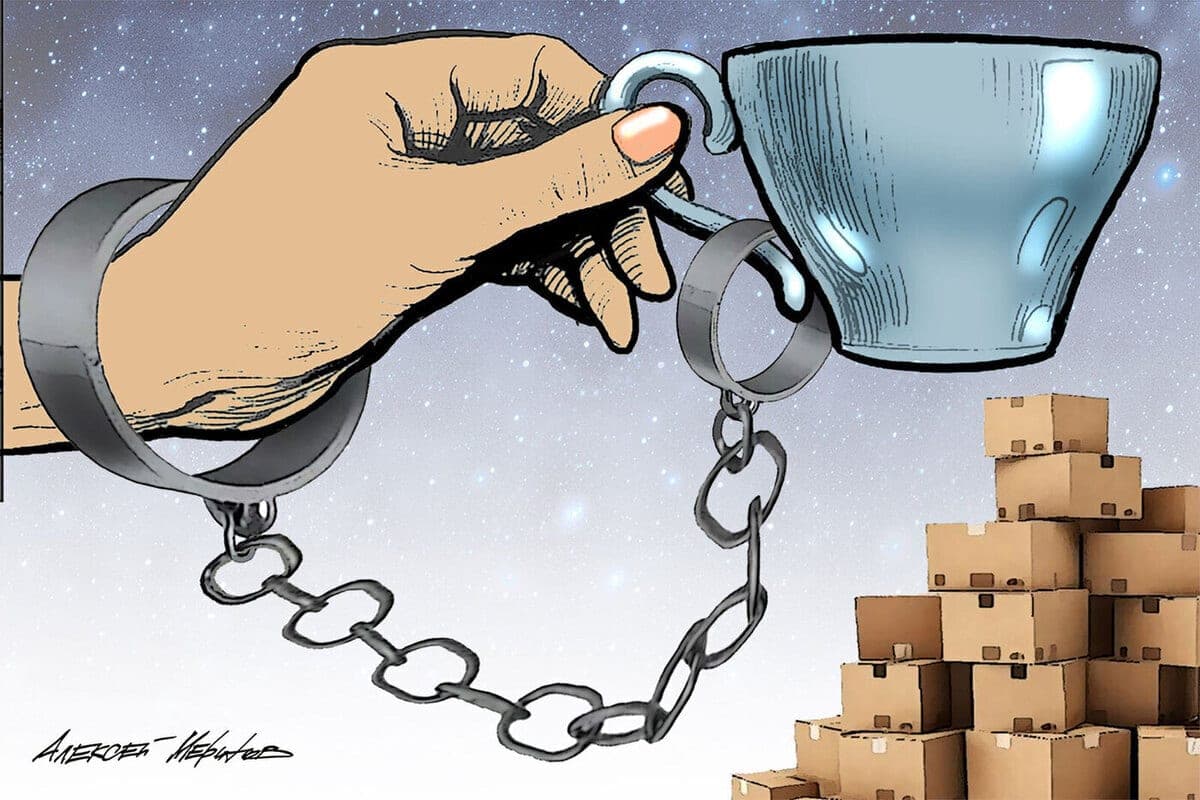
The habit of drinking morning coffee from just one scratched mug hides a fundamental mechanism of the psyche, because they, these cups, like stretched sweaters, are nothing more than “transitional objects” of Donald Winnicott. Back in 1953, a British pediatrician unveiled the transitional object theory, according to which an infant pulls the edge of a blanket into his mouth as an “anchor”, which helps him to survive anxiety when his mother, for example, moves away from the crib.
The “transitional object” has key properties that retain their relevance for an adult: it is an illusion of control (the child has absolute power over the toy, unlike the same mother; this object is always available and predictable, and if the baby lost it, then there is a loud cry); “a calm reaction” to the emotions of the owner (no matter how much the child yells and throws the toy in a fit of anger or fear, it will not be offended, will not disappear and will not cry in response); an intermediate space of experience (the thing exists simultaneously in the objective physical reality and in the subjective inner world of a small person, with them).
In adulthood, the need for such “anchors” does not disappear, but transforms and reduces the level of cortisol (stress hormone), and the function of plush toys is taken over by household items. For example, an old blanket or a favorite sweater helps a person to quickly return to a state of emotional balance after a hard day.
And if Winnicott explained how things reduce anxiety, then consumer behavior researcher Russell Belk in 1988, creating the theory of the “expanded self”, showed how objects form the structure of personality. Man defines himself not only through his own body, thoughts and character traits, but also through the totality of objects that he considers “his own”. Memory anchors remind of pleasant moments in life and act as physical evidence that important events did occur. And most interestingly, research conducted by Belk showed that victims of theft or natural disasters often experience symptoms similar to mourning a deceased loved one. The loss of personal belongings is perceived by the psyche as the symbolic disintegration of one’s own self, the loss of a personal history and a part of oneself.
A completely different story is collecting, which, first of all, knowledge of the world and the study of history. According to various sociological estimates, about a third of the adult population of developed countries is fond of collecting in various forms, and they collect everything from brands to shoes.
In contrast to spontaneous household accumulation, collecting is defined as the active, selective and passionate process of acquiring and owning a set of interconnected objects removed from ordinary utilitarian circulation. The coin in the collection ceases to be a means of payment, and the rare book is no longer used simply for reading. Conscious gathering is believed to satisfy the need for control and completeness when a collector is in search of a missing specimen and acquires it, often paying a hefty sum of money. It also strengthens self-esteem.
The search and acquisition of the missing element bring a powerful release of dopamine, a neurotransmitter of reward. The real world is chaotic and unpredictable, and the collector creates his own controlled universe with clear boundaries and clear rules. By building objects according to chronology, countries, or series, the psyche satisfies a basic need for structure and order.
Belk believed that collecting also helps to find like-minded people, establish social ties, and the collection becomes a legitimate way of self-expression and demonstration of taste or status in the reference group. Quite often, the heirs of a rich collector fall, if not into fury, then certainly into complete bewilderment when a relative suddenly decides to bequeath his worth millions of collection to a museum or the state. But there is a simple and logical explanation. According to Russell Belk, creating a meaningful collection helps a person cope with the existential fear of death. By transferring the collected treasures to a library or university, the owner expects that his name and the fruits of his many years of labor will continue to exist after his physical death, and the heirs will not steal and sell the collection on individual artifacts.
However, collecting has a shadowy side when the process of finding and buying items ceases to bring joy and turns into a ritual to suppress anxiety. Fascination turns into behavioral disorders. In such cases, a person begins to spend up to the last penny to replenish the collection and hides purchases from family and colleagues. The collector becomes dependent on his collection, and he no longer controls it, but vice versa.
However, gathering also has such a terrible manifestation as choarding, or syllogomania - the pathological accumulation of things indiscriminately. For a long time, medicine considered accumulation only as one of the symptoms of senile dementia. However, large-scale clinical studies have proved that this is an independent pathology with specific symptoms and a neurobiological profile. In the International Classification of Diseases, choarding is distinguished as an independent diagnosis. According to available data, clinically significant choarding affects from 2 to 5% of the adult population of the planet.
A scientific explanation of the mechanism of “plushkinism” was proposed in 1996 by clinical psychologists Randy Frost and Tamma Hartle. They identified three reasons for choarding: the inability to categorize objects and make decisions; a hypertrophied sense of responsibility for the safety of objects and the fear of forgetting important information if you throw things away; replacing human relationships with things and making up for the deficit of communication with the outside world.
It is easy to understand the neighbors and relatives of Plyushkin when he has a real warehouse and full of bedlam in his apartment. Most often, a person himself understands that it is impossible to sleep on a bed, it is impossible to cook food on a stove, it is impossible to wash in the bathroom, and you can walk around the rooms only along narrow “paths”. But he can't do anything about it because he's really sick. It is useless to shame such a “plushkin”, this will not help, because objects serve as the only safe substitute for human warmth: a significant proportion of such patients have a history of severe psychological trauma, abuse, early loss of parents or chronic loneliness.
There is no universal “pill” for this disorder. At the same time, others often make mistakes that do not cure the disorder, but sharply worsen the condition of the unhappy person. For example, forced “general cleaning” in the absence of the owner is perceived by the brain as a severe psychological trauma and robbery, and a person after such an invasion begins to accumulate junk at a double rate. Persuasion will also not give a result, because any criticism, especially aggressive ("you live in a dumpster"), increases the anxiety state.
But to tolerate such outrage hardly anyone will agree. Therefore, if symptoms appear in an elderly person, it is important to consult a neurologist to rule out dementia. But here neighbors are powerless, they can only turn to relatives. The same should be done, according to the recommendations of doctors, not snoring, but gradually, step by step. For example, talk about physical security: clearing the aisle to the front door, stove and bed. If a person comes into contact, then it is necessary to offer him to disassemble things, but not to throw everything away at once, but to disassemble the rubble for 15-20 minutes a day, using the rule of three boxes (“leave”, “give / sell”, “throw away”), while the final decision on each item should be made by the owner himself.
Well, people in a sober mind and sound memory should think about how to maintain the right balance in relations with things. The modern culture of consumption creates a double pressure on the human psyche. On the one hand, it stimulates the constant purchase of new things as a way to achieve happiness. On the other hand, radical minimalism is advertised. Although psychologists do not call for radical asceticism: a careful attitude to favorite trinkets is absolutely natural. And yet the memory of a close or important event lives on in your mind, not inside an old postcard or a cracked vase. The art of living in the material world is that things are created to give us pleasure, not to replace it. And the only person who can truly own a thing is one who is internally ready to let it go one day


