
Furniture, clothes and even cars: Ulyanovsk residents were shown products produced in the colonies
Furniture, clothes, shoes and even special cars are not a complete list of products that are produced in correctional institutions
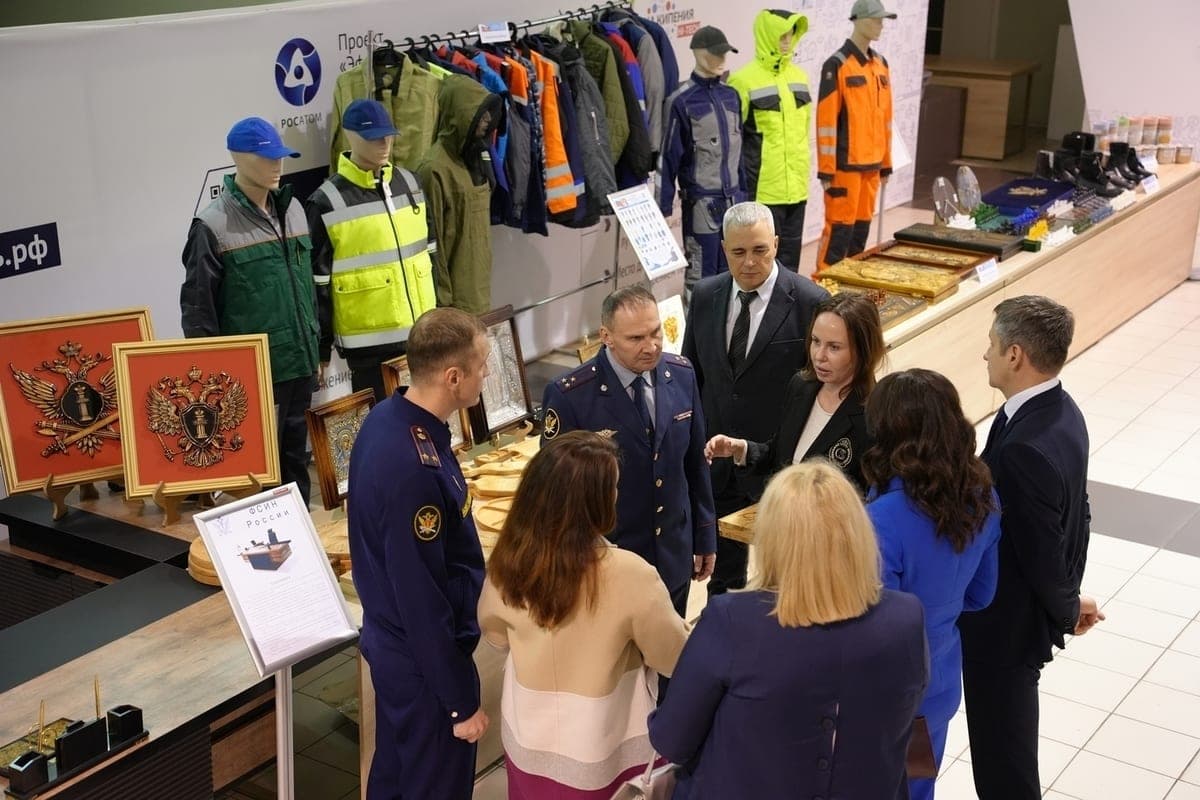
Furniture, clothes, shoes and even special cars are not a complete list of products that are produced in correctional institutions.
A specialized exhibition was held in Ulyanovsk, where the regional department of the Federal Penitentiary Service presented the production capabilities of subordinate institutions. The event was organized at the site of the Center for Competences for Industrial Development.
Visitors were able to get acquainted with a wide range of goods manufactured in institutions of the penitentiary system. In the thematic areas, samples of sewing and shoe products, cabinet and upholstered furniture, souvenirs and food products were placed. Small architectural forms and special cars were demonstrated in the open area.
The exhibition brought together producers from two regions. In addition to the Ulyanovsk institutions, representatives of the Federal Penitentiary Service of Russia for the Republic of Mordovia presented their products.
The main objective of the event was the development of cooperation between correctional institutions and entrepreneurs. Representatives of the regional government, relevant departments, the city administration, the chamber of commerce and industry and local enterprises gathered to discuss the prospects of joint work.
Deputy head of the Federal Penitentiary Service of Russia for the Ulyanovsk region Ivan Pavlov spoke about the production capacities of correctional institutions and the possibilities of their use by business. According to him, such cooperation allows enterprises to attract additional labor resources, and convicts to gain professional skills that can be useful after release.
One of the results of the exhibition was the signing of cooperation agreements. The agreements were signed by the regional department of the Federal Penitentiary Service and the Center for Competences for Industrial Development, as well as the Federal Penitentiary Service and the Creative Industries Fund.
In addition, the head of the Federal Penitentiary Service of Russia for the Ulyanovsk region Stanislav Akimov handed letters of gratitude to representatives of companies involved in the development of production and social adaptation of convicts.
The event ended with negotiations, during which the participants discussed the possibilities of expanding cooperation and increasing the volume of products.
The development of production activities helps not only to provide correctional institutions with orders, but also to create conditions for professional training of convicts. The acquired work skills can further facilitate their return to normal life after release.


