
“Our family tree”: in the suburbs decided to raise children together with the forest
In 2027, a project will start in the Moscow region, which can become one of the most beautiful family traditions of the region
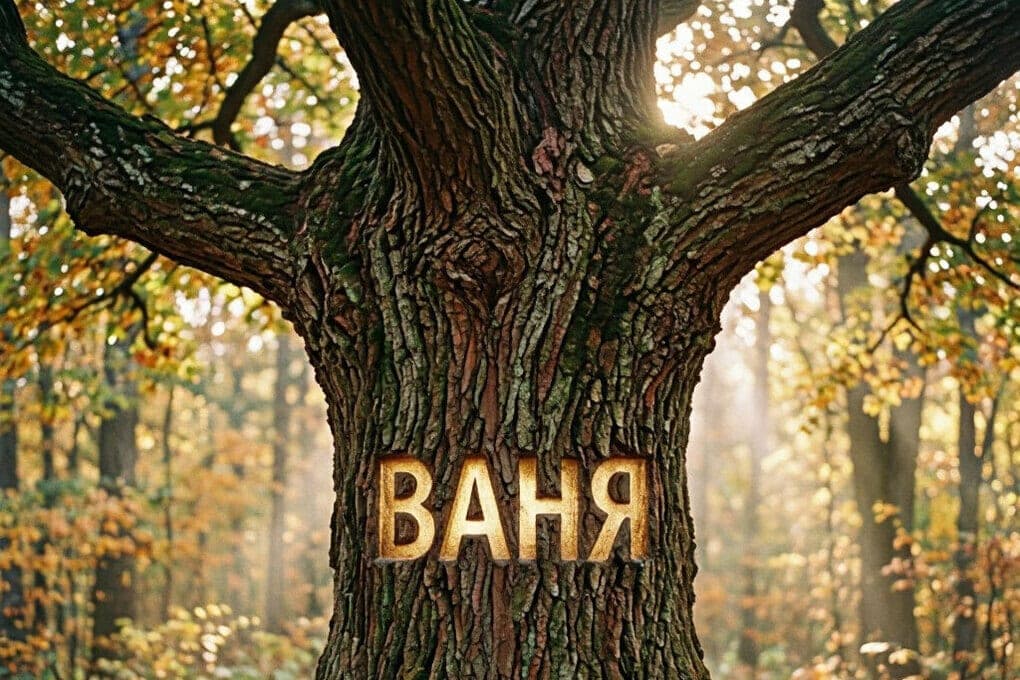
The Moscow region annually records about 70 thousand births. If half of the households use the certificate, that would be 35,000 new trees a year. If the project becomes truly massive, we can safely talk about a figure comparable to the population of a small city. For comparison: over the years of the existence of environmental actions in the region, 16.3 million young trees have been planted, and 465,000 people took part in them.
What else is planted in the suburbs?
The new project is not from scratch. There is already a whole ecosystem of shares in the region:
- "Victory Forest" - planting trees in memory of the heroes of the Great Patriotic War. Only one Sergiev-Posad district on 27 sites planted 50 thousand seedlings spruce and pine trees.
- "Memory Garden" is an international action, coniferous trees are planted in the suburbs for the 80th anniversary of the Victory.
Save the Forest is one of the country’s largest reforestation projects.
Corporate eco-imbuilding - for labor collectives, and school forestry - for adolescents.
Our Family Tree project is logically built into this infrastructure, adding to the patriotic and corporate dimension of family.
Tree as a family member: what psychologists say
Planting a tree to celebrate the birth of a child is not just a green checkmark. Psychologists note that the tree is a symbol of the flow of life and a reflection of the connection between generations - father, child, mother. As the family returns to their tree year after year, the child grows up feeling like they have a living twin in the natural world. There is a more mundane effect: family traditions, according to experts, give a sense of security and confidence and strengthen family ties. In an age when parenting is increasingly reduced to logistics - kindergarten, school, mugs - co-planting a tree becomes a rare ritual of slowing down and shared meaning.
Expert look: do no harm
Environmentalists are cautious in their estimates. On the one hand, any landing is a plus for the carbon balance and the urban environment. On the other hand, experts warn: “planting a tree is not reforestation yet”, many seedlings die because of illiterate agricultural techniques. Ecologist Violetta Chernaya emphasizes that “there should be no spontaneous, chaotic landings”, monocultural plantings should not be allowed. For a family project, this means that it is important not just to issue a certificate and invite you to the holiday, but to provide escort – to show how to plant correctly, and perhaps to give the family the opportunity to visit “their” tree, so that care does not remain on the shoulders of the foresters.
World history: custom older than Christianity
The tradition of planting a tree at the birth of a child is one of the oldest. The ancient Romans planted a tree in honor of the birth of a son and judged the welfare of a child by the growth of a tree. In Polynesia, at the birth of a baby, a coconut palm was planted, and the knots on the trunk allegedly indicated the number of years allotted to him. In Germany and Switzerland, they still plant an apple tree for a boy and a pear for a girl. In Polesie, the son was planted an oak, daughters - a pine, poplar or birch. The Talmud prescribes the planting of cedar at the birth of a boy and cypress at the birth of a girl. In Africa, Tanzania, the placenta is buried in the ground and a tree is planted on top to make the baby grow like a tree. Even in Japan, there are special “parenthood parks” where a tree is planted in honor of newborns.
The Moscow project is not an invention of officials, but a return to an archetype that is older than even the bureaucracy itself.
Is that a good tradition? Of course, yes, with reservations. As a symbolic gesture, it is powerful: the tree grows with the child, and the family has a living point of attachment to place, time and each other. As an environmental measure, it works only with competent agricultural engineering and subsequent care. As a demographic tool, certainly not. But in conjunction with other supportive measures -- benefits, infrastructure -- it makes parenthood visible in the urban landscape. A forest in which every tree is someone’s new life is the best monument to family values imaginable. The main thing is that the seedlings are really taken care of. Twenty years from now, children who have grown up can come to their tree and say, “This was planted in my honor.”.


